How Your Desire to be Liked is Creating a Low-Fidelity Culture
16 March 2026
Why being a ‘nice’ leader is often a form of standard-avoidance, and how to transition to supportive candour.
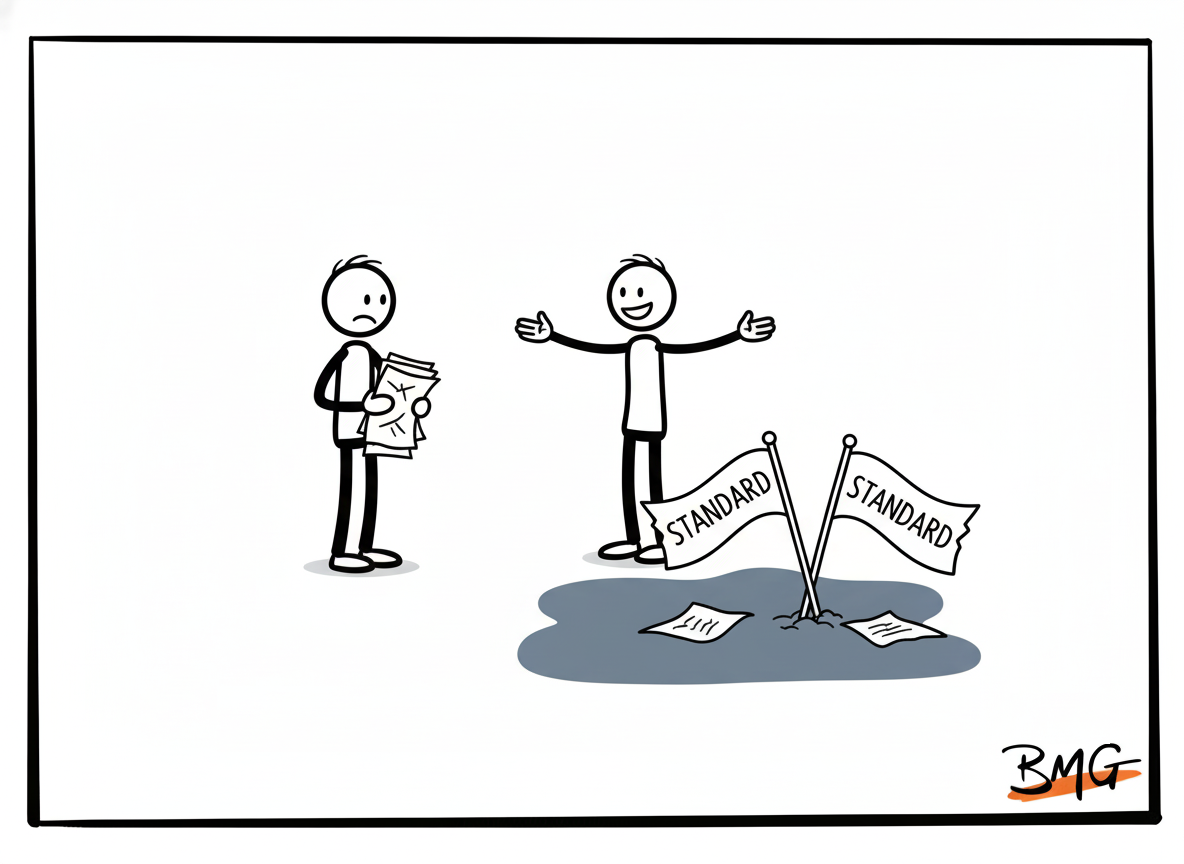
The Problem
You are, by most accounts, a good person.
You care about your team.
You listen.
You offer flexibility when someone is struggling.
You make people feel supported and heard.
Your 360-degree feedback probably mentions your empathy and your approachability. In the corridors and on Slack, you are liked.
But there is a heavy load you are carrying, and it is starting to get heavy.
It is the tension you feel in your stomach when you review a report that is eighty per cent there, but lacks the precision required for the board. Instead of calling it out, you spend two hours on a Sunday evening fixing it yourself. It is the persistent, low-level frustration you feel during the Tuesday morning stand-up when the same person is three minutes late, again, and you just give them a warm smile because you don't want to be that leader.
You think you are being nice. You think you are building a culture of psychological safety and support.
You are not.
You are casting a shadow. By prioritising the absence of friction over the presence of standards, you are accidentally training your team that excellence is optional. You are teaching them that your approval is based on your relationship with them, rather than the fidelity of their work. You are building a culture of 'Good Enough', which is just the final stage before a culture of 'Not Quite'.
Being a ‘nice’ leader is often just a socially acceptable way to avoid the discomfort of a difficult conversation. It is a Rescue Reflex disguised as empathy. And the cost is the very credibility you think you are protecting.
The Reframe
We confuse kindness with the absence of conflict.
Real kindness is the willingness to tell someone the truth about their performance before it becomes a career-limiting problem. The ‘Nice Leader’ Shadow is what happens when you decide that your comfort (avoiding a tense moment) is more important than their growth (receiving the feedback they need).
When you stay silent about a standard slip, you aren't being kind to the person. You are being kind to your own ego. You are protecting yourself from the discomfort of being the person who has to say, ‘This isn't to the standard we agreed.’
High-fidelity leadership requires a shift from being ‘Nice’ to being ‘Kind’. Nice is polite. Kind is clear. Nice avoids. Kind addresses. Nice is about the moment. Kind is about the long-term potential of the person and the team.
The real driver of the Nice Leader Shadow is often the fear of being perceived as authoritarian or ‘Corporate’. You have seen those leaders (the ones who bark orders and manage by fear) and you decided to be the exact opposite. But in running away from one extreme, you have crashed into another.
The middle ground is not a compromise, it is a different category altogether.
It is Supportive Candour.
It is the ability to hold a high, unmoving standard while offering an equally high, unmoving level of personal support to help them reach it.
The Drift of Low Fidelity
This doesn't happen in a fireball. It happens in a drift.
It starts with the small things - the slightly late email, the vague meeting agenda, the meeting that starts five minutes after the hour because ‘everyone is busy’. Because you are nice, you let it go. You tell yourself it doesn't matter.
But excellence leaks. When the small standards slip, the big ones follow.
Soon, the drift becomes the standard. Your high performers (the ones who actually care about the work)become frustrated. They see that the same rewards and the same ‘niceness’ are given to those who deliver excellence and those who deliver the bare minimum. They start to lower their own standards to match the environment, or worse, they start looking for the exit.
Meanwhile, your underperformers stay. They love your ‘niceness’ because it protects them from reality. They are not growing, they are not improving, but they feel very ‘supported’. You are accidentally subsidising mediocrity with your own emotional labour.
The Busy-ness Barrier often hides this drift. You feel so busy (fixing things, bridging gaps, attending meetings to ratify decisions that shouldn't need you) that you don't notice you are doing the work the team should be doing. You have become the system, rather than the person who builds and holds the system.
A quick pause
If this is helpful, the free guide goes deeper, and the newsletter brings ideas like this twice a week.
Reflection Prompts
What standard am I currently tolerating because I don't want to create friction?
Who on my team has no idea they are underperforming because I haven't been clear?
Is my need to be liked more important to me than my team's need to be excellent?
Where is my ‘niceness’ actually a form of cowardice?
What would happen if I stopped fixing the work and started holding the standard?
Final Thought
Transitioning out of the Nice Leader Shadow is not about becoming a colder person. It's about becoming a clearer leader.
The people who work for you don't actually need you to be their friend. They need you to be the person who defines what a ‘win’ looks like and tells them the truth about how they are doing against that scale. They need the security of knowing that when things are good, they are actually good... and when they aren't, you will tell them.
Trust is not built on smiles and avoiding the hard stuff. Trust is built on the predictable consistency of standards and the honest delivery of candour. When you move from ‘Nice’ to ‘High-Fidelity’, you give your team the greatest gift a leader can provide: the clarity of where they stand and the support to get better.
The path to extraordinary is walked with a thousand small steps, you’re doing great!
Your Small Steps
What if I've already set a ‘nice’ precedent?
You can't change the past, but you can change the contract. Start your next 1:1 by naming the change. Say, ‘I’ve realised I haven't been as clear as I need to be about our standards. Because I want you to succeed, I'm going to start being more direct with feedback.’
Small Step: Write down one specific standard that has slipped and prepare the script to reset it in your next 1:1.
Won't being more direct hurt psychological safety?
Psychological safety is the belief that you can take a risk without being punished. It is NOT the absence of standards. In fact, safety increases when expectations are clear. Knowing exactly where the line is makes people feel safer, not less.
Small Step: In your next team meeting, explicitly define the difference between ‘support’ (helping them grow) and ‘standards’ (the quality of the work).
How do I handle the initial pushback?
People may be surprised or even resistant at first. They liked the old version of you. Stay calm. Don't defend. Just reiterate your intent: ‘My goal is for us to be a high-fidelity team. I’m doing this because I value your contribution and want to ensure we are delivering at our best.’
Small Step: If you feel yourself wanting to back down during a feedback session, take a sip of water and count to three.
Is there a way to be direct without being ‘mean’?
Yes. Focus on the work, not the person. Use objective observations. Instead of ‘You were late’, try ‘We agreed the meeting starts at 9:00, and you joined at 9:05. What’s making that start time difficult?’
Small Step: Practise your opening line for a feedback conversation out loud until it feels grounded and neutral.
What if they get upset anyway?
Emotions are part of the work. You can acknowledge the emotion without retracting the feedback. ‘I can see this is difficult to hear. I’m sharing it because I care about your progress.’
Small Step: Allow for silence after delivering a hard truth. Don't rush to fill the gap with ‘nice’ words.
How do I know I’m not just being too demanding?
Standards are not arbitrary. They should be tied to the mission and the quality the team needs to succeed. If the standard is for the team, it's leadership. If it's for your personal preference, it's control.
Small Step: Check your standards against your Authority Pillars. Does this standard directly support Clarity, Standards, or Decision Rights?

Barry Marshall-Graham
Executive coach and leadership advisor
Get the Difficult Conversations Guide
A practical resource for leaders who want to say the thing that needs saying, without burning bridges or avoiding the moment.
Keep reading
6 April 2026
The Soft Ending Trap
Hard conversations rarely fail at the opening. They fail when leaders soften the close, leave the standard vague, and walk away without a real commitment.
30 March 2026
How to Stop Confusing Frantic Activity with Strategic Momentum
Why senior leaders get trapped in 'heroic execution' and how to build a rhythm that prioritises outcome over activity.
23 March 2026
Why ‘Empowerment’ Fails Without the Clarity of Decision Rights
Why telling your team they are ‘empowered’ often leads to paralysis, and how to fix it with clear decision ownership.
13 March 2026
The Weight of Unshared Doubt
Why senior leadership feels lonelier as you rise, and why confidence is often just unshared doubt.
9 March 2026
Why Your Best Advice is the Problem
Why the rush to fix others is actually a specific insecurity, and how to stop.
6 March 2026
The Weight in Your Voice
Your words carry more weight than you realise. Calm authority is often a matter of pace, tone, and the courage to name what matters.

2 March 2026
The Quiet Drift You Inherit
Inherited teams rarely collapse in a moment. They drift. Resetting standards isn't about being harsh, it's about clarity, dignity, and trust.
27 February 2026
When Everyone Owns It
Shared ownership sounds healthy, but when everyone owns a decision, nobody owns the decision. Clarity needs a single accountable owner.
23 February 2026
The Private Ledger of Leadership
Senior leaders carry a private ledger of risks, promises, and people. Naming that inner load isn't weakness, it's how you lead without breaking.

20 February 2026
The Avoided Conversation Is a Decision
The conversation you're avoiding isn't neutral. It's a decision to let the current pattern continue, and that decision shapes the culture.
