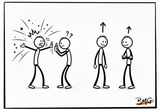
The First Small Tolerance
13 February 2026
Standards rarely collapse in a moment. They slip through the first small tolerance you let pass, then the next one feels easier.

The first small tolerance always feels harmless.
It looks like pragmatism.
It sounds like being reasonable.
You let the deadline slide because the team is stretched.
You ignore the sloppy update because the work is good.
You avoid the conversation because you don't want to pile on.
None of these choices are wrong on their own. The cost shows up later, when the exception becomes the new normal and the standard you never named is the one you're now carrying alone.
The difficult part isn't the big reset, it's the quiet moment where you decide whether to name a small slip. That's where standards are built or traded away.
A leader I worked with told me she felt like the team had changed. The truth was more subtle. The team was still capable, but the small tolerances had added up. The standard had moved, and nobody could point to the moment it happened.
If you want to raise the bar without becoming abrasive, start with the first small tolerance.
Notice it, name it, and explain why it matters.
People respond well to clarity when it comes with respect.
Questions to sit with:
Which small tolerance am I treating as temporary?
What standard do I expect but rarely name?
Where am I carrying the cost of an unspoken exception?
Standards don't need drama.
They need attention, consistency, and the quiet courage to say what's slipping before it becomes the culture.
The path to extraordinary is walked with a thousand small steps, you’re doing great!

Barry Marshall-Graham
Executive coach and leadership advisor
Get the Difficult Conversations Guide
A practical resource for leaders who want to say the thing that needs saying, without burning bridges or avoiding the moment.
Keep reading
6 March 2026
The Weight in Your Voice
Your words carry more weight than you realise. Calm authority is often a matter of pace, tone, and the courage to name what matters.

2 March 2026
The Quiet Drift You Inherit
Inherited teams rarely collapse in a moment. They drift. Resetting standards isn't about being harsh, it's about clarity, dignity, and trust.
27 February 2026
When Everyone Owns It
Shared ownership sounds healthy, but when everyone owns a decision, nobody owns the decision. Clarity needs a single accountable owner.
23 February 2026
The Private Ledger of Leadership
Senior leaders carry a private ledger of risks, promises, and people. Naming that inner load isn't weakness, it's how you lead without breaking.

20 February 2026
The Avoided Conversation Is a Decision
The conversation you're avoiding isn't neutral. It's a decision to let the current pattern continue, and that decision shapes the culture.

16 February 2026
Calm Authority in Tense Rooms
Authority isn't volume or force. It's the ability to hold a tense room steady, name what matters, and set a clear boundary without heat.

9 February 2026
The Decision Vacuum
When decision rights are unclear, every meeting becomes a referendum. Clarity is less about answers and more about who owns the call.

6 February 2026
The Standard You Walk Past
How small exceptions become the quiet rule, and why leaders must name the slip before it sets the team's real expectations.
2 February 2026
The Private Load of Public Roles
Senior roles can feel heavier as private responsibility accumulates, decisions multiply, and there are fewer safe places to speak plainly.
30 January 2026
Conviction Without Force
How to hold a clear position without pushing, and why steady conviction builds more trust than intensity ever will over time.