A Little Bit Less, A Little Bit More
1 January 2025
How Smaller Achievable Goals And Habit Stacking Wins the Long Game
At the time of writing (January 1st 2025) the excitement of a new year is on us, and many of us find ourselves swept up in the tradition of resolutions.
Big, hairy audacious goals (BHAG’s) fill our minds: “Lose some weight”, “Stop drinking alcohol”, “Double my income” or “Run a marathon” with many more besides.
While these ambitions reflect our desire for transformation, they often fail us - not because they’re unattainable, but because they’re unrealistic in the time frames we give ourselves.
The truth is, we don’t achieve greatness in leaps but in steady, deliberate steps.
A little bit less here, a little bit more there - that’s the formula for meaningful and sustainable change.
The Allure of Resolutions
Each year, millions of resolutions are born, and most are abandoned by February - some way before in the early stages of January - as that early enthusiasm very quickly disappears to be replaced by the reality of the task.
Why? Because we often approach change with an all-or-nothing mindset. We aim to overhaul our lives, forgetting that drastic changes are not only exhausting but almost always unsustainable.
Resolutions like the examples mentioned above don’t account for the messy, unpredictable nature of life. They leave no room for flexibility or humanity.
When we inevitably slip or the old “I’ll just miss this one day” mentality rears its head, we feel we have failed ourselves and usually give up altogether.
But here’s the thing: failure doesn’t come from aiming high. It comes from not understanding the nature of change.
Real change isn’t about being perfect - it’s about being consistent.
The Power of Small Steps
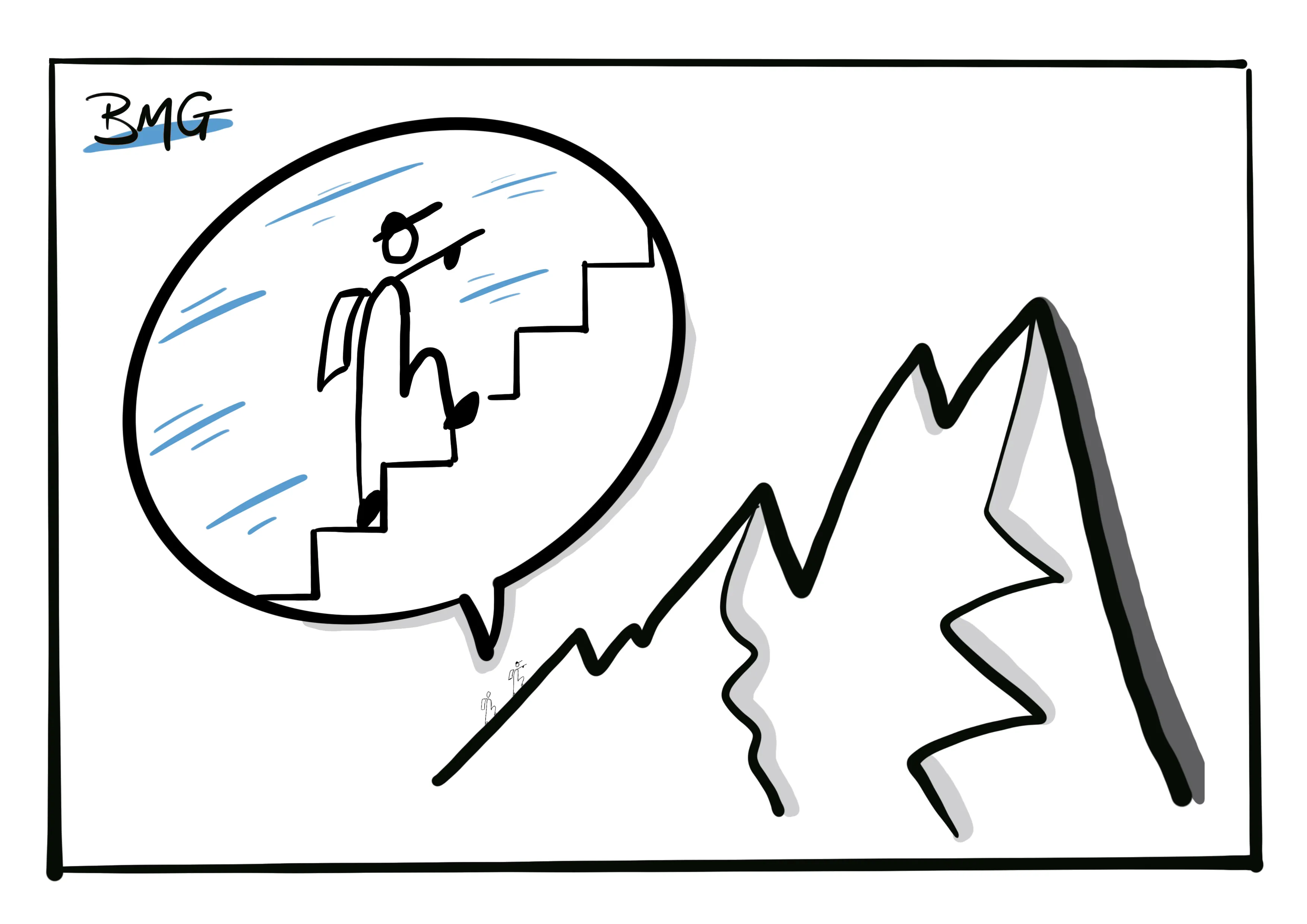
The alternative to grand, sweeping resolutions is almost embarrassingly simple: start small.
Commit to changes that feel manageable, modest even. Instead of aiming for massive results overnight, focus on incremental improvements, that little bit less, or little bit more.
Want to read more? Start with five pages a day.
Looking to get healthier? Drink one more glass of water each day and have at least one portion of fruit or vegetables.
Hoping to exercise? Begin with a 10-minute walk or jog. Dont count in miles, count in lamp-posts.
Giving up alcohol? Start with a smaller glass.
These small steps are powerful because they’re sustainable. They fit into our existing routines without overwhelming us.
Over time, they build momentum.
Each small win reinforces our belief in ourselves, creating a positive feedback loop that keeps us moving forward. These small wins should be celebrated! It will give us that shot of dopamine we crave to keep the habit going, making all of the effort worthwhile.
This approach mirrors the philosophy of kaizen, the Japanese concept of continuous improvement. Kaizen teaches us that consistent, small changes lead to significant long-term results.
It’s the small, daily habits that define our trajectory.
The Compound Effect of Progress
Imagine you decide to start exercising for just 10 minutes a day. Initially, it seems insignificant … 10 minutes barely feels like it could make a dent in your overall health.
But let’s break it down:
In Week One, you’ve exercised for 70 minutes. That’s over an hour of activity that you wouldn’t have done otherwise. You feel slightly more energised, but the results are subtle.
In a Month, those 10 minutes a day add up to about 5 hours of exercise. You begin to notice real changes. Your mood improves, you sleep better, and your stamina increases. That 10 minutes starts to feel like an easy habit, so you extend it to 15 minutes.
In a Year, your 10–15 minutes a day amount to roughly 60–90 hours of exercise. By now, this habit has had a profound impact. You’ve improved your cardiovascular health, lost some weight, built strength, and significantly reduced stress. The consistent effort has reshaped not just your body but also your confidence and discipline.
In Five Years, the ripple effect of this daily habit is transformational. You’ve likely avoided major health issues, increased your life expectancy, and gained more energy to spend on the things you love. What started as a modest 10 minutes a day has compounded into a massive shift in your overall well-being.
When we focus on small, achievable actions, their impact compounds over longer periods of time.
One healthier meal turns into a healthier week, which turns into a healthier lifestyle.
One kind word to a colleague improves your relationship, which strengthens team morale and enhances collaboration.
By setting the bar at an achievable height, we create the conditions for long-term success. Instead of burning out, we build up. Instead of rushing toward a distant goal, we enjoy the journey.
A quick pause
If this is helpful, the free guide goes deeper, and the newsletter brings ideas like this twice a week.
A Little Bit Less, A Little Bit More
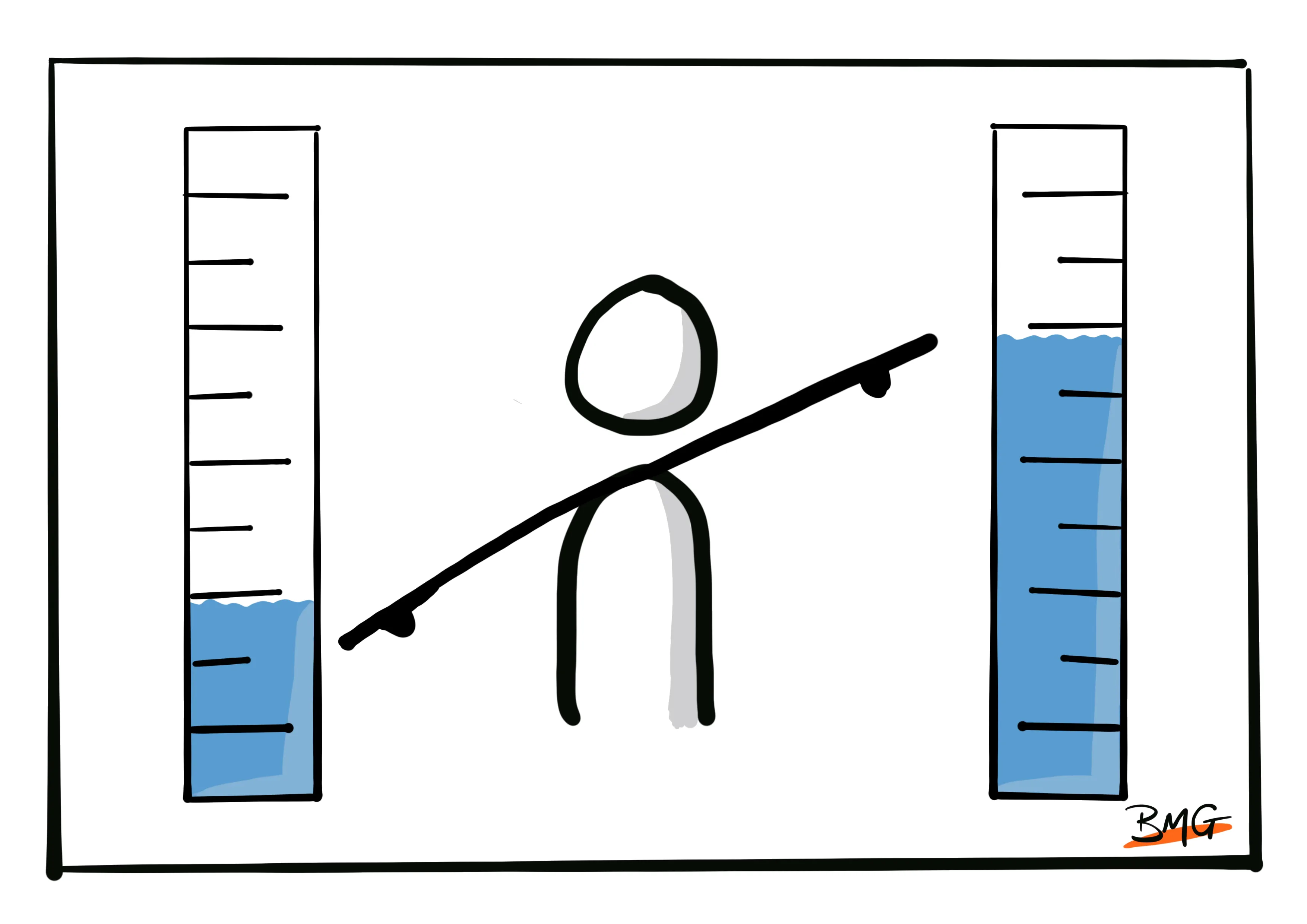
This philosophy can be applied to almost any goal. Consider the following:
Health and Wellness: Aim for a little bit less junk food, a little bit more movement.
Work and Productivity: Commit to a little bit less procrastination, a little bit more focus.
Relationships: Strive for a little bit less criticism, a little bit more empathy.
By focusing on incremental changes, we reduce the pressure on ourselves while making tangible progress.
These shifts may feel small, but their cumulative impact is transformative.
Small Wins Build Your Identity
Another benefit of starting small is the way it shapes our identity.
Every time we achieve a goal, no matter how small, we reinforce the belief that we’re capable of change. Each small step becomes a vote for the person we want to become.
For example, if your goal is to “become a reader,” committing to five minutes of reading a day sends a message to yourself: I’m someone who reads. Over time, this identity becomes ingrained, and the habit grows naturally.
An example I may offer is this; Last year I committed to writing - some of my early work was truly awful (in hindsight … and I am my own worst critic), but I kept at it keeping the articles small and to the point. I had already built a habit of writing small posts on LinkedIn and this new approach simply built on that existing habit.
Whilst this is still early days, it’s a habit I have continued and it got me to this article - who knows where it may lead.
My approach is highlighted in James Clear’s Atomic Habits, and reminds us that success isn’t about reaching a specific destination. It’s about becoming the kind of person who consistently moves in the direction of their goals.
When we focus on consistent actions, no matter how small, we are voting for the type of person we want to become: “I am someone who takes care of my health,” “I am someone who values learning,” or “I am someone who keeps promises to myself.”
Change begins not with the outcomes we desire but with the identity we cultivate along the way.
Habit Stacking
One of the most powerful tools in building this identity is habit stacking, a technique Clear emphasises as a way to embed new habits into our daily routines seamlessly.
Habit stacking involves pairing a new habit with an existing one, using the rhythm of our current routines to anchor the changes we want to make.
For example:
If you want to start journaling, you might stack it with your morning coffee: “After I brew my coffee, I will write three sentences in my journal.”
If you aim to build strength, you could stack bodyweight exercises onto brushing your teeth: “After I brush my teeth, I will do 10 squats.”
If your goal is to read more, you can pair it with getting into bed at night: “Once I get into bed, I will read one page of a book.”
Habit stacking works because it eliminates the friction of trying to introduce new behaviours into your day.
By attaching them to something familiar and automatic, you create a natural prompt that keeps the habit consistent. Over time, this consistency reinforces your identity, helping you embody the kind of person you aspire to be.
This shift - from focusing on outcomes to embedding behaviours -fundamentally changes how we approach our goals.
Instead of chasing distant results, we start living the values that drive them. The success isn’t just in achieving the goal; it’s in becoming the type of person who continuously aligns their actions with their aspirations.
This identity-driven approach is the foundation of meaningful and lasting change.
The Long Game
The beauty of small, achievable steps is that they allow us to play the long game (a concept often undervalued in a world obsessed with instant results).
The long game isn’t about quick wins or rapid transformations; it’s about building a foundation for enduring success.
By focusing on what we can realistically accomplish today, we sidestep the burnout and frustration that come with overambitious goals, and instead, we cultivate a habit of showing up consistently.
When our goals feel manageable, they stop being a source of stress and start becoming part of our rhythm.
The power of small steps lies in their sustainability … they integrate seamlessly into our lives without demanding drastic sacrifices. This makes the journey not only feasible but also enjoyable.
We’re not racing against an impossible deadline or punishing ourselves for falling short. Instead, we’re playing a game we can win, and that keeps us motivated.
Consistency Over Intensity
Lasting change doesn’t come from short bursts of intense effort but from the quiet, steady commitment to improvement.
It’s tempting to chase dramatic transformations: to overhaul our diet in a week, to master a new skill in a month, or to completely reorganise our lives overnight. But these grand gestures, though exciting, rarely stick.
They’re too big, too sudden, and too demanding.
The long game, on the other hand, is about progress that compounds over time. It’s about trusting that small, incremental improvements,done consistently,will lead to extraordinary outcomes.
Just as a tree doesn’t grow to its full height in a single season, neither do our efforts yield their best results immediately. But with patience and perseverance, the rewards become undeniable.
An Invitation to Simplify
As you think about your goals for the coming year, I encourage you to leave the crazy resolutions behind.
Instead, ask yourself: What’s one small, achievable step I can take today? Start there, and let the momentum build.
A little bit less doubt. A little bit more belief.
A little bit less noise. A little bit more focus.
That’s how change happens … one small, meaningful step at a time.
Remember, the path to extraordinary is walked with a thousand small steps, you’re doing great!

Barry Marshall-Graham
Executive coach and leadership advisor
Get the Difficult Conversations Guide
A practical resource for leaders who want to say the thing that needs saying, without burning bridges or avoiding the moment.
Keep reading
13 March 2026
The Weight of Unshared Doubt
Why senior leadership feels lonelier as you rise, and why confidence is often just unshared doubt.
9 March 2026
Why Your Best Advice is the Problem
Why the rush to fix others is actually a specific insecurity, and how to stop.
6 March 2026
The Weight in Your Voice
Your words carry more weight than you realise. Calm authority is often a matter of pace, tone, and the courage to name what matters.

2 March 2026
The Quiet Drift You Inherit
Inherited teams rarely collapse in a moment. They drift. Resetting standards isn't about being harsh, it's about clarity, dignity, and trust.
27 February 2026
When Everyone Owns It
Shared ownership sounds healthy, but when everyone owns a decision, nobody owns the decision. Clarity needs a single accountable owner.
23 February 2026
The Private Ledger of Leadership
Senior leaders carry a private ledger of risks, promises, and people. Naming that inner load isn't weakness, it's how you lead without breaking.

20 February 2026
The Avoided Conversation Is a Decision
The conversation you're avoiding isn't neutral. It's a decision to let the current pattern continue, and that decision shapes the culture.

16 February 2026
Calm Authority in Tense Rooms
Authority isn't volume or force. It's the ability to hold a tense room steady, name what matters, and set a clear boundary without heat.

13 February 2026
The First Small Tolerance
Standards rarely collapse in a moment. They slip through the first small tolerance you let pass, then the next one feels easier.

9 February 2026
The Decision Vacuum
When decision rights are unclear, every meeting becomes a referendum. Clarity is less about answers and more about who owns the call.
