Activate Your Inner Calm
4 August 2025
The Power of Your Parasympathetic Nervous System
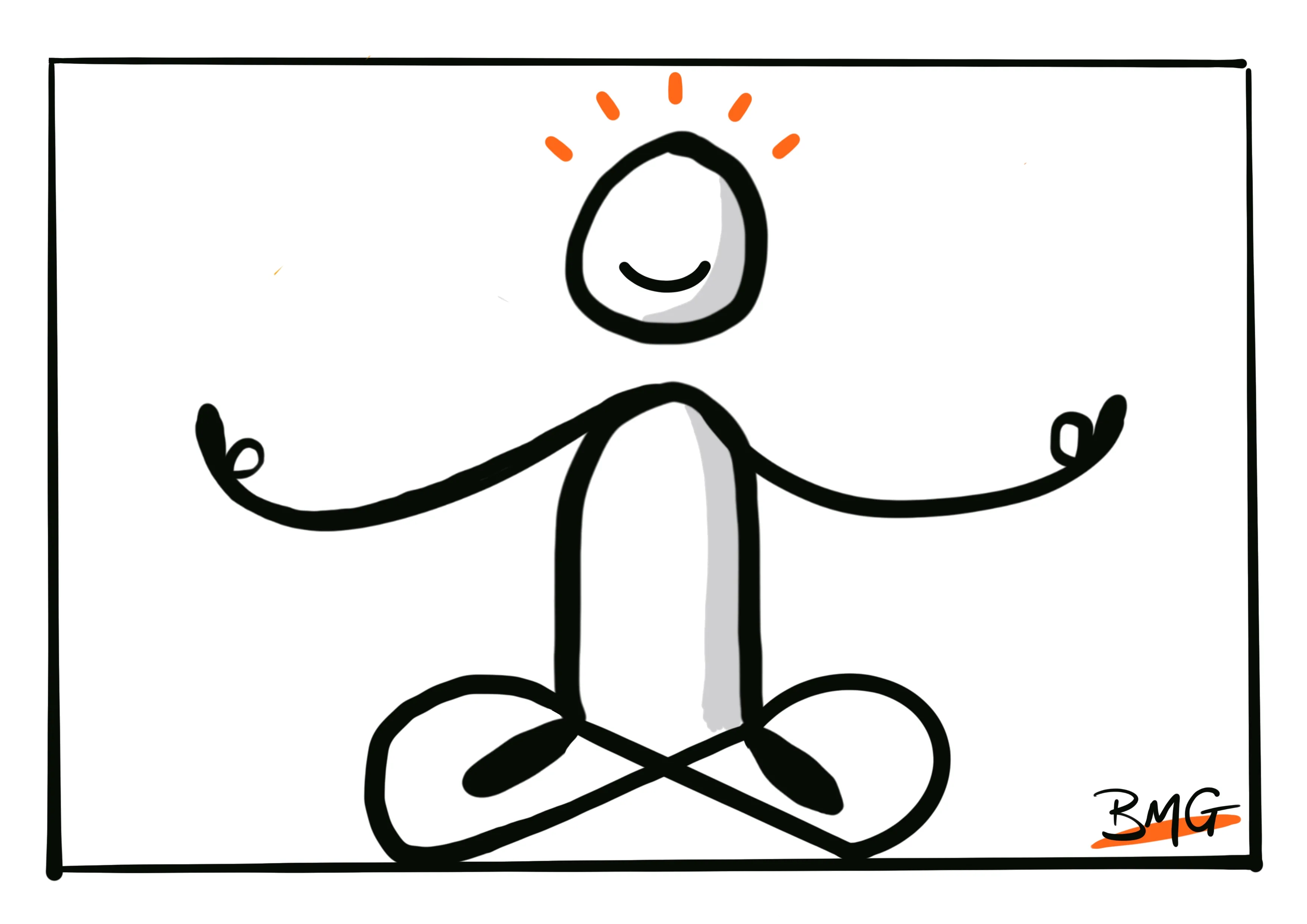
“Tension is who you think you should be. Relaxation is who you are.”
, Chinese Proverb
A common thread I hear in my line of work is that of the quiet pressure that never lets up. You know the type … you’re not in absolute crisis, but you’re not totally calm either.
Your shoulders stay tight. Your mind doesn’t stop. Even rest feels like another item on your to-do list.
It’s not just your workload creating this tension. It’s your nervous system running on overdrive.
That’s where your parasympathetic nervous system comes in.
Often overlooked, the parasympathetic nervous system is one of the most powerful tools we have for recovering presence and peace, often right in the middle of a busy day.
Understanding this system, and learning how to activate it will allow you to routinely reclaim control from the inside out.
Your Nervous System Explained (Very Briefly)
The human nervous system is split into two key branches: the sympathetic and parasympathetic nervous systems, both part of the autonomic nervous system that operates largely below conscious awareness.
The sympathetic nervous system is responsible for the “fight, flight, or freeze” response, it mobilises the body in times of stress or danger by increasing your heart rate, releasing adrenaline, and diverting as much energy as is needed to your muscles.
In contrast, the parasympathetic nervous system supports the “rest and digest” state, it slows your heart rate, promotes digestion, and enables the body to recover, heal, and restore balance.
Together, these two systems regulate our physiological state, toggling between activation and restoration to help us survive, adapt, and thrive.
Your nervous system is obviously very complex and cant be done justice in a couple of paragraphs … and I am certainly no expert … but let me try and explain why it worth knowing a little more.
Your Parasympathetic Nervous System
As mentioned above, your parasympathetic nervous system (PNS) is one half of your autonomic nervous system, your silent regulator that governs many of your body’s automatic functions.
Where the sympathetic nervous system prepares you for high-alert situations - speeding up the heart, tightening the muscles, releasing stress hormones - the parasympathetic system performs the opposite functions.
It’s your internal recovery mode, often summarised as “rest and digest.”
When your PNS is active, your body shifts into a restorative state: heart rate slows, breathing deepens, digestion resumes, and blood pressure lowers.
So think about that … when we activate our PNS, we are essentially creating the biological conditions for clarity, empathy, creativity, and connection.
This is the mode where we reflect more clearly, listen more deeply, and respond rather than react. It’s the physiological foundation for conscious leadership, thoughtful coaching, and sustainable performance.
Why It Matters
You know that you can’t operate well if your nervous system is stuck in survival mode.
When your sympathetic system dominates, even low-level stress can keep you locked in a reactive loop. Your body is tense, your mind races, and your emotional range narrows.
You may even find yourself defaulting to binary thinking (good/bad, win/lose, now/never) because your brain is prioritising short-term survival over long-term strategy.
This chronic state of alert comes at huge cost.
Over time, it decays patience, reduces cognitive flexibility, and damages relationships. Your body pays the price too: poor sleep, digestive issues, lowered immunity, and eventual burnout.
By contrast, when you build rhythms that stimulate the parasympathetic system (even in small, consistent ways) you increase your capacity to lead, create, and care.
You’re not just pausing to feel better in the moment; you’re laying the groundwork for resilience, regulation, and real sustainable performance.
Simple Practices to Activate Your PNS
The suggestions that follow are not about taking spa days or week-long retreats (although they can be very useful). These are small, science-backed habits that can shift your nervous system in real time and compound over time - and you can build them all into your routine with ease.
1. Deep, Slow Breathing
Try box breathing (inhale for 4, hold for 4, exhale for 4, hold for 4). This signals safety to the brain and slows heart rate, grounding you in the present moment.
2. Cold Exposure
Splash your face with cold water or take a brief cold shower. The vagus nerve (a key part of the PNS) is stimulated by cold, which can help downregulate stress responses.
3. Walking in Nature
Known as “green therapy” or forest bathing, even 10–15 minutes outside, especially in green space, calms the nervous system and improves mood and cognition.
4. Physical Touch and Safety Cues
Gentle touch, self-hugs, or even placing a hand over your heart can activate the PNS. So can eye contact, smiling, and safe connection with others.
5. Mindful Awareness
Practices like meditation, body scans, or mindful walking re-engage your body’s natural calming systems and build capacity for self-regulation.
6. Humming or Chanting
Sound vibrations stimulate the vagus nerve. Humming in the shower or chanting quietly can be surprisingly effective tools for calm.
7. Posture and Grounding
Sit upright with both feet flat, spine tall, shoulders relaxed. Posture tells the brain a story … one of presence, control, and intention.
A quick pause
If this is helpful, the free guide goes deeper, and the newsletter brings ideas like this twice a week.
A Personal Reflection
I used to think recovery was something you did after the hard work was done. But over time, and especially as I got a little older, I’ve learned that integrating calm isn’t something we should do in blocks or in sporadic spikes … it’s a life strategy that should be part of the foundation of our daily habits.
When I recently began to feel the early signs of burnout (tight shoulders, snappy reactions, poor sleep, bad decisions) it wasn’t another productivity hack I needed. It was nervous system regulation.
As soon as I reintroduced really simple practices and habits like meditation, regular breath-work, mindful lunchtime walks, and post-meeting pauses/stretches into my day, I’ve gotten back to much more focus and better presence for those that need me.
The fact I know this stuff, and still get caught out as work and life demands take precedence should tell you you’re not alone in this when it occurs.
What I can say however is that the change is real. And it’s sustainable when give the attention it needs to become habitual.
I cannot recommend it enough.
Reflection Prompts
When was the last time you truly felt calm and present at work? What contributed to that?
What habits or routines currently overstimulate your nervous system?
How could you introduce one “braking” moment into your day?
What would it look like to prioritise nervous system health as much as physical or mental fitness?
Who in your life models calm leadership, and what can you learn from them?
Where do you feel stress in your body? What’s your first signal?
How could your team benefit if you operated from a more regulated state?
Final Thoughts
Being calm is a competitive advantage.
Through the increasing noise of modern life, those who can regulate their state win. They win in wellbeing, clarity, influence and ultimately … performance.
The parasympathetic nervous system is not a passive tool, it’s a hidden superpower. Train it well, and you build a quieter, stronger foundation beneath everything you do.
Here’s the truth: the pressure isn’t going away. Deadlines, decisions, demands will keep coming. But your response doesn’t have to be dictated by them.
You don’t have to live in overdrive to be effective.
You don’t have to burn out to prove your worth.
You simply have to learn how to come back to yourself, nervous system first.
The fact is, people who stay grounded make better choices. Those who are calm create deeper trust and carry a kind of quiet presence that can shift the tone of an entire room.
So if you’re feeling scattered, reactive, or stretched thin … don’t just reach for another productivity hack.
Reach for your breath.
Regulate your state.
And remember: the most powerful transformations don’t always start with thinking differently. They begin with feeling safe enough to think at all. Period.
Don’t get caught out thinking that total calm is the opposite of ambition.
It isn’t.
Your inner calm is the container that lets your ambition flourish.
Remember, the path to extraordinary is walked with a thousand small steps, you’re doing great!
Small Steps, Giant Leaps is a reader-supported publication. To receive new posts and support my work, consider becoming a free or paid subscriber.
Your Small Steps
Isn’t the nervous system automatic? Can I really control it?
Yes … and no. While it’s automatic, research shows we can influence it through conscious habits like breathing, posture, and environment.
Action: Start with two minutes of slow, nasal breathing right now.
What if I don’t have time for long relaxation practices?
Good news - you don’t need them. Even micro-habits (like a pause between meetings) matter.
Action: Build a “reset breath” into your meeting transitions today.
Can this help others in my circle too?
Absolutely. When people regulate themselves, they co-regulate those around them. Calm is contagious.
Action: Try introducing a “settle moment” in your next gathering.
What’s the fastest way to calm down in the moment?
Slow exhales are your best friend. Try doubling the length of your out-breath to your in-breath.
Action: Inhale for 4, exhale for 8 - repeat for 1 minute when tension hits.
How do I make this stick?
Link it to existing habits. (Habit Stacking will help you here) Pair breath-work with coffee breaks. Walk while taking calls. Layer calm into life.
Action: Choose one anchor habit this week to pair with a PNS technique.
Are there tools that help track nervous system states?
Yes. Devices like HR/HRV monitors can help, but intuition is powerful too. Learn your cues.
Action: Take note when you feel anxious or calm - what triggered it?
Is this just about stress relief?
Not at all. It’s about performance, decision-making, presence, and longevity. As I said closing the article, calm is not the opposite of ambition, it’s what sustains it.
Action: Reframe “calm” as a life asset, not a soft trait.

Barry Marshall-Graham
Executive coach and leadership advisor
Get the Difficult Conversations Guide
A practical resource for leaders who want to say the thing that needs saying, without burning bridges or avoiding the moment.
Keep reading
30 January 2026
Conviction Without Force
How to hold a clear position without pushing, and why steady conviction builds more trust than intensity ever will over time.
26 January 2026
When Calm Carries Authority
Why credibility grows when you stop performing certainty and start leading with calm, consistency, and clear boundaries.
22 January 2026
The Meeting After the Meeting
Why real alignment only happens when truth can survive the room.
19 January 2026
The Quiet Tax of Avoidance
Why avoidance creates decision debt and quietly erodes standards.
16 January 2026
When Being Believed Too Quickly Becomes Dangerous
12 January 2026
The Subtle Art of Doing Nothing
Why doing nothing is rarely neutral, and often the riskiest choice of all
9 January 2026
The Cassandra Effect - When Being Right Isn’t Enough

5 January 2026
A New Year, Not a New You
Why big goals only work when they fit into real life
22 December 2025
Thank You!
A Small Pause Before Christmas

19 December 2025
If You Give the Answers, You’ll Create a Queue
