Becoming the Observer
9 June 2025
Cultivating Awareness Without Judgement
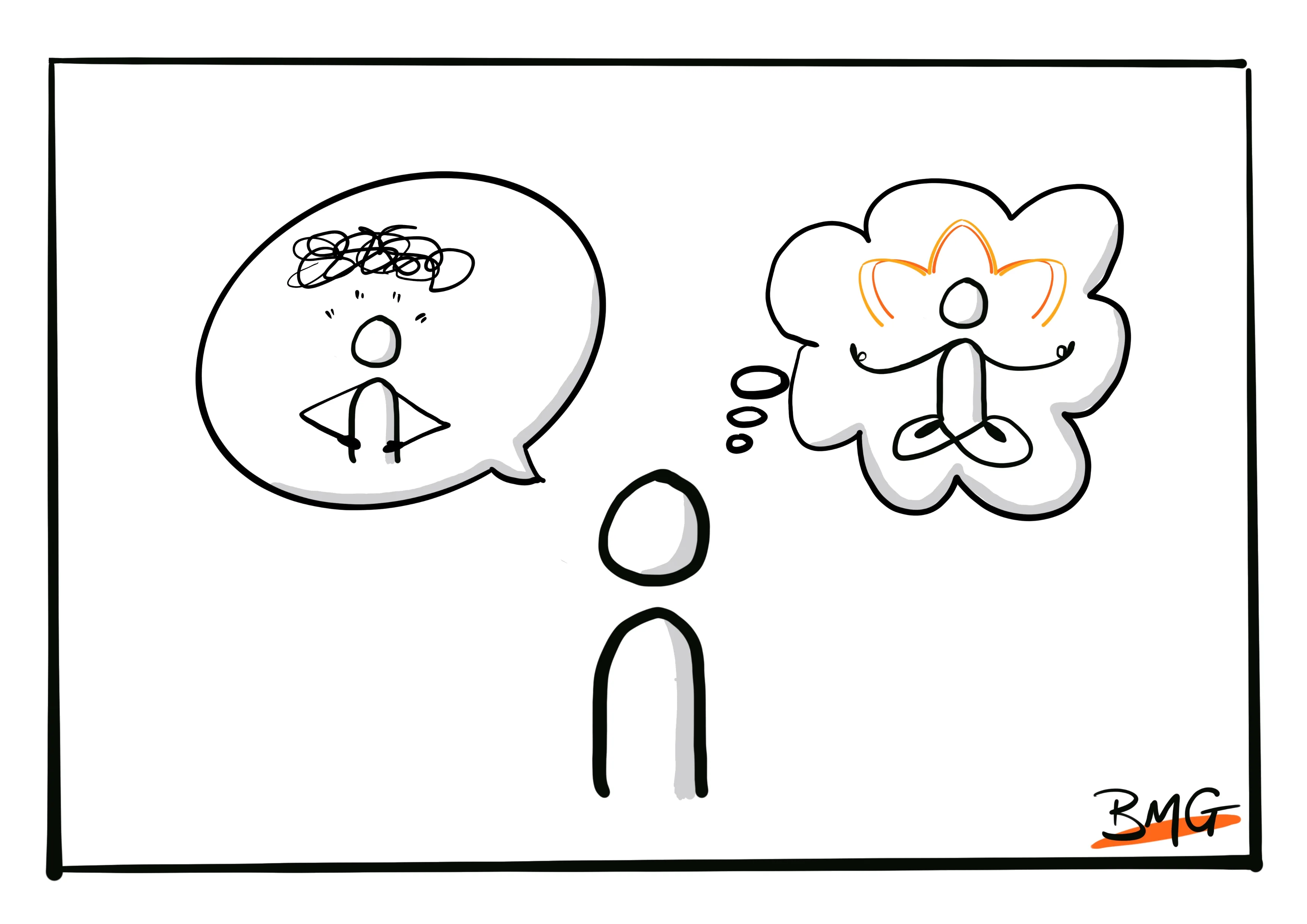
“Between stimulus and response, there is a space. In that space is our power to choose our response.”
, Viktor Frankl
There’s a moment, sometimes so brief it often passes unnoticed, a moment between something happening and how we respond to it.
Someone interrupts you.
You get a message you didn’t expect.
A colleague speaks over you in a meeting.
A relative, a colleague, a friend lets you down.
In that moment, you either react, or you observe.
It’s in that gap (in the breath between stimulus and response) that self governance begins.
Not governance of others, but of self.
This article is about that space … that still point.
The shift from being in the moment to seeing it.
It’s about becoming the observer, without judgement, without drama and without urgency.
Awareness (it turns out) is the foundation of choice.
From Actor to Witness
When we’re caught in the moment (especially under stress) we become the actor.
Fully immersed.
Scripts running.
Emotions driving.
Narratives spinning.
But in mindfulness, and in Zen, there is a practice of stepping back.
The practice isn’t to escape the moment, but to see it clearly.
To become the witness of your thoughts, rather than the actor in them.
This isn’t detachment in the cold sense, more centred presence.
You’re still in the room, but no longer ruled by the noise inside it.
“You are not your thoughts. You are the awareness of those thoughts.”
The Power of Non-Judgemental Awareness
One of the great paradoxes of personal development is this:
The more we try to change ourselves through force or judgement, the more we entrench the habits we want to escape.
But when we observe gently, without rushing to fix, condemn, or justify, something powerful happens.
We create space.
And in that space, options appear.
Clarity emerges.
Energy returns.
This is where growth begins … with permission to see everything clearly.
“Judgement closes. Awareness opens.”
Awareness Precedes Choice
In coaching, there’s a simple but profound truth:
You can’t change what you can’t see.
Much of our reactivity (anger, defensiveness, blame, avoidance) comes not from conscious decision, but from unconscious repetition.
We think we’re choosing.
But really, we’re reacting.
Awareness is what interrupts the loop.
When we observe without judging, we loosen the grip of automatic patterns.
We go from being driven by the moment to being aware in it, and from there, we can choose something better.
The Taoist View: Be Like Water
Taoist philosophy doesn’t ask us to strive or fight, it invites us to flow.
To move through life as water does … adaptable, clear, gentle, but persistent.
To hold space for the world, but not be flooded by it.
When you’re the observer, you become like water:
You notice turbulence, but don’t absorb it.
You adapt without losing your essence.
You move around obstacles rather than through sheer force.
This isn’t weakness. It’s strength without tension.
Presence without pressure.
“The soft overcomes the hard. The still overcomes the restless.”
, Lao Tzu
A quick pause
If this is helpful, the free guide goes deeper, and the newsletter brings ideas like this twice a week.
When I Forgot to Pause
There have been moments, very recent ones in fact, when I’ve forgotten to pause.
When I’ve allowed emotion to speak before reflection.
When my response was louder than it needed to be, because I wasn’t grounded in awareness.
I often find it’s periods of challenge or stress, when tiredness creeps in and “System 1 Thinking” takes over when I miss the opportunity to pause.
And that, to me at least, is the work.
Take a deep breath.
Create a lingering pause.
Anything to take an opportunity of seeing what’s happening in me, not just around me.
And in those moments, something subtle shifts.
Instead of being pulled into reaction, I return to observation.
And I know from experience, that’s where my power lives.
Reflection Prompts - Practising the Pause
What situations trigger your reactivity?
What emotions are you most likely to judge or suppress rather than observe?
How do you experience the shift between being in the moment and seeing it?
Where in your life would more gentle observation create space?
What does it mean to live in awareness, rather than urgency?
Final Thought
In a world of noise, pressure, and expectation, it’s tempting to move fast.
To fix. To answer. To act.
But the wisest leaders, the most grounded coaches, the most peaceful souls … they don’t rush to speak … they learn to observe.
And in observing, they create space.
Space for grace.
Space for choice.
Space for something better to emerge.
So become the observer.
Return to yourself … to the moment … to what matters.
Because In that space of stillness and clarity, you will find your power again.
Remember, the path to extraordinary is walked with a thousand small steps, you’re doing great!
Your Small Steps
Isn’t observation just avoidance in disguise?
No. Observation is engaged stillness. It’s not about stepping away from responsibility, it’s about stepping into it with clarity and grounded presence.
Action: In your next emotionally charged moment, don’t act. Just name what’s happening inside you … “I notice frustration,” “I feel rushed.”
Then breathe.
What if I notice something I don’t like about myself?
That’s the gift. Observation is about awareness. Self-kindness opens the door to change. Judgement slams it shut.
Action: Journal one pattern or reaction you’ve judged harshly. Now write about it as an observer, without labels, just facts, tone, energy.
How can I practise this in busy, high-pressure environments?
Mindfulness requires intention. Even 10 seconds of pause can recalibrate your system. Awareness is portable.
Action: Set one “anchor moment” tomorrow (before a meeting, after a notification, at the end of a call) to pause, observe, and reset.
Can this help me support others who are reactive or emotional?
Absolutely. When you hold calm, non-judgemental space for others, you help them access their own awareness. Leadership presence is contagious.
Action: The next time someone reacts emotionally, say less. Hold eye contact. Breathe slowly. Model the stillness you want to invite.
Is this a leadership tool or a personal tool?
It’s both. Self-awareness is foundational to decision-making, communication, and trust. The more you observe your own patterns, the more wisely you lead.
Action: Ask yourself at day’s end: Where today did I react? Where did I observe? What did each create?

Barry Marshall-Graham
Executive coach and leadership advisor
Get the Difficult Conversations Guide
A practical resource for leaders who want to say the thing that needs saying, without burning bridges or avoiding the moment.
Keep reading
13 March 2026
The Weight of Unshared Doubt
Why senior leadership feels lonelier as you rise, and why confidence is often just unshared doubt.
9 March 2026
Why Your Best Advice is the Problem
Why the rush to fix others is actually a specific insecurity, and how to stop.
6 March 2026
The Weight in Your Voice
Your words carry more weight than you realise. Calm authority is often a matter of pace, tone, and the courage to name what matters.

2 March 2026
The Quiet Drift You Inherit
Inherited teams rarely collapse in a moment. They drift. Resetting standards isn't about being harsh, it's about clarity, dignity, and trust.
27 February 2026
When Everyone Owns It
Shared ownership sounds healthy, but when everyone owns a decision, nobody owns the decision. Clarity needs a single accountable owner.
23 February 2026
The Private Ledger of Leadership
Senior leaders carry a private ledger of risks, promises, and people. Naming that inner load isn't weakness, it's how you lead without breaking.
20 February 2026
The Avoided Conversation Is a Decision
The conversation you're avoiding isn't neutral. It's a decision to let the current pattern continue, and that decision shapes the culture.

16 February 2026
Calm Authority in Tense Rooms
Authority isn't volume or force. It's the ability to hold a tense room steady, name what matters, and set a clear boundary without heat.

13 February 2026
The First Small Tolerance
Standards rarely collapse in a moment. They slip through the first small tolerance you let pass, then the next one feels easier.
9 February 2026
The Decision Vacuum
When decision rights are unclear, every meeting becomes a referendum. Clarity is less about answers and more about who owns the call.
