Conviction Without Force
30 January 2026
How to hold a clear position without pushing, and why steady conviction builds more trust than intensity ever will over time.
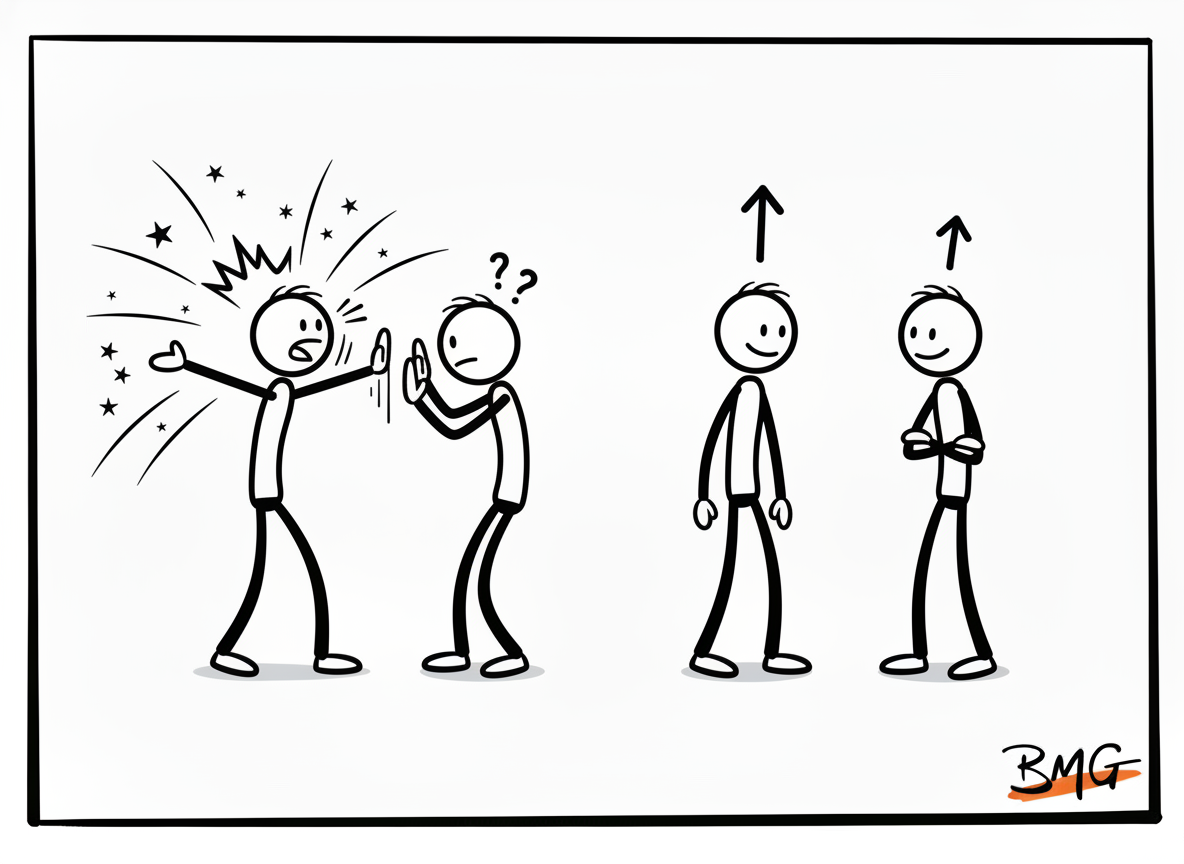
Most senior leaders know the feeling of pushing for agreement and watching the energy drop. You can feel yourself carrying the room. It rarely works.
‘People follow the person who is steady, not the person who is loud.’
Conviction without force is a quiet kind of power. It is the ability to hold a clear position while staying open to what you might not yet know. It does not retreat. It does not push. It stays calm.
You can see it in the way a leader handles challenge. They do not wince. They do not retaliate. They listen, then restate the direction with respect.
It also shows up in small moments:
- The pause before answering a hard question.
- The willingness to say ‘I need to think’ without losing credibility.
- The calm repetition of a decision when the room tries to reopen it.
This is not softness. It is control without control theatre.
Questions to consider: Where do you tighten your language because you want to be believed? What would change if you trusted your own pace? Which decision needs you to be clear, not convincing?
Your conviction does not need volume. It needs steadiness, and a willingness to let others adjust to the clarity you bring.
The path to extraordinary is walked with a thousand small steps, you’re doing great!

Barry Marshall-Graham
Executive coach and leadership advisor
Get the Difficult Conversations Guide
A practical resource for leaders who want to say the thing that needs saying, without burning bridges or avoiding the moment.
Keep reading
13 March 2026
The Weight of Unshared Doubt
Why senior leadership feels lonelier as you rise, and why confidence is often just unshared doubt.
9 March 2026
Why Your Best Advice is the Problem
Why the rush to fix others is actually a specific insecurity, and how to stop.
6 March 2026
The Weight in Your Voice
Your words carry more weight than you realise. Calm authority is often a matter of pace, tone, and the courage to name what matters.

2 March 2026
The Quiet Drift You Inherit
Inherited teams rarely collapse in a moment. They drift. Resetting standards isn't about being harsh, it's about clarity, dignity, and trust.
27 February 2026
When Everyone Owns It
Shared ownership sounds healthy, but when everyone owns a decision, nobody owns the decision. Clarity needs a single accountable owner.
23 February 2026
The Private Ledger of Leadership
Senior leaders carry a private ledger of risks, promises, and people. Naming that inner load isn't weakness, it's how you lead without breaking.

20 February 2026
The Avoided Conversation Is a Decision
The conversation you're avoiding isn't neutral. It's a decision to let the current pattern continue, and that decision shapes the culture.

16 February 2026
Calm Authority in Tense Rooms
Authority isn't volume or force. It's the ability to hold a tense room steady, name what matters, and set a clear boundary without heat.

13 February 2026
The First Small Tolerance
Standards rarely collapse in a moment. They slip through the first small tolerance you let pass, then the next one feels easier.
9 February 2026
The Decision Vacuum
When decision rights are unclear, every meeting becomes a referendum. Clarity is less about answers and more about who owns the call.
