Forget long-term plans. Start running smart experiments
30 May 2025
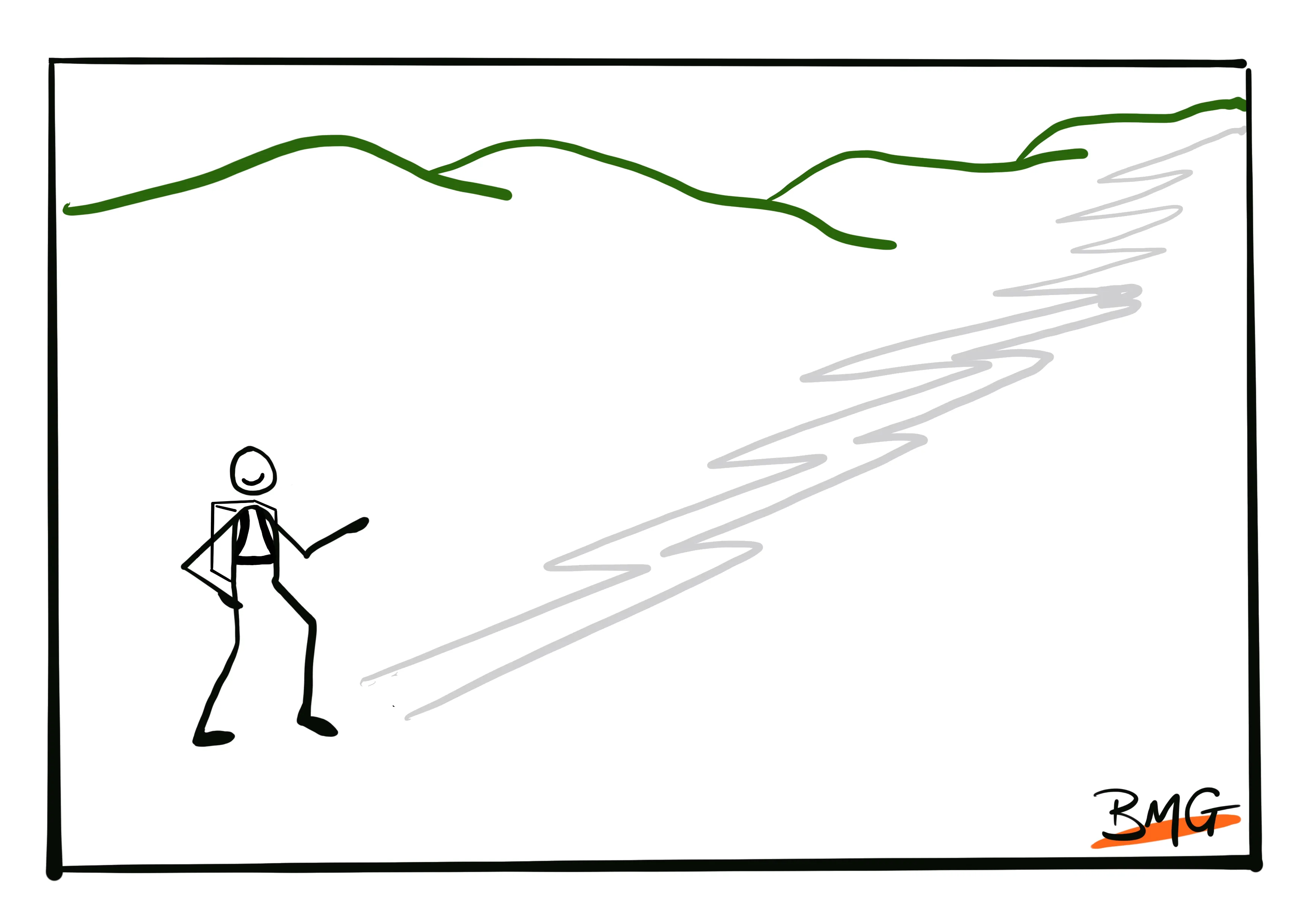
“I have not failed. I’ve just found 10,000 ways that won’t work.”
, Thomas Edison
Everything you’ve been told about long-term goals is wrong.
The most successful people don’t follow a straight path … they zigzag.
They set a direction, not a destination.
They take a step, learn something, (maybe fail a little), and adjust.
They move, notice, pivot. Again and again.
I track mine in what I call an Experiments Log - an idea I picked up from Daniel Pink’s “Book of Experiments” idea. He, in turn, credits David Epstein (author of Range) for popularising this approach: run small, real-world tests to figure out where you thrive.
No need for a 5-year plan. Try a 5-day one.
Here’s how the zigzag method works:
Pick a direction you care about. (Not a finish line. A feeling. A value. A domain.)
Take the next smart step (not the perfect one).
Write it down. What did it teach you?
Adjust and repeat. (Stay open to the zag to your zig).
Careers aren’t ladders.
Growth isn’t linear.
Progress doesn’t need a fixed path, it needs curiosity, and motion.
The magic isn’t in sticking to the plan, it’s in learning/failing fast, and course-correcting faster.
Remember, the path to extraordinary is walked with a thousand small steps, you’re doing great!

Barry Marshall-Graham
Executive coach and leadership advisor
Get the Difficult Conversations Guide
A practical resource for leaders who want to say the thing that needs saying, without burning bridges or avoiding the moment.
Keep reading
30 January 2026
Conviction Without Force
How to hold a clear position without pushing, and why steady conviction builds more trust than intensity ever will over time.
26 January 2026
When Calm Carries Authority
Why credibility grows when you stop performing certainty and start leading with calm, consistency, and clear boundaries.
22 January 2026
The Meeting After the Meeting
Why real alignment only happens when truth can survive the room.
19 January 2026
The Quiet Tax of Avoidance
Why avoidance creates decision debt and quietly erodes standards.
16 January 2026
When Being Believed Too Quickly Becomes Dangerous
12 January 2026
The Subtle Art of Doing Nothing
Why doing nothing is rarely neutral, and often the riskiest choice of all
9 January 2026
The Cassandra Effect - When Being Right Isn’t Enough

5 January 2026
A New Year, Not a New You
Why big goals only work when they fit into real life
22 December 2025
Thank You!
A Small Pause Before Christmas

19 December 2025
If You Give the Answers, You’ll Create a Queue
