The Weight of Unshared Doubt
13 March 2026
Why senior leadership feels lonelier as you rise, and why confidence is often just unshared doubt.
When you reach a certain level of seniority, the feedback loops begin to thin out.
People stop challenging your bad ideas. They stop giving you the unfiltered truth about how a project is really going. Instead, they start looking at your face to see how they should feel about a crisis. The isolation at the top isn’t just about having a private office or a different pay grade; it’s about the psychological weight of knowing that your uncertainty is now a liability for everyone else.
Most senior leaders I coach carry a private ledger of doubt. They aren’t worried they can't do the job—they have spent decades proving they can. They are worried about the one decision they don't see coming. They are worried about the gap between what they project in the boardroom and what they actually feel when they close their laptop at night.
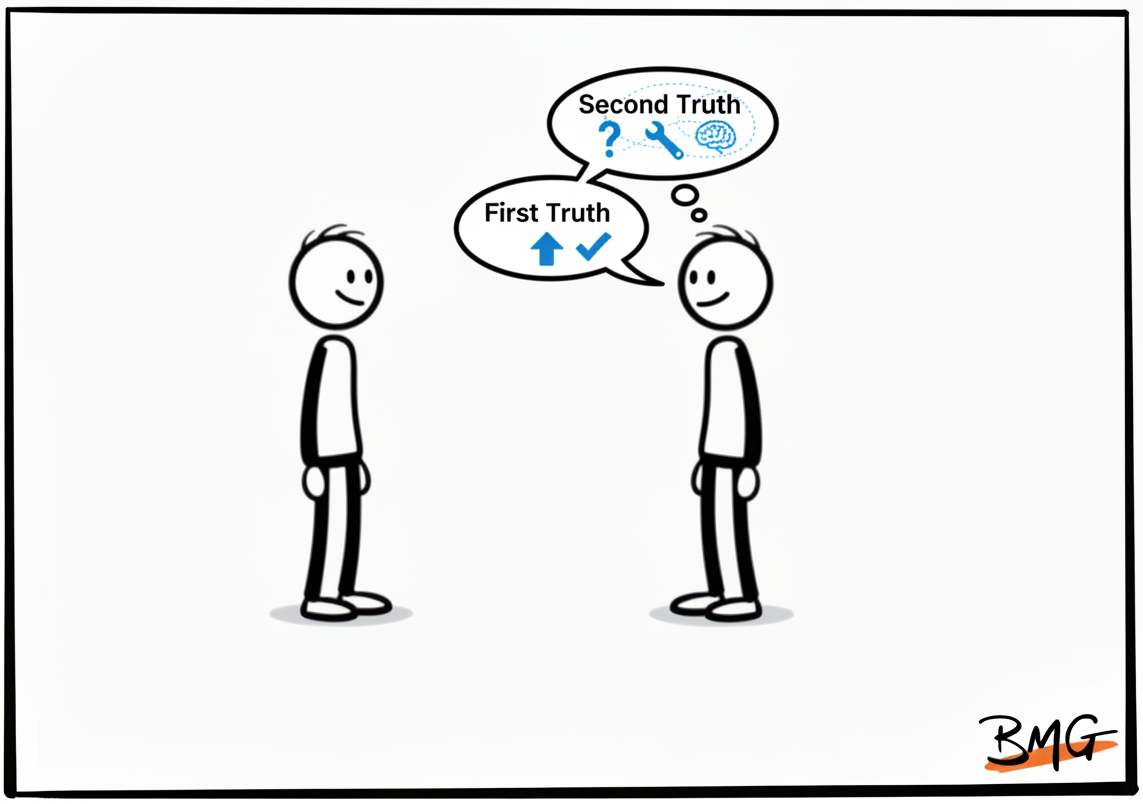
We call this playing the First Truth. The First Truth is performative. It is polite, structured, and designed entirely for social harmony and the appearance of unshakeable consensus. In the First Truth, you always know the plan and you never show fear.
But the Second Truth is what you whisper in the corridor or over the kettle. It’s where the real objections, the scepticism, and the deep, unshared doubts live. When you carry the Second Truth alone, the drift doesn’t just happen in your team; it happens in your own self-trust. You start to confuse being the answer with being the solution.
Confidence, at this level, is rarely about being certain. It is about being comfortable with the doubt while still having the capability to move the room forward. The moment you stop trying to hide the doubt from yourself, you can actually start to manage it. You stop fighting a ghost, and you start leading.
Questions to sit with: What uncertainty am I pretending not to hold? Where am I confusing 'having the answer' with 'leading the team'? What would happen if I treated my doubt as a tool, rather than a secret?
The path to extraordinary is walked with a thousand small steps, you’re doing great!

Barry Marshall-Graham
Executive coach and leadership advisor
Get the Difficult Conversations Guide
A practical resource for leaders who want to say the thing that needs saying, without burning bridges or avoiding the moment.
Keep reading
9 March 2026
Why Your Best Advice is the Problem
Why the rush to fix others is actually a specific insecurity, and how to stop.
6 March 2026
The Weight in Your Voice
Your words carry more weight than you realise. Calm authority is often a matter of pace, tone, and the courage to name what matters.

2 March 2026
The Quiet Drift You Inherit
Inherited teams rarely collapse in a moment. They drift. Resetting standards isn't about being harsh, it's about clarity, dignity, and trust.
27 February 2026
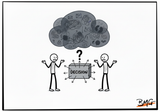
When Everyone Owns It
Shared ownership sounds healthy, but when everyone owns a decision, nobody owns the decision. Clarity needs a single accountable owner.
23 February 2026
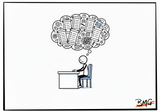
The Private Ledger of Leadership
Senior leaders carry a private ledger of risks, promises, and people. Naming that inner load isn't weakness, it's how you lead without breaking.
20 February 2026
The Avoided Conversation Is a Decision
The conversation you're avoiding isn't neutral. It's a decision to let the current pattern continue, and that decision shapes the culture.

16 February 2026
Calm Authority in Tense Rooms
Authority isn't volume or force. It's the ability to hold a tense room steady, name what matters, and set a clear boundary without heat.

13 February 2026
The First Small Tolerance
Standards rarely collapse in a moment. They slip through the first small tolerance you let pass, then the next one feels easier.
9 February 2026
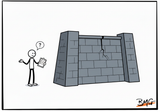
The Decision Vacuum
When decision rights are unclear, every meeting becomes a referendum. Clarity is less about answers and more about who owns the call.

6 February 2026
The Standard You Walk Past
How small exceptions become the quiet rule, and why leaders must name the slip before it sets the team's real expectations.