Efficiency vs. Effectiveness
2 May 2025
Doing Things Right vs. Doing the Right Things
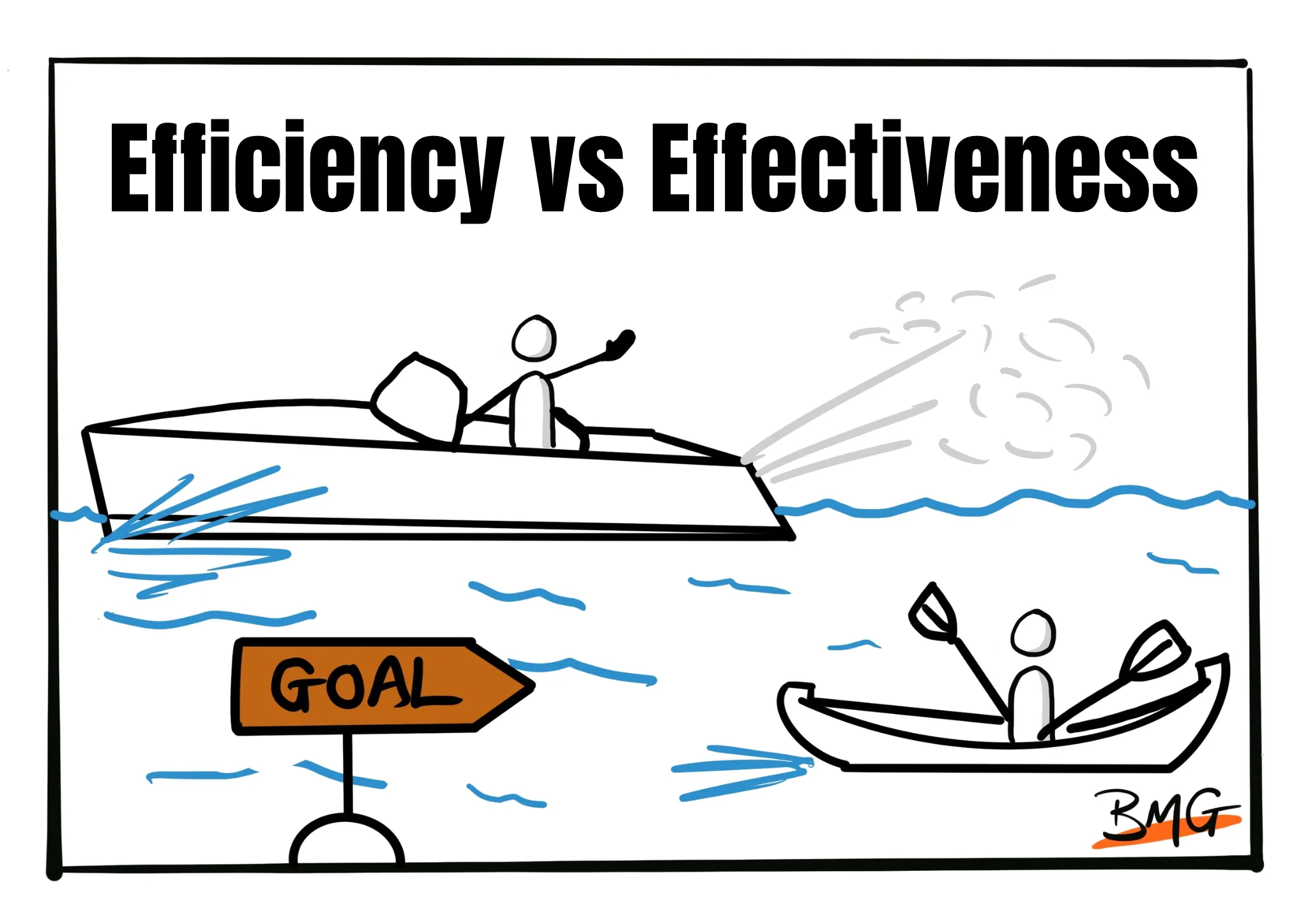
“Efficiency is doing things right; effectiveness is doing the right things.”
, Peter Drucker
In our pursuit of productivity, we often equate being busy with being effective. We tick off tasks, clear inboxes, and attend meetings, all in the name of getting things done. But are we focusing on the right tasks?
Are we making meaningful progress, or just moving for movement’s sake?
Understanding the distinction between efficiency and effectiveness is crucial.
Efficiency is doing tasks in the best possible manner with the least waste of time and effort.
Effectiveness is about doing the right tasks that align with our goals and values.
Striking the right balance between the two can transform our work sure, but more importantly … our overall sense of purpose and fulfilment.
When Efficiency Has Led Me Astray
I remember a period when I used to be laser-focused on clearing my to-do list. I’m sure we have all experienced something similar.
Each completed task gave me a sense of accomplishment.
However, I began to notice that despite my “busyness”, I wasn’t making any meaningful progress on my longer-term goals.
When I reflected, I realised I was prioritising tasks based on ease and immediacy as opposed to importance. I hadn’t stopped to consider the value of the things I was doing - busy being busy is a term I often use, and this was a classic example of that behaviour.
I was efficient but not effective.
This insight prompted me to reevaluate my priorities and align my daily actions with my broader objectives. I now regularly push back on asks and really dig into the true value of whats being asked of me and my teams.
Then, when I’ve drilled as deep as I can, I turn my mind to the most efficient path to deliver on the pure value I found there.
Efficiency: The Art of Doing Things Right
Efficiency is found in optimising processes, reducing waste, and maximising output … using the right tools for the job. As a fully paid up member of “Club Lean” - efficiency is my Kung Fu!
It’s the realm of checklists, time management, and streamlined workflows. An efficient person or team can accomplish tasks quickly and with minimal resources.
However, efficiency without direction can lead to a flurry of activity that doesn’t necessarily contribute to meaningful outcomes.
It’s possible to be highly efficient at tasks that may not matter in the grand scheme of things - think about the eighty side of the 80/20 rule here.
Effectiveness: The Discipline of Doing the Right Things
Effectiveness requires clarity of purpose and intentionality.
It’s identifying which tasks will have the most significant impact and aligning actions with strategic objectives. Effective individuals and teams prioritise tasks that drive progress toward their goals.
While effectiveness might sometimes mean doing fewer tasks, it ensures that the tasks undertaken are the ones that really matter.
Think depth over breadth, quality over quantity.
This is the twenty side of the 80/20 rule.
Balancing Efficiency and Effectiveness
Achieving a balance between efficiency and effectiveness involves:
Setting Clear Goals: Understand what you aim to achieve in the long term.
Prioritising Tasks: Focus on tasks that align with your goals.
Optimising Processes: Once you’ve identified the right tasks, find the best ways to execute them.
Regular Reflection: Periodically assess whether your actions are leading you toward your goals.
By ensuring that we’re doing the right things (effectiveness) and doing them right (efficiency), we can maximise our impact and satisfaction.
Win/Win in my view - as always the key is balance.
A quick pause
If this is helpful, the free guide goes deeper, and the newsletter brings ideas like this twice a week.
Reflection Prompts
Are your daily tasks aligned with your long-term goals?
Are you prioritising tasks based on importance or ease?
Do you regularly assess the impact of your work?
How can you adjust your workflow to focus more on effectiveness?
Final Thoughts
In the on-going quest for ultimate productivity, it’s tempting to equate busyness with progress.
We fill our calendars, clear our inboxes, and race from task to task, believing that movement must mean momentum.
But true productivity isn’t about doing more.
It’s about doing what matters.
Efficiency has its place - it allows us to move through our work with grace and skill.
Yet without clarity of purpose, even the most efficient actions can leave us feeling strangely hollow, as though we’ve won a race that didn’t need running.
Effectiveness demands something more.
It asks us to slow down long enough to ask the harder questions:
Where am I really trying to go?
Which efforts truly move me closer?
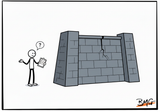
Am I climbing the right wall - or just climbing quickly?
When we align action with purpose (when we choose effectiveness first, and layer efficiency on top) we transform the nature of our work.
Tasks become contributions.
Movements become meaningful.
Achievement becomes something far deeper than a completed checklist, it becomes a reflection of intention lived out in practice.
In the end, it’s not the volume of what we complete that defines us.
It’s the value of what we commit to.
Choose wisely. Move purposefully.
And remember: busyness fades, but meaningful progress endures.
Remember, the path to extraordinary is walked with a thousand small steps, you’re doing great!
Your Small Steps
Can I be efficient without being effective?
Yes. You can execute tasks quickly and with minimal resources, but if those tasks don’t contribute to your overarching goals, you’re not being effective.
Is effectiveness more important than efficiency?
Effectiveness ensures you’re focusing on the right tasks. Once you’ve identified those, efficiency helps you execute them well. Both are important, but effectiveness should come first.
How can I improve my effectiveness?
Start by clarifying your goals. Then, evaluate your tasks to ensure they’re aligned with those goals. Regular reflection and adjustment are key.
What tools can help balance efficiency and effectiveness?
Time-blocking, prioritisation matrices (like the Eisenhower Matrix), and regular goal-setting sessions can help maintain this balance.
Why is it so easy to focus on efficiency rather than effectiveness?
Efficiency feels immediately rewarding … it’s visible, measurable, and often praised. Effectiveness requires stepping back, reflecting, and sometimes questioning whether the task itself should even be done. It demands more intention and courage, which is why it’s often overlooked in the rush of daily activity.
How can I tell if I’m being busy instead of being effective?
If you’re completing many tasks but not seeing meaningful progress toward your bigger goals, you’re likely trapped in busyness. Reflect regularly: Are my actions moving me closer to what really matters, or am I simply staying active to feel productive?
What’s a quick daily habit to ensure I stay focused on effectiveness?
Begin each day by identifying your one or two most important tasks … the ones that, if completed, would make the biggest difference. Focus your energy there before moving on to lower-impact activities.
Can a team be efficient but still ineffective?
Absolutely. Teams can operate with impressive speed and precision, but if their efforts aren’t aligned with strategic goals or customer needs, their efficiency becomes meaningless. True leadership ensures that teams are pointed towards effectiveness first, and efficiency second.

Barry Marshall-Graham
Executive coach and leadership advisor
Get the Difficult Conversations Guide
A practical resource for leaders who want to say the thing that needs saying, without burning bridges or avoiding the moment.
Keep reading
13 March 2026
The Weight of Unshared Doubt
Why senior leadership feels lonelier as you rise, and why confidence is often just unshared doubt.
9 March 2026
Why Your Best Advice is the Problem
Why the rush to fix others is actually a specific insecurity, and how to stop.
6 March 2026
The Weight in Your Voice
Your words carry more weight than you realise. Calm authority is often a matter of pace, tone, and the courage to name what matters.

2 March 2026
The Quiet Drift You Inherit
Inherited teams rarely collapse in a moment. They drift. Resetting standards isn't about being harsh, it's about clarity, dignity, and trust.
27 February 2026
When Everyone Owns It
Shared ownership sounds healthy, but when everyone owns a decision, nobody owns the decision. Clarity needs a single accountable owner.
23 February 2026
The Private Ledger of Leadership
Senior leaders carry a private ledger of risks, promises, and people. Naming that inner load isn't weakness, it's how you lead without breaking.
20 February 2026
The Avoided Conversation Is a Decision
The conversation you're avoiding isn't neutral. It's a decision to let the current pattern continue, and that decision shapes the culture.

16 February 2026
Calm Authority in Tense Rooms
Authority isn't volume or force. It's the ability to hold a tense room steady, name what matters, and set a clear boundary without heat.

13 February 2026
The First Small Tolerance
Standards rarely collapse in a moment. They slip through the first small tolerance you let pass, then the next one feels easier.
9 February 2026
The Decision Vacuum
When decision rights are unclear, every meeting becomes a referendum. Clarity is less about answers and more about who owns the call.
