Have You Found Your Happiness Advantage?
5 May 2025
Why Positivity Isn’t a Perk. It’s a Performance Strategy.
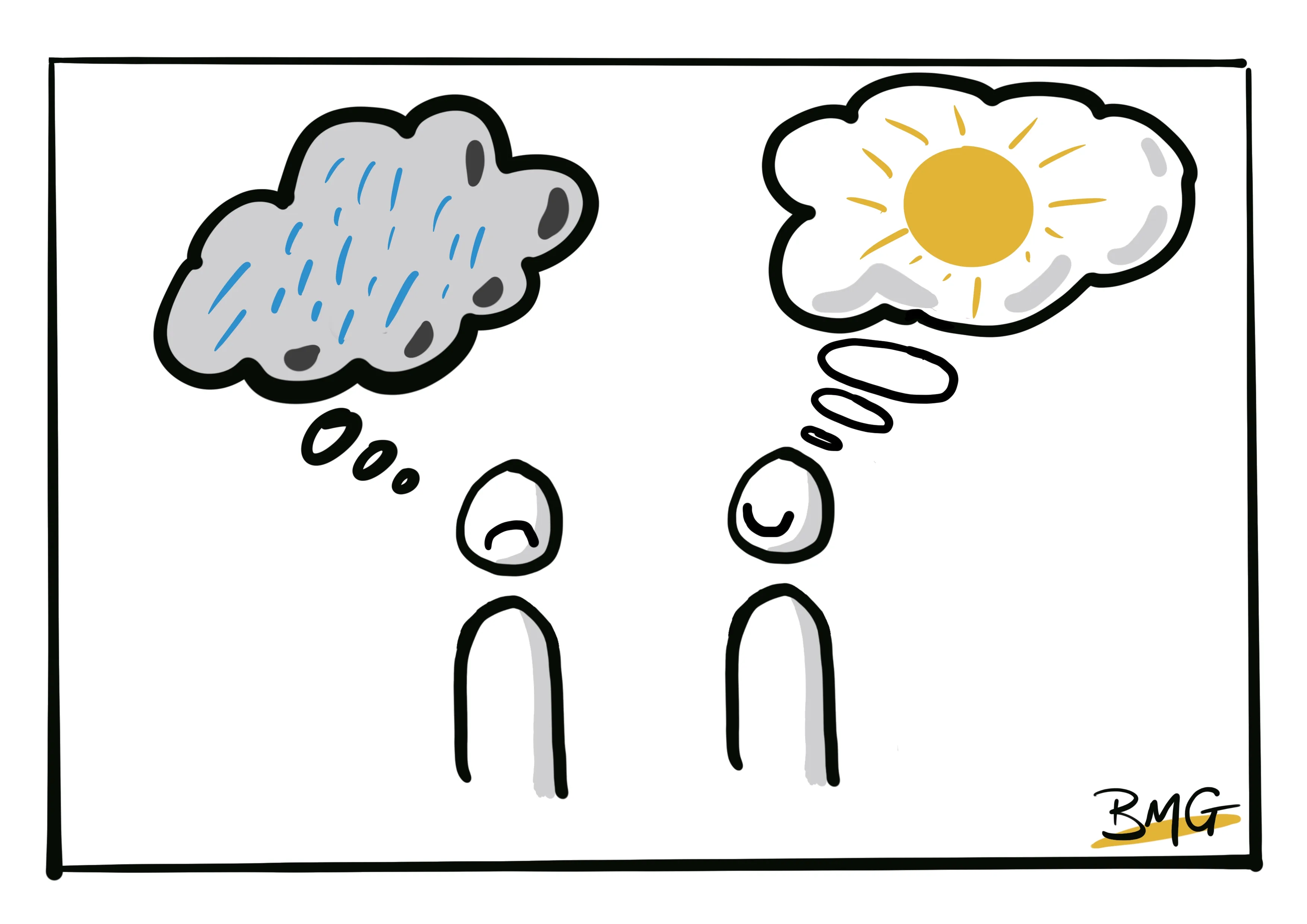
“Happiness is not the belief that we don’t need to change; it’s the realisation that we can.”
, Shawn Achor
I think we have been taught the winning formula backwards.
Work hard > Achieve success > Generate wealth > Feel happy.
But what if that formula is wrong?
What if happiness isn’t the result of success, but the cause of it?
That’s the central thesis of The Happiness Advantage by Shawn Achor - a book grounded in positive psychology and decades of research from Harvard and beyond.
Achor argues, compellingly, that when we cultivate happiness and positive mindset first, we dramatically increase our ability to succeed in work, relationships, and life.
In other words: happiness fuels success … not the other way around.
Shawn’s findings are evidence-based, practical, and increasingly essential for leaders who want to sustain performance without burnout. I took my third pass through it recently and found it as eye-opening and engaging as pass one many years ago.
So what is the Happiness Advantage?
The Core Idea
Achor defines happiness as a deeper sense of joy, engagement, and meaning. And when we operate from this state, our brains perform significantly better.
Research shows that positive emotion:
Increases creativity and problem-solving ability
Enhances memory and cognitive function
Improves resilience in the face of stress
Strengthens immune function and energy levels
Builds stronger relationships and trust
In short, a positive mindset is not a “nice to have.” It’s a competitive advantage.
The Seven Principles of The Happiness Advantage
Achor outlines seven key principles that explain how happiness leads to success. Each one offers practical insight into how to rewire our mental habits for more sustainable performance.
1. The Happiness Advantage
When we’re positive, our brains are more engaged, more creative, and more productive. This is the lens through which the rest of the book flows. Cultivating happiness is not just about feeling good, it’s about thinking better.
2. The Fulcrum and the Lever
Our mindset (the fulcrum) determines how much power (the lever) we have to change our reality. When we shift our perspective, we change our potential. People who believe they can influence outcomes are more likely to take action and succeed.
3. The Tetris Effect
Our brains are wired to look for patterns. If we constantly scan for problems, that’s all we’ll see. But if we train our minds to notice the good (progress, opportunities, small wins) we begin to reshape our reality. This principle underpins gratitude and strengths-based thinking.
4. Falling Up
Failure isn’t the end,it’s a launch pad. The most successful people aren’t those who avoid setbacks, but those who grow from them. They find meaning, learning, and growth even in adversity. This is about resilience through reframing.
A quick pause
If this is helpful, the free guide goes deeper, and the newsletter brings ideas like this twice a week.
5. The Zorro Circle
When overwhelmed, we’re prone to paralysis. But by focusing on what we can control (small, manageable actions) we regain a sense of agency. This principle encourages starting small and expanding from there. If you imagine Zorro the sword fighter, he is at his most potent in his circle around its central axis.
6. The 20-Second Rule
Willpower is a limited resource. Make positive habits easier to start by reducing the friction. Want to read more? Leave a book on your pillow. Want to eat better? Prep snacks in advance. Lowering the “activation energy” increases the odds of follow-through. Remove as many barriers as possible so that the process of starting takes no more than 20 seconds and you increase the likelihood of success many fold.
7. Social Investment
Relationships are our greatest buffer against stress. High performers prioritise connection, not just output. When we invest in others (through support, empathy, or simply being present) we build resilience for ourselves and those around us.
Reflection Prompts
Do you currently see happiness as a by-product of achievement, or as a foundation for it?
Which of the seven principles resonates most with where you are in life or work right now?
What small mental habit could you shift this week to scan for positives instead of problems?
Where have you grown through adversity recently, how might you “fall up” from it?
What’s one habit you could make easier to start using the 20-second rule?
Who in your life or team could benefit from more intentional social investment?
What would it look like to take 10% more responsibility for your own mindset each day?
Final Thought
The real message of The Happiness Advantage is that we all have the ability to train our minds to work for us rather than against us.
Happiness, in this context, is strategic.
It’s creating the internal conditions for resilience, creativity, and sustainable success … especially in environments that are fast-paced, uncertain, or emotionally demanding.
What Achor offers is a hopeful reframe:
We’re not stuck with the mindset we have.
We can shape it, bit by bit, habit by habit, until positivity becomes our default operating system.
So perhaps the true advantage isn’t happiness itself.
It’s the belief that our outlook is something we can influence.
And when we shift it, we shift everything.
Remember, the path to extraordinary is walked with a thousand small steps, you’re doing great!
Your Small Steps
Isn’t happiness fleeting? How can it possibly fuel long-term performance?
Achor distinguishes between fleeting pleasure and deeper, lasting positivity grounded in meaning, purpose, and mindset. The latter is what drives sustainable gains in focus, resilience, and motivation.
How can leaders model this without sounding overly optimistic or insincere?
By being real, not rehearsed. Leaders who acknowledge challenges and hold space for possibility demonstrate mature optimism. It’s about being honest and hopeful, not naïve.
What if I’m just not naturally a ‘positive person’?
That’s okay, this isn’t about personality. It’s about practice. Positivity, like fitness, is trainable. Even small mental habits (like noting three good things at the end of a day) can rewire your lens over time.
Is this only for individuals, or can teams adopt these principles too?
Teams thrive on collective mindset. Principles like the Tetris Effect, Falling Up, and Social Investment are powerful when shared and modelled across a culture, not just practised individually.
How do I apply the 20-second rule in real life?
Identify one thing you want to do more of (e.g., journalling, reading, walking). Then reduce the friction to starting: lay out your gym kit, open the notebook, preload the playlist. Make it too easy not to begin.
What if I’m doing all the right things but still don’t feel happy?
Sometimes, a deeper reset is needed. Check your rest, your boundaries, your relationships, and your expectations. Positivity grows best in environments that allow for recovery and real connection.
Where’s the best place to start if I’m feeling overwhelmed?
Begin with the Zorro Circle. Choose one small, controllable action and take it. That single movement, however modest, can reconnect you with your own confidence. From there, build out.

Barry Marshall-Graham
Executive coach and leadership advisor
Get the Difficult Conversations Guide
A practical resource for leaders who want to say the thing that needs saying, without burning bridges or avoiding the moment.
Keep reading
13 March 2026
The Weight of Unshared Doubt
Why senior leadership feels lonelier as you rise, and why confidence is often just unshared doubt.
9 March 2026
Why Your Best Advice is the Problem
Why the rush to fix others is actually a specific insecurity, and how to stop.
6 March 2026
The Weight in Your Voice
Your words carry more weight than you realise. Calm authority is often a matter of pace, tone, and the courage to name what matters.

2 March 2026
The Quiet Drift You Inherit
Inherited teams rarely collapse in a moment. They drift. Resetting standards isn't about being harsh, it's about clarity, dignity, and trust.
27 February 2026
When Everyone Owns It
Shared ownership sounds healthy, but when everyone owns a decision, nobody owns the decision. Clarity needs a single accountable owner.
23 February 2026
The Private Ledger of Leadership
Senior leaders carry a private ledger of risks, promises, and people. Naming that inner load isn't weakness, it's how you lead without breaking.

20 February 2026
The Avoided Conversation Is a Decision
The conversation you're avoiding isn't neutral. It's a decision to let the current pattern continue, and that decision shapes the culture.

16 February 2026
Calm Authority in Tense Rooms
Authority isn't volume or force. It's the ability to hold a tense room steady, name what matters, and set a clear boundary without heat.

13 February 2026
The First Small Tolerance
Standards rarely collapse in a moment. They slip through the first small tolerance you let pass, then the next one feels easier.
9 February 2026
The Decision Vacuum
When decision rights are unclear, every meeting becomes a referendum. Clarity is less about answers and more about who owns the call.
