Hofstadter’s Law
8 September 2025
Why Everything Takes Longer Than You Think It Should
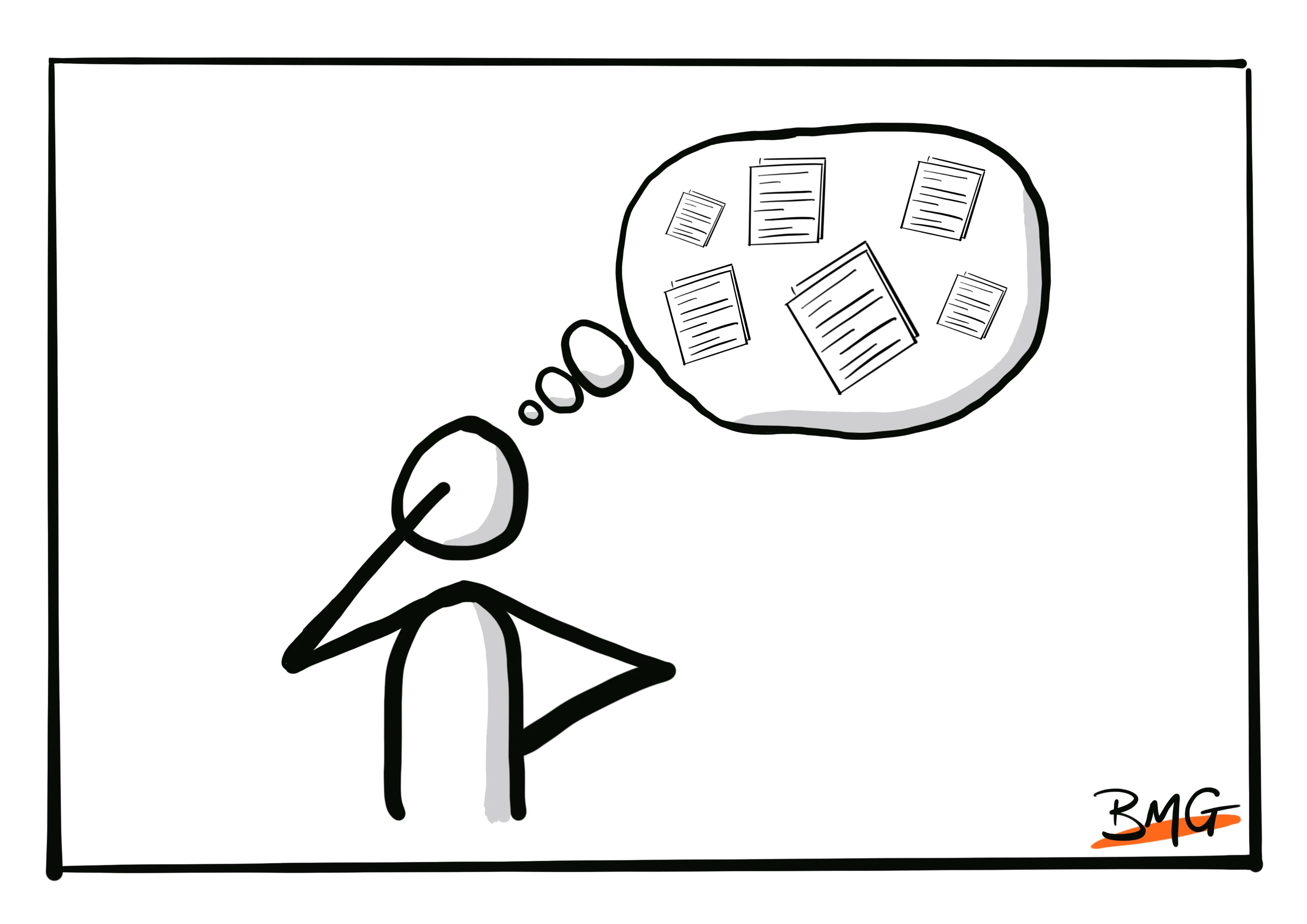
Plans are worthless, but planning is everything.”
Dwight D. Eisenhower
Deadlines keep slipping. Promises tighten. Confidence erodes. You add more people, write more plans, hold more meetings, and yet … the finish line moves away faster than you move towards it.
Hofstadter’s Law names the pattern:
“It always takes longer than you expect, even when you take into account Hofstadter’s Law.”
It isn’t a punchline; it’s a systems truth. Once you understand why it happens and how to design for it, your plans get calmer, your delivery gets steadier, and your leadership gets more credible.
Let’s dig in.
What Hofstadter’s Law really says
Non-linear complexity. Time doesn’t scale linearly with scope. Each element interacts with every other element; the coordination cost often grows faster than the work itself.
Unknown unknowns. You can’t estimate what you can’t yet see. Discovery is part of the work, not separate from it.
Recursive optimism. Even when you “factor in the delay,” you tend to under-weight tail risks, integration pain, and the rework that shows up late.
Hofstadter’s Law is the older cousin of the planning fallacy, the neighbour of Parkinson’s Law (“work expands to fill the time available”), and perfectly aligned with Brooks’s Law (“adding manpower to a late software project makes it later”).
Together, they explain why the most productive teams still miss dates.
Why should you care?
Accuracy beats bravado. Stakeholders forgive slips; they remember certainty theatre.
Missed dates tax trust. Repeated overconfidence creates watermelon reporting … green outside, red inside.
Bad incentives compound delay. If teams are rewarded for optimistic dates, they learn to promise early and explain late.
Your job isn’t to make the future certain; it’s to make it clear.
The mechanics of delay (in plain sight)
Hidden work: testing, data migration, compliance, documentation, handovers.
Integration friction: two “done” components that aren’t done together.
Decision latency: waiting for approvals dwarfs execution time.
Queueing effects: high utilisation (80–100%) makes cycle times explode.
Rework tails: late discovery produces late rework, which is the most expensive kind.
Context switching: too much WIP guarantees everything is late together.
A practical playbook
Forecast from evidence, not opinion
Reference Class Forecasting: find 5–10 comparable initiatives; note their actual durations; anchor to that base rate before you adjust.
Three-point estimates (PERT): ask for Optimistic (O), Most likely (M), Pessimistic (P). Use ranges to talk about time, not single numbers.
Speak in probabilities, not promises
Publish P50 (best guess) and P90 (conservative) dates. Treat P50 as internal planning, P90 as external expectation.
Example language: “We’re 50% confident in 30 Sept; 90% confident in 15 Oct.”
Use throughput data, not intuition
If you run Kanban/Scrum, use historical cycle time percentiles and throughput to create probabilistic delivery windows.
Show a burn-up with confidence bands rather than an optimistic line to a fixed date.
Buffer like a professional
Project buffer protects the final date; feeding buffers protect critical integrations.
Keep risk reserves separate from change budget,and defend them.
De-scope early, not late
Fix the date and the quality; let scope float.
Apply a ruthless MUST/SHOULD/COULD/WON’T cut before you promise a date.
Attack uncertainty first
Do spikes for unknowns in the first 20% of the schedule.
Prototype risky integrations end-to-end as early as possible.
Reduce WIP, shrink batches
Fewer parallel streams → less waiting, faster feedback, fewer collisions.
Ship thin slices that complete the full path (front to back) over thick slices that stall in the middle.
Kill decision latency
Name a DRI (Directly Responsible Individual) per stream.
Set explicit SLAs for decisions (e.g., 24–48 hours) and escalate automatically when breached.
Make “done” unmissable
Definition of Done includes tests, security checks, documentation, and monitoring.
“Code complete” isn’t “complete.”
Report risk like a grown-up
Replace RAG theatre with risk registers (probability x impact), aging-WIP charts, and impediment lists.
Admit variance early; protect credibility later.
Don’t hire your way out of late
- If you add people, ring-fence a landing zone (mentoring, onboarding, low-risk tickets) to avoid slowing the core stream.
Close feedback loops weekly
Weekly forecast review: what slipped, why, and which assumption broke?
Convert lessons into policy (e.g. “No external commitments without P90 analysis”).
A quick pause
If this is helpful, the free guide goes deeper, and the newsletter brings ideas like this twice a week.
Toolkits you can copy today
The confidence ladder
P50 (best case typical): internal planning
P70 (stretch but plausible): team target
P90 (conservative): external communication, contracts, and exec expectations
The 10-minute pre-mortem
Gather the team and ask: “It’s 90 days from now and we missed. What happened?”
Capture top 5 reasons > create mitigations > time-box experiments in the next two sprints.
The constraint check
What’s the current bottleneck (people, approvals, environment, vendor)?
What’s the one change that would increase flow through that bottleneck this week?
The “no orphan work” rule
Every item names its integration partner and consumer. If you can’t name them, it isn’t ready.
Anti-patterns to ban
Single-date commitments with no ranges
Watermelon status (green slides, red reality)
Hardening sprints as a habit (quality is not a phase)
“It’s only a small change” requests without re-forecasting
Parallel heroics (too many streams for too few seniors)
Reflection prompts
Where are we currently promising certainty we don’t possess?
Which piece of work has the longest queue or approval wait?
If we had to remove 20% of scope today, what would we cut first, and why isn’t it already cut?
What is the earliest integration we could prove in the next 7 days?
What’s our P90 date for the flagship milestone, and who outside the team knows it?
Final thought (and today’s move)
Hofstadter’s Law isn’t a curse; it’s can however be a compass.
Reality will always be messier than your plan.
The leaders who win aren’t the most optimistic, they’re the most truthful about time and decisive about scope.
Today’s move: Open your top project, cut one non-essential feature now, and publish two dates (P50 and P90) with the risks that separate them.
Then protect the buffer like it’s part of the product.
Remember, the path to extraordinary is walked with a thousand small steps, you’re doing great!
Your Small Steps
Should we stop estimating altogether and only measure flow?
No. Use both: estimates to shape options, flow data to forecast delivery.
Action: Produce next month’s forecast using cycle-time percentiles and compare it to your current plan.
How big should buffers be?
Enough to cover typical variance (P50 > P90) plus known risks. For many teams, that’s 15–30% of the duration, but let your data decide.
Action: Calculate the gap between your average and 85th/90th percentile cycle times; size buffers from that.
What do I tell stakeholders who demand one date?
Give a range with confidence levels and show the cost of forcing a single number (quality, staff burnout, and rework).
Action: Reframe the next update as: “We have a 50% date and a 90% date; here’s the trade-off.”
We keep finding “unknown work” late. How do we surface it earlier?
Run pre-mortems, do risk spikes in week one, and integrate sooner.
Action: Book a 2-hour risk session to prove the riskiest integration end-to-end.
Does adding people ever help?
Yes - when you split independent work and protect seniors from onboarding drag.
Action: Create a landing lane (starter tickets + pairing) so newcomers don’t cannibalise the critical path.
Our dates slip because decisions take ages. What now?
Name the DRI, set decision SLAs, and publish an aging-impediments list weekly.
Action: Start a visible impediments board; anything older than 5 days escalates.
How do we stop watermelon reporting?
Show aging WIP, risk burndown, and burn-up with confidence bands. Make “red early” a rewarded behaviour.
Action: Replace your next status deck with three charts: burn-up with bands, aging WIP, top five risks.
What’s the smallest change that yields the biggest improvement?
Reduce WIP. It cuts queues, context switching, and integration pain in one move.
Action: Set a WIP limit for your main lane and enforce it for two weeks; review cycle-time impact.

Barry Marshall-Graham
Executive coach and leadership advisor
Get the Difficult Conversations Guide
A practical resource for leaders who want to say the thing that needs saying, without burning bridges or avoiding the moment.
Keep reading
30 January 2026
Conviction Without Force
How to hold a clear position without pushing, and why steady conviction builds more trust than intensity ever will over time.
26 January 2026
When Calm Carries Authority
Why credibility grows when you stop performing certainty and start leading with calm, consistency, and clear boundaries.
22 January 2026
The Meeting After the Meeting
Why real alignment only happens when truth can survive the room.
19 January 2026
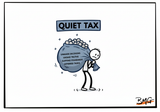
The Quiet Tax of Avoidance
Why avoidance creates decision debt and quietly erodes standards.
16 January 2026
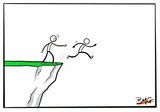
When Being Believed Too Quickly Becomes Dangerous
12 January 2026
The Subtle Art of Doing Nothing
Why doing nothing is rarely neutral, and often the riskiest choice of all
9 January 2026
The Cassandra Effect - When Being Right Isn’t Enough

5 January 2026
A New Year, Not a New You
Why big goals only work when they fit into real life

22 December 2025
Thank You!
A Small Pause Before Christmas

19 December 2025
If You Give the Answers, You’ll Create a Queue
