Lead From Within. Strong Body, Still Mind
21 April 2025
Why Great Leadership Starts with Your Own Inner Alignment
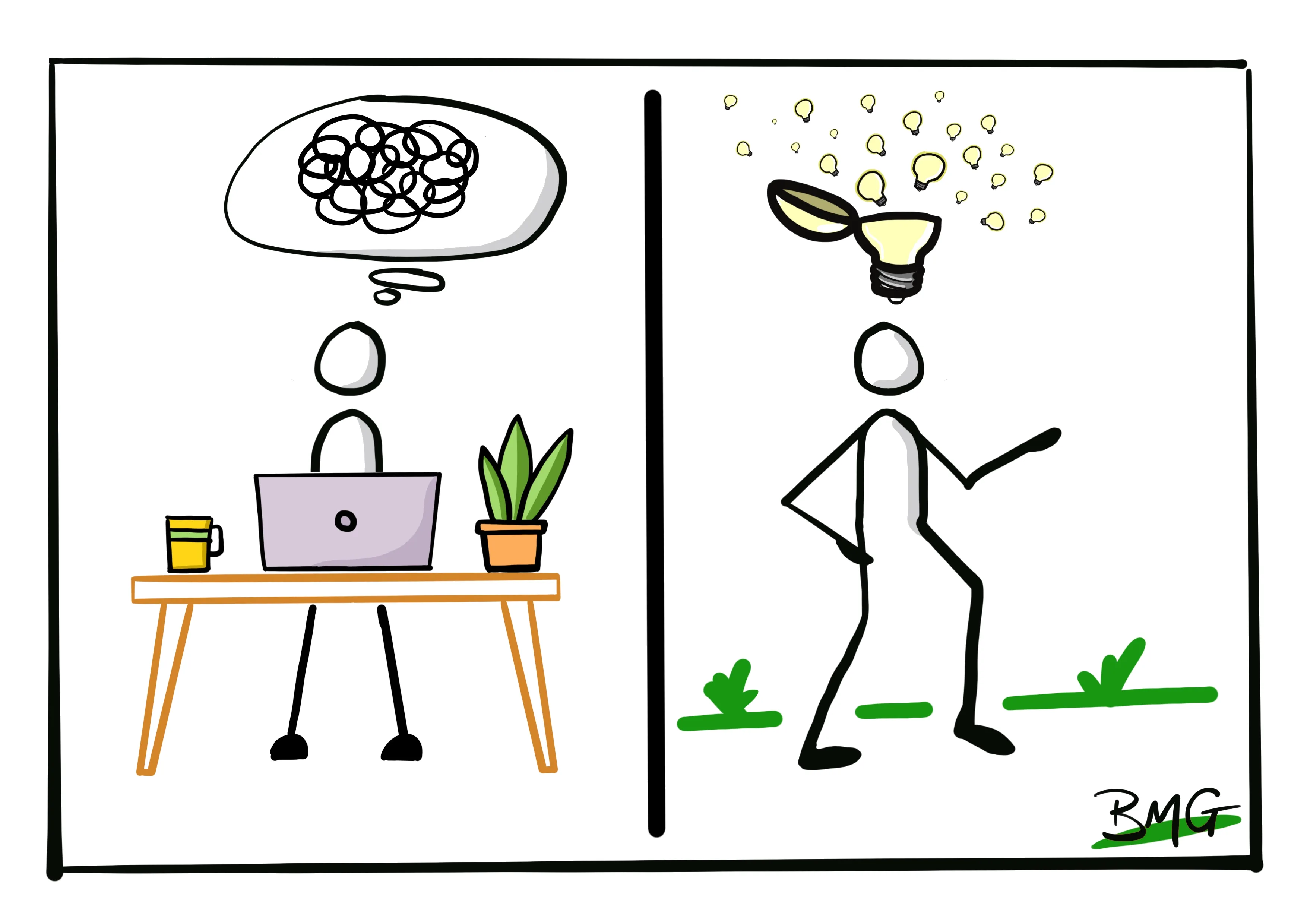
“The body is not separate from the mind. If you ignore one, you weaken both.”
- Anton Wilhelm Amo
Leadership demands presence. When I say this I don’t just refer to our physical presence in meetings or emotional presence in conversations, what I mean is our embodied presence. That grounded clarity you bring into a room. The calm you carry under pressure. The attention you offer without distraction.
And yet, so many leaders I come across are showing up on empty.
I don’t think this is because they lack commitment, more that they’re disconnected from the very thing that makes powerful leadership possible: a healthy, integrated relationship between mind and body.
I’ve experienced this disconnection first-hand.
Recently, I began struggling with severe, recurring headaches - at times, almost debilitating. After a series of tests, I was diagnosed with chronic tension through my neck and upper spine. The cause? Not illness - but sustained tension. Subtle, unaddressed, quietly compounding tension.
The kind that builds over weeks and months, (sometimes years) of high responsibility, low rest, and the quiet inner belief that “I’ll slow down once things settle.”
We must.
And that insight, as uncomfortable as it was, became a turning point.
I realised I couldn’t keep leading others well if I wasn’t caring for myself - fully, consistently, and consciously.
What I’ve Learned from Pain, And My Brain
My recent experience with chronic tension was humbling.
It reminded me that pain is a signal, not a punishment. A message from the body that something is out of sync.
Without turning this into a narrative of my own heath issue, the story is a relatively simple one. Some six to eight months ago I picked up a relatively minor injury after a fall. This meant I couldn’t keep up my usual routine of exercise and my mind and body changed significantly through my recovery, my working routine however did not. I kept up my schedule which often meant hours on video calls at my desk and late nights writing and catching up on things I had missed during the day.
Then the headaches started. I have always suffered with migraines, but these were different. “It’ll pass” I told myself, and with my pride in my higher than normal pain threshold, on I continued. For months.
As leaders, we often get praised for how much we carry. But few people see the cost. The physical strain. The constant low-level stress. The nights of interrupted sleep. The tension we store in our joints.
And when we ignore those signals, we eventually pay the price - through injury, burnout, or disconnection. In my case, the headaches were a sign - one I ignored - so then came the awakening.
One morning while catching up on some messages, I lost the sight in my left eye. Only briefly, for around 30 minutes or so. But long enough. This was my own brain telling me “I’ve been warning you, and you’ve not listened - so you wont be needing two functioning eyes - Pop! - listening now?”
So I made a change. Immediately.
Leadership is a Full-Body Practice
We often separate mental performance from physical wellbeing, as if they’re unrelated. But neuroscience, behavioural psychology, and ancient wisdom traditions all say the same thing: the body is where great leadership starts.
Think about it, we:
Make decisions with our nervous system, not just our intellect.
Build trust with our tone and posture, not just our words.
Regulate our reactions with our breath, not just our mindset.
A tired body produces a foggy mind. A stressed body creates reactivity. An overworked system becomes brittle.
And in that state, we don’t show up as your best. We show up as our most defended, depleted, or distracted self.
This is why mind–body integration is not a lifestyle luxury.
It’s a leadership advantage.
The Practices That Bring Us Back to Centre
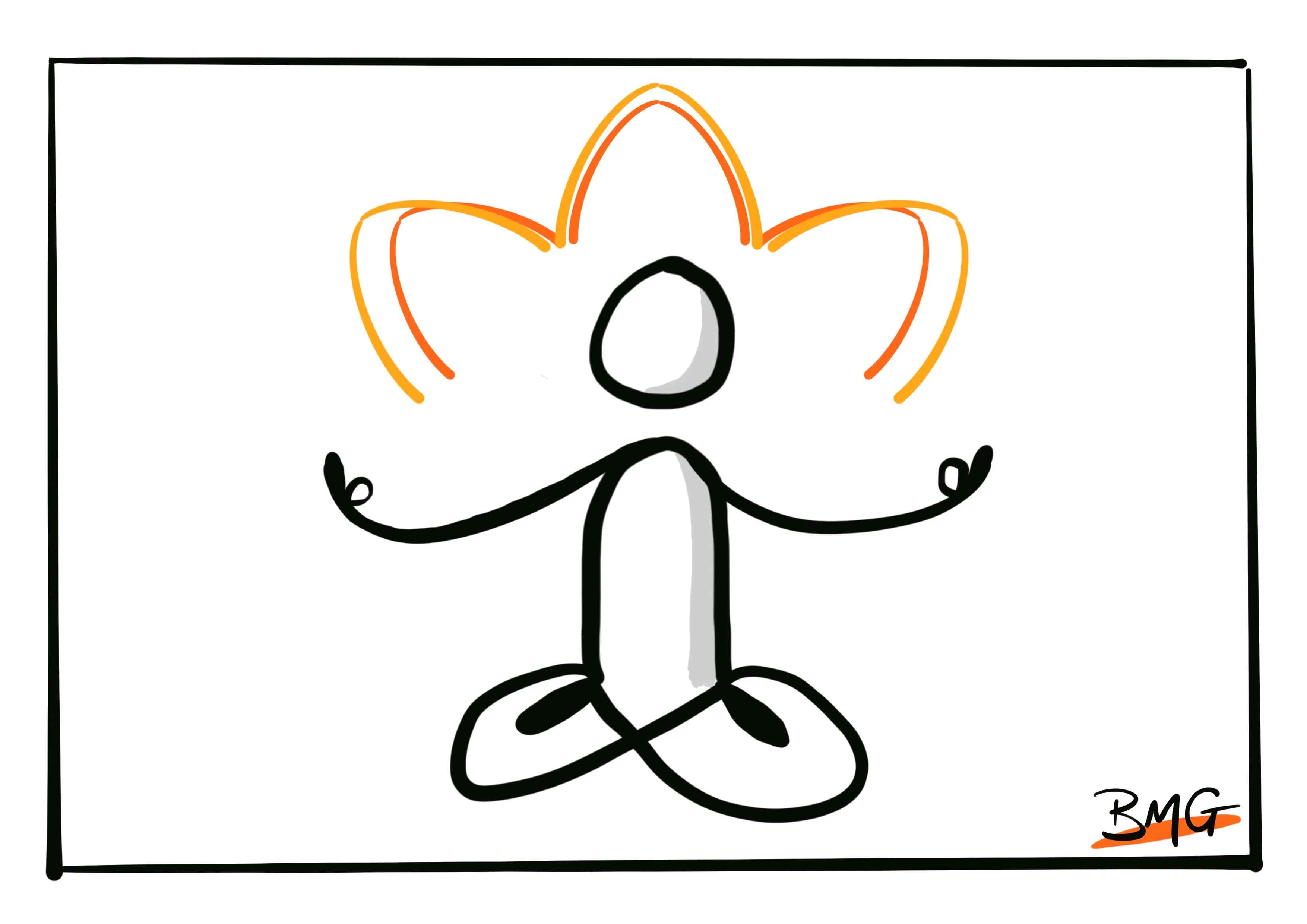
Since my “awakening”, I’ve begun to take mobility and rest seriously. I’ve built constant movement and stretching into my working day, not just my personal time. I’ve stopped seeing breaks as something “nice to have” and started treating them as leadership hygiene.
And you know, almost immediately, I’ve noticed the difference - not just in how I’ve felt, but in how I’ve led. I am more patient. More creative. More present. Not because I’ve tried harder … but because I was no longer fighting a war against myself.
Below are a few practices that have become part of my own shift back to mental and physical alignment. They’re deceptively simple at first glance - but in practice, they’re deeply powerful.
Walking Meetings
A short walk with a colleague often yields more connection and clarity than an hour at a desk. Movement opens thought. Side-by-side walking removes hierarchy for those days in the office and for remote (or hybrid) workers a plain old voice call rather than a video meeting allows all participants to get the benefits. Never forget that few things reset your nervous system like the great outdoors and some fresh-air.
Quiet Exercise
Not every workout needs to be intense. A quiet session - mobility, stretching, slow resistance training - can unlock tension that’s been carried into leadership spaces. These can easily be done at your desk without moving. Just turn off that camera for a minute or two if you need to.
Trust me, your colleagues won’t mind - in fact, in my experience, they will encourage it.
Sometimes, the most important weight to lift is the one you didn’t realise you were holding.
Deep Rest
Rest isn’t just sleep. It’s the discipline of non-doing … space where you’re not productive, not stimulating, not consuming. Stillness as a form of recovery. This is where your internal systems recalibrate, and where clarity finds you again.
I make sure I am in bed by 10pm every night and asleep by 10:30pm. Most nights, I am in bed before my children … but I have learned that to be the best version of myself, I need that level of rest and recovery.
Mindfulness in Micro-Moments
Before a difficult meeting, pause and check in with your breath. Between back-to-back calls, take 90 seconds with your eyes closed. Mindfulness isn’t a destination … it’s a doorway into the present moment, again and again.
And while we are discussing back-to-back calls, try and avoid these but where you can’t, start booking 25 minute half hours and 50 minute hours. This ensures you have time to reflect on the conversation you’ve just left, and prepare for the one to come.
Availability Doesn’t Always Mean Capacity
If someone reaches out and asks if you are free, take a breath, ask if it’s urgent, or maybe query to see if they can wait for a few minutes while you gather your thoughts. I joke with my own team that they’ve installed sensors on my chair. I can almost guarantee that the second I stand up, I’ll get a call.
I know it’s not deliberate. Sometimes technology can work against us in a remote setting and when we see that “green/available status”, some pounce and seize their opportunity while it’s there. They don’t see what may have been clear in an office environment … that deep exhale from a colleague as they end a call, or noting that it’s been several hours since they left their screen.
A quick pause
If this is helpful, the free guide goes deeper, and the newsletter brings ideas like this twice a week.
Reflection Prompts
What physical signals has your body been giving you lately?
Where in your day are you disconnected from your breath, posture, or presence?
What simple practice could you build in to reset tension before it builds up?
When did you last move, rest, or breathe without a productivity goal?
Are you leading from calm, or from cortisol?
Final Thoughts
If you want to lead with clarity, creativity, and care, you can’t afford to neglect the vessel that makes it all possible - your body.
I don’t expect any of us to become a fitness influencer or be found meditating in mountain retreats - although both sound rather appealing, to me at least.
My point here in this article is about reclaiming the deep connection between presence and physiology.
Mind and body. Awareness and energy. Clarity and calm.
Because when we lead from within we become the kind of leaders people feel safer around, more energised by, and more inspired to follow.
That starts with how you feel. How you move. How you breathe.
And how you choose to live.
Remember, the path to extraordinary is walked with a thousand small steps, you’re doing great!
Your Small Steps
Isn’t self-care a personal matter, rather than a leadership one?
It’s both. Your wellbeing impacts your leadership directly. If you want to model sustainability, and emotional balance, you have to live it - not just encourage it in others.
I don’t have time to take breaks or schedule rest. What do I do?
Start small. Even 5-minute resets between meetings can regulate your nervous system. Rest isn’t escaping your work, it’s protecting your energy so you can sustain your impact over time.
Isn’t it a bit indulgent to slow down when everyone else is under pressure?
Actually, it’s leadership by example. When you prioritise your wellbeing, you give others permission to do the same. You set a new standard: performance without burnout, pace without sacrifice.
How can I integrate this without overhauling my schedule?
Think rhythm, not routine. Add pockets of movement, stillness, and breath into your existing day. Start with walking calls, silent transitions, short recovery breaks. Let it evolve as you feel the benefits. Have a read of my recent post on habit stacking for a proven change system.
What if I feel guilty prioritising my health when my team is under pressure?
Guilt is often a signal of internalised expectations - not always truth. The best leaders model sustainability, not sacrifice. When your team sees you lead with energy and composure, they’re more likely to do the same. You can’t protect their wellbeing if you consistently neglect your own.
How do I stay consistent with wellbeing practices when the pace of work accelerates?
Consistency doesn’t require perfection. The key is to embed small, repeatable moments into your existing routine - like breath resets between calls, walking for one-on-ones, or five minutes of quiet meditation before deep work. These micro-practices add up, especially when the pace gets heavy.
What are some early warning signs that I’m becoming disconnected from my body?
Look for: shallow breathing, irritability, headaches, tightness in your neck or shoulders, poor sleep, difficulty focusing, or needing constant stimulation (coffee, emails, noise). These are signs your nervous system is under strain and asking for reconnection. And should you suddenly lose your eyesight in one eye, well … I told you so! (Wishing someone told me)
How do I bring this conversation to my leadership team without it feeling ‘soft’?
Frame it in terms of performance, sustainability, and presence. Use language like, “We perform better when we recover better” or “Our thinking quality is directly tied to our energy quality.” Sharing your own practices or insights makes the message more credible … and human - hence this article you just spent your valuable time reading to the end.
Thank you.
Barry Marshall-Graham
Executive coach and leadership advisor
Get the Difficult Conversations Guide
A practical resource for leaders who want to say the thing that needs saying, without burning bridges or avoiding the moment.
Keep reading
13 March 2026
The Weight of Unshared Doubt
Why senior leadership feels lonelier as you rise, and why confidence is often just unshared doubt.
9 March 2026
Why Your Best Advice is the Problem
Why the rush to fix others is actually a specific insecurity, and how to stop.
6 March 2026
The Weight in Your Voice
Your words carry more weight than you realise. Calm authority is often a matter of pace, tone, and the courage to name what matters.

2 March 2026
The Quiet Drift You Inherit
Inherited teams rarely collapse in a moment. They drift. Resetting standards isn't about being harsh, it's about clarity, dignity, and trust.
27 February 2026
When Everyone Owns It
Shared ownership sounds healthy, but when everyone owns a decision, nobody owns the decision. Clarity needs a single accountable owner.
23 February 2026
The Private Ledger of Leadership
Senior leaders carry a private ledger of risks, promises, and people. Naming that inner load isn't weakness, it's how you lead without breaking.
20 February 2026
The Avoided Conversation Is a Decision
The conversation you're avoiding isn't neutral. It's a decision to let the current pattern continue, and that decision shapes the culture.

16 February 2026
Calm Authority in Tense Rooms
Authority isn't volume or force. It's the ability to hold a tense room steady, name what matters, and set a clear boundary without heat.

13 February 2026
The First Small Tolerance
Standards rarely collapse in a moment. They slip through the first small tolerance you let pass, then the next one feels easier.
9 February 2026
The Decision Vacuum
When decision rights are unclear, every meeting becomes a referendum. Clarity is less about answers and more about who owns the call.
