Leading with Intelligence
4 April 2025
Considering How AI Can Augment Your Leadership Toolbox
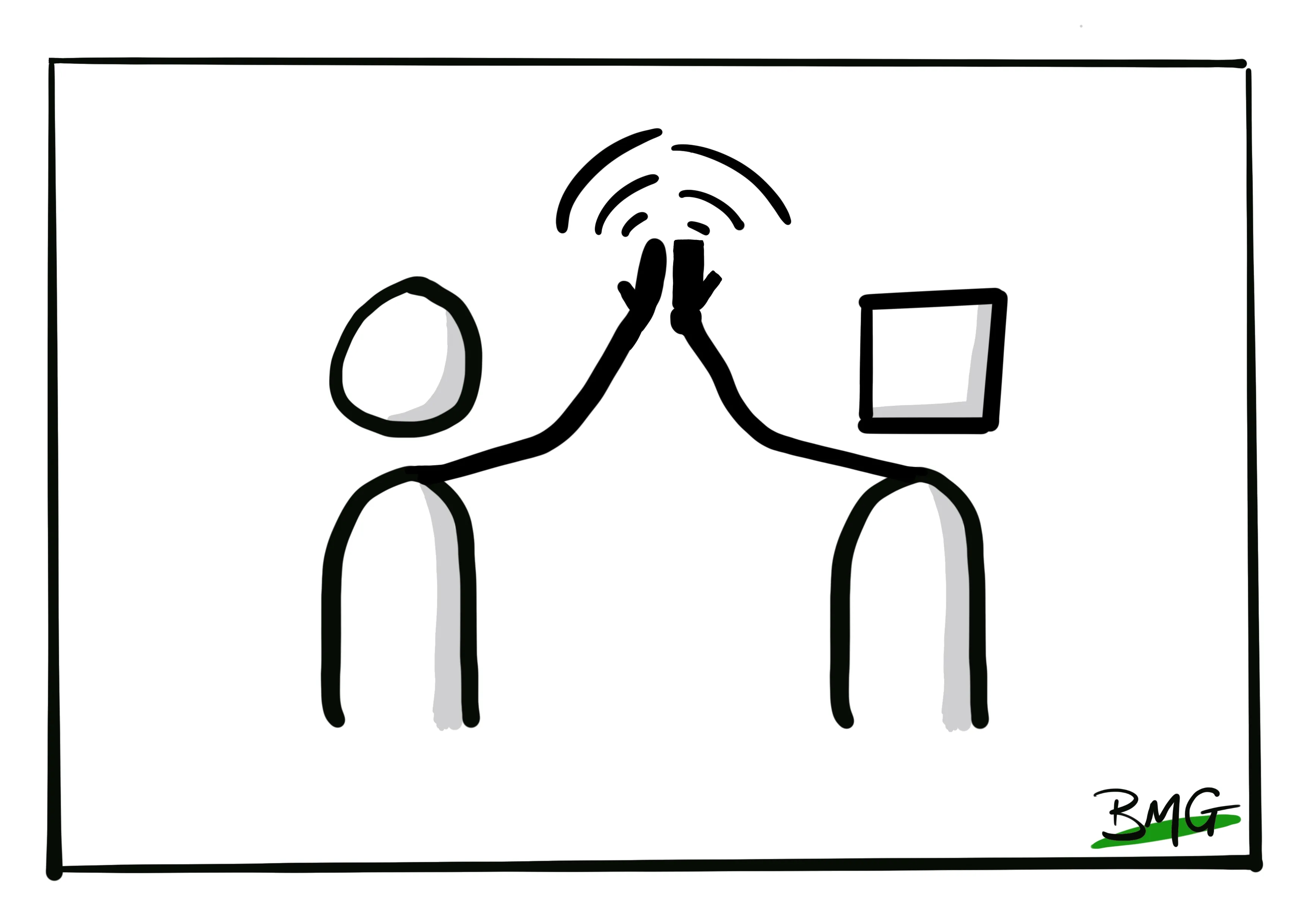
There’s a quiet AI revolution taking place in leadership … not one replacing people with machines, but of augmenting human potential with tools that expand our capacity to think, decide, and act.
We have entered Generation AI. The door behind us is closed.
AI tools like ChatGPT don’t replace your leadership, and in my view can’t, but they can extend and supplement it when used in the right way. They challenge your thinking, support decision-making, speed up execution, and even deepen the quality of your reflections.
As a coach, a leader, and a constant learner, I’ve come to see AI as a companion - not a crutch, but a catalyst.
“The best leaders are not the ones who have every answer, but the ones who ask better questions … and know where to look the answers they don’t yet have.”
A Personal Reflection
In my own work, I’ve found that AI frees up space in my mind. That might sound like a small thing, but as any leader knows, mental space is one of the most valuable and fragile assets we possess. It’s the difference between reacting and responding, between repeating old patterns and creating something new.
As leaders, we often find ourselves rapidly switching mindsets in the moment … one minute offering a guiding hand in a 1:1, the next making a critical strategic decision. I personally use AI like a silent collaborator - always ready to engage, test my thinking, or help me shape an idea I can’t quite articulate yet.
Whether I’m preparing for a presentation, designing a strategy session, drafting a difficult message, or reflecting on a coaching conversation, having a tool that can quickly sketch the shape of something gives me a running start.
In the last three to six months of using tools like Chat CPT, AI has allowed me to:
Ask better questions, of others AND myself.
Create structure from scattered thoughts (of which, I have many), especially when I’m moving quickly.
Accelerate the creative process, generating first drafts, frameworks, or metaphors I can then refine and humanise.
Model curiosity, showing that seeking validation and input is a strength, not a weakness.
It’s also an incredible tool for reflection. I’ve prompted it to act as a mirror, to challenge my assumptions, and even to simulate conversations before I step into the real thing. It doesn’t replace intuition or experience but it helps me arrive at both at speed, with much greater clarity.
And yet, through all of this, one truth stands firm: the leadership is mine.
The decisions, the values, the accountability … these can’t be outsourced. AI can be insightful, but it isn’t wise. It can organise, but it can’t empathise. It can offer structure, but not presence.
For me, the best use of AI is not to do the work for me, but to walk alongside me, making space so that I can do the work only I can do: leading with focus, depth, and intent.
In that sense, AI doesn’t reduce the human element of leadership. It elevates it. It gives me more time … to be, well … me!
A quick pause
If this is helpful, the free guide goes deeper, and the newsletter brings ideas like this twice a week.
How AI Supplements the Leadership Toolbox

So with my own personal experience highlighted, let’s explore some of the most powerful ways AI can support your modern leadership:
Thought Partner for Reflection and Planning
Leaders don’t always have time for deep reflection in isolation. Tools like ChatGPT can help structure thinking - whether you’re planning a presentation, preparing for a difficult conversation, or shaping a vision.
Example:
“I would like to talk about the benefits of using <something> in the context of <business case> that highlights the benefits for <recipients>” can result in a draft that you then adapt with your personal tone and context.
Support for Communication Clarity
Whether it’s writing a newsletter, briefing the board, or providing feedback to a peer, clear communication is critical. AI can help you articulate ideas, test language, and even offer alternative framings. This saves time as well as in some areas that may not be your strengths, improves impact.
Strategic Brainstorming and Idea Expansion
Stuck on next steps? AI is an excellent stimulus for brainstorming initiatives, value statements, workshop agendas, or cultural principles.
Think of it as your non-judgemental, always-available whiteboard partner.
Time and Energy Recovery
Automating small tasks - writing first drafts, summarising notes, exploring frameworks - can save hours every week. This is time that can be reinvested in real conversations, personal reflection, or strategic thinking. Utilise the theory of marginal gains … all of those one percent savings really add up over the long-term.
Reflection Prompts
Where in your leadership practice do you spend time that could be reallocated to higher-value activity?
How might AI help you become more consistent in how you communicate and plan?
What’s stopping you from using these tools more proactively?
In what ways can you test or trial AI to support a real leadership challenge this week?
How can you help your team engage with AI without fear or resistance?
What are the human qualities you must never outsource in your leadership?
Final Thought
AI can, in the right hands, make you a better leader.
Not because it makes the decisions for you - but because it releases you to focus on the decisions that matter most. It gives you back time, clarity, and mental space. And in that space, better leadership can emerge: calmer, more focused, more intentional.
Used well, AI becomes a thought partner … a mirror that reflects your ideas back to you, a sounding board that helps you sharpen your message, and a second brain when yours is stretched thin.
But while AI can accelerate your thinking, the soul of leadership remains unchanged.
Courage. Empathy. Judgement. Presence.
These are still yours to carry. These are still, and will always be, what your team needs from you most.
The smart leaders won’t compete against AI. They’ll partner with it …thoughtfully, creatively, and with a human heart at the centre.
Remember, the path to extraordinary is walked with a thousand small steps, you’re doing great!
Your Small Steps
Will using AI make me a less authentic leader?
Not if you use it intentionally. AI can help you say what you mean, but it’s your values, tone, and judgement that give the message meaning.
What are the risks of over-relying on AI for leadership decisions?
AI can’t understand nuance, culture, or trust. It can’t read a room or feel someone’s energy. Use it to support and enhance your thinking but never replace it.
How can I introduce AI tools to my team without resistance?
Can AI support coaching and mentoring?
Yes. AI can help generate reflection questions, explore models, and simulate conversations. But real coaching depends on presence, trust, and intuition.
Isn’t using AI just faking expertise?
Only if you stop at the first draft. The shortcut is not in thought, but in speed to insight and then perhaps execution. Used well, it gives you more time for depth, not less. Use that time saving and dive much deeper than you otherwise would have.
Is it ethical to use AI for leadership tasks?
Ethics come from intent and transparency. If you’re using AI to sharpen thinking, draft ideas, and become more effective - while remaining accountable - you’re on safe ground.

Barry Marshall-Graham
Executive coach and leadership advisor
Get the Difficult Conversations Guide
A practical resource for leaders who want to say the thing that needs saying, without burning bridges or avoiding the moment.
Keep reading
13 March 2026
The Weight of Unshared Doubt
Why senior leadership feels lonelier as you rise, and why confidence is often just unshared doubt.

9 March 2026
Why Your Best Advice is the Problem
Why the rush to fix others is actually a specific insecurity, and how to stop.
6 March 2026
The Weight in Your Voice
Your words carry more weight than you realise. Calm authority is often a matter of pace, tone, and the courage to name what matters.

2 March 2026
The Quiet Drift You Inherit
Inherited teams rarely collapse in a moment. They drift. Resetting standards isn't about being harsh, it's about clarity, dignity, and trust.

27 February 2026
When Everyone Owns It
Shared ownership sounds healthy, but when everyone owns a decision, nobody owns the decision. Clarity needs a single accountable owner.
23 February 2026
The Private Ledger of Leadership
Senior leaders carry a private ledger of risks, promises, and people. Naming that inner load isn't weakness, it's how you lead without breaking.

20 February 2026
The Avoided Conversation Is a Decision
The conversation you're avoiding isn't neutral. It's a decision to let the current pattern continue, and that decision shapes the culture.

16 February 2026
Calm Authority in Tense Rooms
Authority isn't volume or force. It's the ability to hold a tense room steady, name what matters, and set a clear boundary without heat.

13 February 2026
The First Small Tolerance
Standards rarely collapse in a moment. They slip through the first small tolerance you let pass, then the next one feels easier.

9 February 2026
The Decision Vacuum
When decision rights are unclear, every meeting becomes a referendum. Clarity is less about answers and more about who owns the call.
