Ten Taoist Principles
31 January 2025
How They Could Apply to Leadership and Coaching
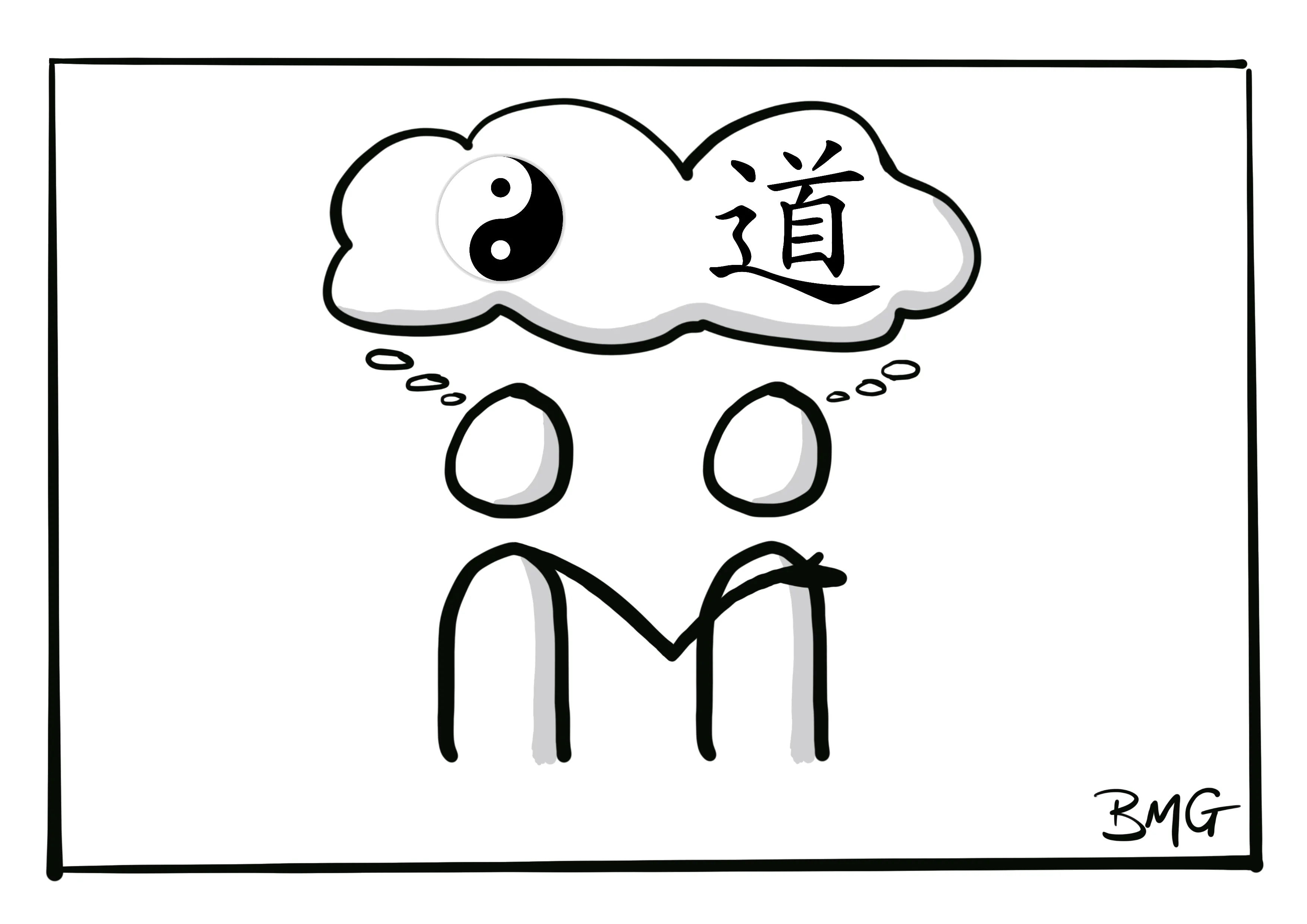
We often seek structure, control, and well-defined strategies to achieve success. However, the ancient Chinese philosophy of Taoism offers a different perspective … one rooted in flow, adaptability, and effortless action.
It’s my belief that by learning, then embracing Taoist principles, leaders and coaches can cultivate a more balanced, effective, and harmonious approach to guiding teams and individuals.
Below are ten core Taoist principles and how they might be applied in leadership and coaching.
1. Wu Wei (Effortless Action)
“The sage does nothing, yet nothing is left undone.” – Laozi
Wu Wei is the principle of effortless action - acting in alignment with the natural flow rather than forcing things. It does not mean passivity, but rather responding intuitively and effectively with minimal resistance.
Application:
Lead by example and create an environment where work flows naturally, without unnecessary obstacles.
Avoid micromanagement; trust your team and allow them to take ownership of their work.
In coaching, let the conversation flow rather than forcing insights - guide rather than control.
2. The Principle of Flow
Taoism teaches us that everything in life has a rhythm, and trying to resist it creates unnecessary struggle. When leaders and coaches tune into this natural flow, they make better decisions and reduce stress.
Application:
Recognise the natural cycles in your organisation - there are times for growth, consolidation, and transformation and times for stepping back, reflecting and measuring, then celebrating progress.
In coaching, identify the natural pace of your client’s development and support them accordingly, rather than pushing them too fast or holding them back.
3. Simplicity (Pu, The Uncarved Block)
Taoism values simplicity and returning to an uncluttered, natural state. Complexity often leads to confusion, inefficiency, and frustration.
Application:
Avoid overcomplicating strategies and communications. Keep your vision and goals clear and straightforward.
In coaching, help clients strip away unnecessary distractions to focus on what truly matters.
Encourage teams to simplify workflows and processes rather than adding more layers of bureaucracy or dogma.
4. Yin and Yang (Balance and Harmony)
Life is a balance of opposites - light and dark, action and stillness, speaking and listening. Effective leaders and coaches understand the importance of balance.
Application:
Balance confidence with humility, authority with empathy, and work with rest.
Encourage work-life balance within your team to prevent burnout and sustain productivity.
In coaching, help clients find harmony between their personal and professional lives.
A quick pause
If this is helpful, the free guide goes deeper, and the newsletter brings ideas like this twice a week.
5. Compassion and Non-Resistance
Taoism teaches that resisting reality only creates suffering. Instead, accepting things as they are and responding with compassion leads to better outcomes.
Application:
Accept change and challenges rather than fighting against them.
Approach difficult conversations with empathy rather than confrontation.
In coaching, help clients accept where they are now as a starting point for growth.
6. The Empty Cup (Openness to Learning)
A full cup cannot hold more water. In the same way, leaders and coaches who believe they already know everything limit their ability to grow.
Application:
Adopt a beginner’s mindset - always be open to learning from others, no matter your experience level.
Encourage curiosity and experimentation within your team rather than rigid adherence to old ways.
In coaching, remain open to new methods and perspectives that may better serve your clients.
7. Nature as a Guide
Taoism often looks to nature for wisdom - trees bend in the wind rather than breaking, rivers carve paths over time through persistence.
Application:
Embrace adaptability - like water, take the path of least resistance to achieve the best outcome.
Cultivate patience - great leaders and coaches understand that growth happens over time.
Learn from nature’s ability to renew itself - ensure rest and recovery are valued in your leadership approach.
8. Stillness and Reflection
Taoist philosophy values stillness as a source of wisdom. The greatest insights often come not from action, but from pausing and reflecting.
Application:
Take time to reflect before making major decisions rather than reacting impulsively.
Encourage a culture of mindfulness in your organisation - moments of stillness can lead to better problem-solving.
In coaching, allow space for silence - some of the best insights come when we resist the urge to fill the void with words.
9. Leading Without Force (The Soft Overcomes the Hard)
“The softest thing in the world overcomes the hardest thing in the world.” – Laozi
Force and aggression are often ineffective leadership tools. True influence comes from flexibility, patience, and understanding.
Application:
Avoid authoritarian leadership - guide rather than dictate.
In coaching, use subtle, powerful questioning rather than forceful direction.
Build relationships through trust and respect rather than control and power.
10. Living in the Present
Taoism emphasises presence - letting go of the past and not becoming consumed by the future. Many leaders and coaches struggle with this, always focusing on “what’s next” rather than the here and now.
Application:
Engage fully with your team in the present moment rather than being distracted by future pressures.
In coaching, help clients focus on the present instead of being stuck in past failures or future anxieties.
Cultivate gratitude - appreciate progress rather than always chasing the next milestone.
Final Thoughts
Taoist wisdom offers a refreshing approach to leadership and coaching … one that prioritises balance, adaptability, and working in harmony with the natural order of things.
By integrating these ten principles, leaders and coaches can create environments where people thrive with ease, rather than struggle against unnecessary resistance.
No “Small Steps” this week - I believe the principles speak for themselves.
Remember, the path to extraordinary is walked with a thousand small steps, you’re doing great!

Barry Marshall-Graham
Executive coach and leadership advisor
Get the Difficult Conversations Guide
A practical resource for leaders who want to say the thing that needs saying, without burning bridges or avoiding the moment.
Keep reading
30 January 2026
Conviction Without Force
How to hold a clear position without pushing, and why steady conviction builds more trust than intensity ever will over time.
26 January 2026
When Calm Carries Authority
Why credibility grows when you stop performing certainty and start leading with calm, consistency, and clear boundaries.
22 January 2026
The Meeting After the Meeting
Why real alignment only happens when truth can survive the room.

19 January 2026
The Quiet Tax of Avoidance
Why avoidance creates decision debt and quietly erodes standards.

16 January 2026
When Being Believed Too Quickly Becomes Dangerous
12 January 2026
The Subtle Art of Doing Nothing
Why doing nothing is rarely neutral, and often the riskiest choice of all

9 January 2026
The Cassandra Effect - When Being Right Isn’t Enough

5 January 2026
A New Year, Not a New You
Why big goals only work when they fit into real life

22 December 2025
Thank You!
A Small Pause Before Christmas

19 December 2025
If You Give the Answers, You’ll Create a Queue
