The Art of Acknowledgement
24 November 2025
Why Leaders Should Praise More (The Right Way)
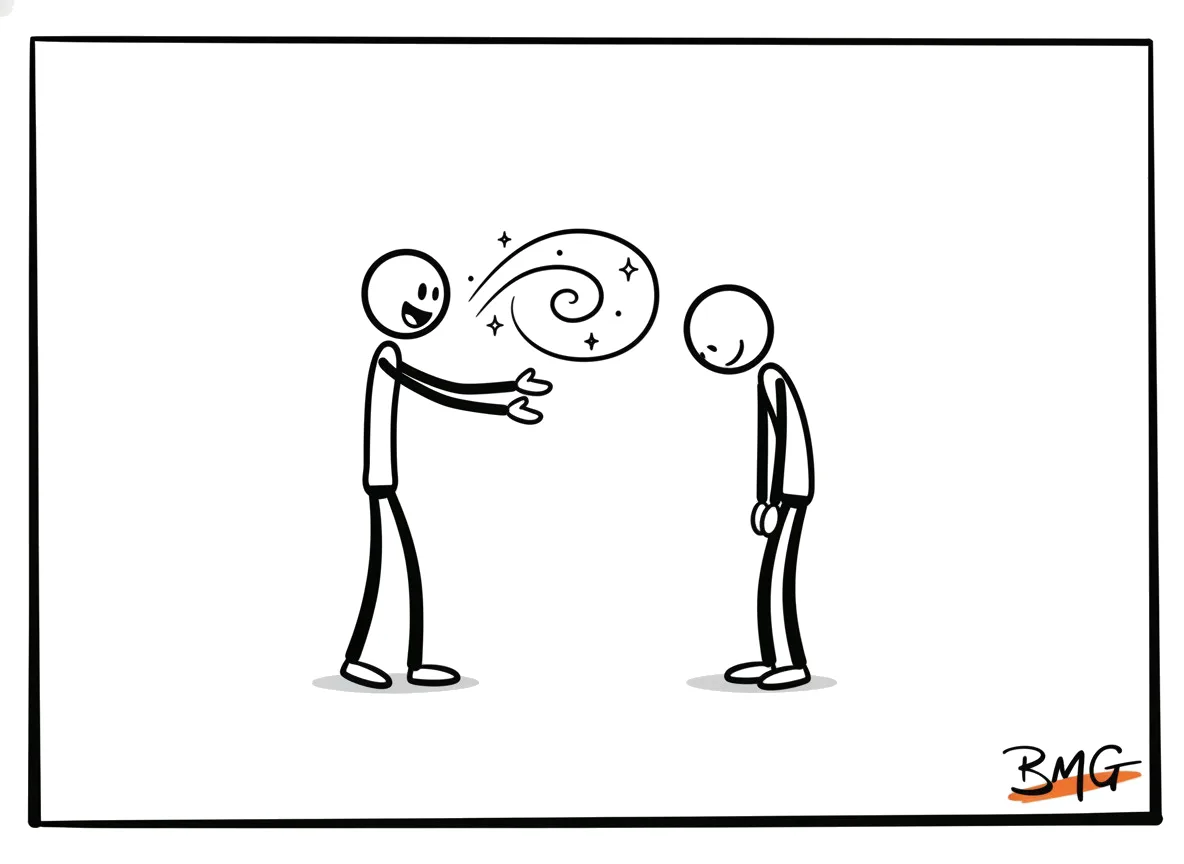
Whilst caught up in the rush of deadlines, meetings, and the relentless forward motion of work, we very often forget one of the simplest, most powerful leadership tools we possess: the ability to genuinely acknowledge someone.
Not reward them, motivate them, “performance manage” them … just see them, and give a small nod to them being seen.
We know that people crave being noticed far more than they crave being instructed, and yet, we often walk past opportunities to tell someone how they matter.
We withhold praise because we’re busy.
Or because it feels awkward.
Or because we assume they already know.
Meanwhile, a five-second acknowledgment could change the temperature of their entire day.
The Overlooked Power of Being Seen
Acknowledgement is not flattery, and it’s certainly not a HR requirement.
It’s the act of saying:
“I see you. I see the way you show up. I see the person behind the work.”
When people feel seen, they don’t need to be coerced into performance.
They step up because your relationship invites it.
They take responsibility because connection encourages it.
They meet challenges with courage because someone recognises they have courage to begin with.
This is why coaching, mentoring, leadership (all forms of human development) depend on one principle:
People grow in the direction of where they are genuinely acknowledged.
Acknowledgement Works in Every Direction
You can do this right now with someone in your life.
Someone you deeply appreciate
The colleague who quietly carries more than most.
The friend who listens without judgement.
The person who makes your world easier, lighter, or better.
Tell them.
Tell them today.
Let them know how they matter.
Someone who irritates you
This is where the practice becomes powerful.
When someone frustrates you, your attention collapses onto the annoyance.
Their good qualities go blurry.
Their humanity shrinks down to the one thing they’ve done that’s wound you up.
Acknowledgment forces you to widen the lens.
It stops you being seduced by irritation.
It reminds you that the person in front of you is more than the behaviour that bothered you.
Very often, this softens the whole relationship.
How to Give Meaningful Acknowledgement
Your stubs are excellent … clear, clean, and emotionally anchored. They work because they invite specificity and sincerity.
You can use:
“I’m celebrating your …”
“I really appreciate …”
“You’re fantastic at …”
“You’ve got a gift for …”
However, the depth doesn’t come from praising what someone does, but acknowledging who they are.
A quick pause
If this is helpful, the free guide goes deeper, and the newsletter brings ideas like this twice a week.
The “Being” Side of Praise
We’re used to complimenting performance.
“You delivered that project well.”
“You hit your numbers.”
“You executed the plan.”
That’s fine, but it doesn’t nourish the soul of the person.
What really lands (and what people remember for years, that will genuinely outlast your tenure as their leader) are acknowledgements rooted in their being:
Generosity, commitment, kindness, intensity, courage, willingness lightness of touch, resilience, showing up, not being daunted.
These describe essence.
They affirm identity.
They say, “This is who you are, and I see it.”
And that … is transformational.
A Simple Acknowledgement Formula
If you want a structure that always lands:
1. Name what you see
“Your resilience…”
“Your courage…”
“Your generosity…”
2. Describe the moment where you saw it
“…in the way you kept showing up despite the pressure…”
“…in how you handled that conversation…”
3. Explain the impact
“…It set the tone for the whole team.”
“…It reminded me how leadership really looks.”
Short. Honest. Human.
That’s all it needs to be.
Reflection Prompts
Who in your life deserves to hear an acknowledgement you’ve been holding back?
Where have you allowed irritation to drown out admiration?
What qualities do you admire in others but rarely name out loud?
How would your relationships change if acknowledgement became a weekly practice?
Final thought
Acknowledgement is not a technique; it’s a way of seeing.
When you name the goodness in someone (honestly, specifically, generously) you don’t just encourage them.
You change the relationship.
You raise the standard of humanity in the room.
If you want to lead well, start by seeing people clearly.
Then tell them what you see.
Remember, the journey to extraordinary is walked with a thousand small steps, you’re doing great!
Your Small Steps
Isn’t too much praise a bit much?
Not if it’s truthful and specific. Empty flattery is noise; genuine acknowledgement is nourishment.
Action: Give one person a specific, sincere acknowledgement today.
Should praise always link to performance?
No. This article is about seeing the person, not scoring their output.
Action: Acknowledge someone for a being quality, not a task they did.
What if someone finds praise uncomfortable?
Most people do (at first). It means they’re not used to being seen.
Action: Keep it simple. Don’t over-explain. Let the moment land.
How do I acknowledge someone I’m frustrated with?
Look for the quality behind the behaviour.
Action: Write down three qualities you know they have but rarely notice when irritated.
How often should leaders acknowledge their people?
Frequently, but not artificially. It should be natural, grounded, and earned.
Action: Add one acknowledgement to every 1:1 this week.
What if it feels awkward?
Everything important feels awkward at first.
Action: Start with one line. Don’t make it a speech.

Barry Marshall-Graham
Executive coach and leadership advisor
Get the Difficult Conversations Guide
A practical resource for leaders who want to say the thing that needs saying, without burning bridges or avoiding the moment.
Keep reading
13 March 2026
The Weight of Unshared Doubt
Why senior leadership feels lonelier as you rise, and why confidence is often just unshared doubt.
9 March 2026
Why Your Best Advice is the Problem
Why the rush to fix others is actually a specific insecurity, and how to stop.
6 March 2026
The Weight in Your Voice
Your words carry more weight than you realise. Calm authority is often a matter of pace, tone, and the courage to name what matters.

2 March 2026
The Quiet Drift You Inherit
Inherited teams rarely collapse in a moment. They drift. Resetting standards isn't about being harsh, it's about clarity, dignity, and trust.
27 February 2026
When Everyone Owns It
Shared ownership sounds healthy, but when everyone owns a decision, nobody owns the decision. Clarity needs a single accountable owner.
23 February 2026
The Private Ledger of Leadership
Senior leaders carry a private ledger of risks, promises, and people. Naming that inner load isn't weakness, it's how you lead without breaking.

20 February 2026
The Avoided Conversation Is a Decision
The conversation you're avoiding isn't neutral. It's a decision to let the current pattern continue, and that decision shapes the culture.

16 February 2026
Calm Authority in Tense Rooms
Authority isn't volume or force. It's the ability to hold a tense room steady, name what matters, and set a clear boundary without heat.

13 February 2026
The First Small Tolerance
Standards rarely collapse in a moment. They slip through the first small tolerance you let pass, then the next one feels easier.

9 February 2026
The Decision Vacuum
When decision rights are unclear, every meeting becomes a referendum. Clarity is less about answers and more about who owns the call.
