The Art of Influence in Leadership and Team Dynamics - Authority
18 October 2024
How Demonstrating Expertise Builds Trust, Inspires Confidence, and Aligns Team Efforts
Few concepts are as powerful (yet often misunderstood) as the art of influence.
Whether you’re guiding a team through challenging projects, inspiring colleagues to embrace a new direction, or simply looking to deepen the connections within your organisation, understanding how to ethically and effectively influence others is a skill that can drive remarkable results.
In this series, we will be drawing inspiration from Robert Cialdini’s classic work, Influence: The Psychology of Persuasion.
Cialdini’s book has long been considered a cornerstone in the study of human behaviour, exploring why people say “yes” and how to ethically apply these principles in everyday interactions. The insights within its pages can be transformational - not just for marketers or salespeople, but for anyone looking to lead with greater impact and authenticity.
Each article will focus on one of the seven key principles outlined by Cialdini:
Authority
Commitment and Consistency
Liking
Scarcity
Social Proof
Unity
We’ll dive deep into how these principles can be applied in leadership and team settings, offering examples and actionable strategies that you can implement to build and maintain stronger, more cohesive teams.
By understanding and leveraging these principles, you can maintain environments where trust, motivation, and collaboration flourish, creating a workplace culture that achieves goals with integrity and purpose.
Whether you’re new to Cialdini’s work or looking for a fresh perspective on his (now) timeless insights, this series is designed to provide practical tools and inspiration for leaders at every level.
Let’s embark on this journey together, exploring the subtle yet powerful ways in which influence can shape the way we lead, connect, and achieve.
Authority
I have been studying Cialdini’s book for over 30 years. I never tire of the content having read the original book and subsequent extended volumes several times over. Whenever I have picked up a new leadership role or should I have been involved in any facilitation or team building, I always refer to the principles described in Cialdini’s Influence.
It’s easy to focus on expertise, credentials, and experience when it comes to leadership. Yet, in the realm of influence, a simple principle can profoundly impact how we lead and connect: Authority.
Authority operates on a straightforward premise:
People tend to follow the lead of those they perceive as experts.
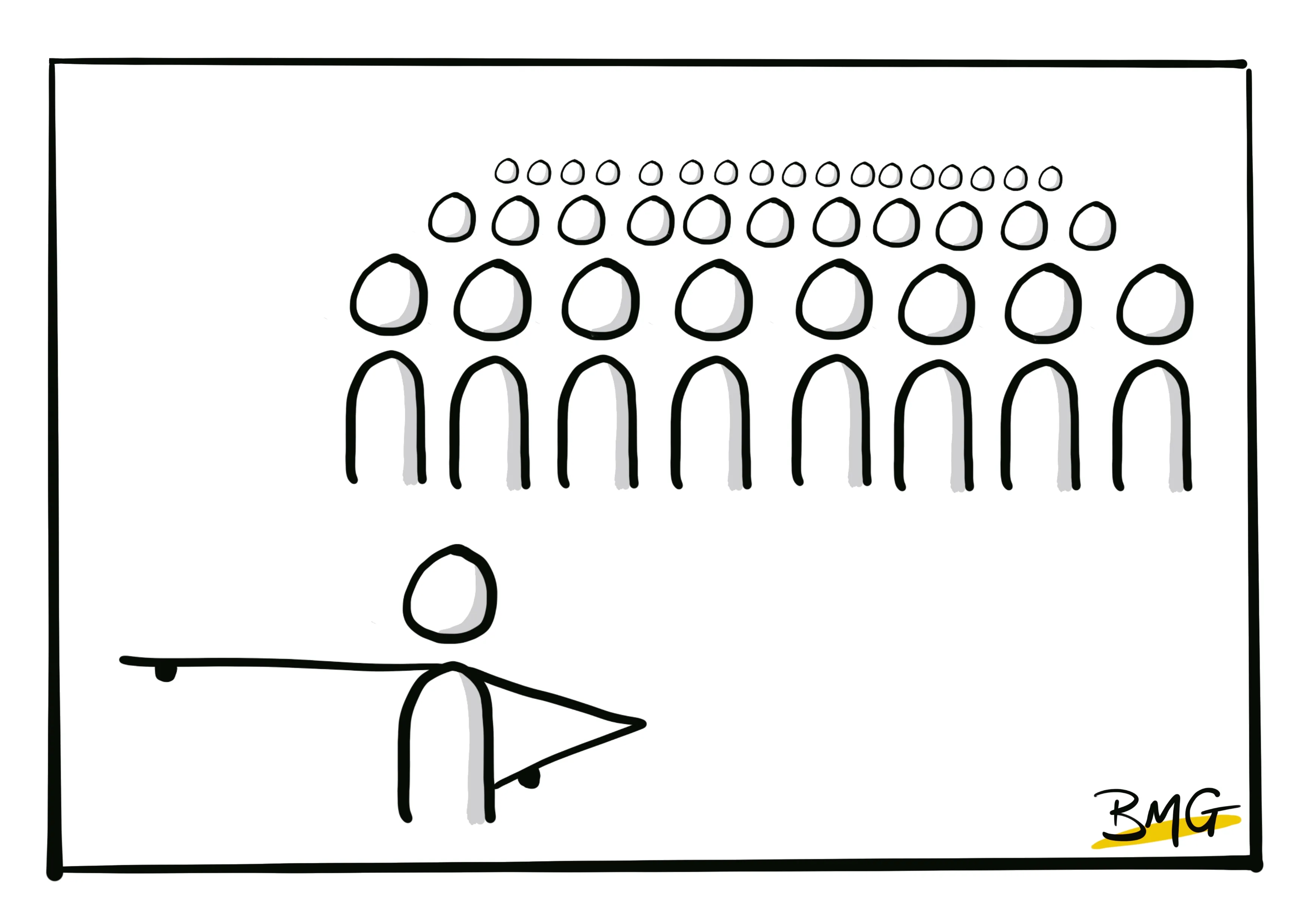
In a team or leadership setting, demonstrating authority can mean sharing your expertise, leading by example, or leveraging your credentials to inspire trust and respect.
Acts of demonstrating knowledge and competence create a sense of assurance, guiding others to align with your vision or decisions.
Think of my opening statement to this principle above. I stated my 30 years of experience with the writing of Cialdini and how I have used it throughout my career. I set the article up using authority and the reader will continue with what follows with that authority subconsciously imprinted in their mind.
Would you have picked up on that? Clever, right?
What is Authority?
As described in Cialdini’s Influence, authority is a principle that taps into the natural human tendency to follow the lead of those who are seen as credible and knowledgeable.
People are conditioned to trust those with perceived authority because it provides a sense of security and confidence in decision-making.
“When making decisions, it is in our best interest to comply with the requests of legitimate authorities.” , Robert Cialdini
This principle is built on a simple yet powerful premise: when someone is viewed as an expert or a figure of authority, people are more likely to subconsciously trust their guidance and follow their lead.
Cialdini highlights how this principle is applied in various aspects of life, from advertising to workplace leadership.
For example, in marketing, endorsements from experts or industry leaders often persuade consumers to trust a product. The authority of the endorsement reassures buyers, making them much more likely to accept the recommendation.
In a broader sense, authority serves as a cornerstone for establishing credibility and trust within teams. It creates an environment where consistent demonstrable expertise builds a team culture where members look to their leadership for guidance, aligning their efforts to the perceived expertise of their leader.
This isn’t about exerting control but more providing confidence through clarity and direction through expertise.

When applied thoughtfully, the principle of authority can help leaders build stronger, confident teams who are willing to rally behind a shared purpose, leading to an aligned and focused environment.
Building Trust through Authority
You can build trust with authority, for sure. But it’s not just about titles or years of experience … it’s about how that expertise is applied and communicated.
Trust is the backbone of the authority effect. Without trust, authority can quickly be perceived as arrogance or “top down” instruction. True authority comes from a blend of competence and relatability, where leaders are seen as having expertise, credentials, or status but remain approachable.
When teams believe that their leaders possess the expertise needed to guide them, they feel more secure in their direction and roles. This sense of security helps to maintain a culture where individuals are willing to listen, collaborate, and take calculated risks, knowing that their leaders are well-equipped to navigate through challenges.
Incorporating the principle of authority doesn’t require dominating conversations. It’s often the small, consistent displays of authority such as sharing insights, providing guidance, or demonstrating best practices that create a sense of respect and credibility.
Leaders who model this behaviour inspire others to strive for excellence, creating a culture of continuous learning and improvement that strengthens the entire team - top to bottom.
When leaders show that they possess the knowledge and vision to navigate complexities, the team know that they are in capable hands.
A quick pause
If this is helpful, the free guide goes deeper, and the newsletter brings ideas like this twice a week.
Examples of Authority
1. Expert-Led Training Sessions
Scenario: In a technology team, a manager with deep knowledge in cloud computing hosts a training session on best practices. The manager’s confidence and clarity throughout their demonstration reassures team members of the importance of the methods being shared. Every point shared is tied back to an example of previous successes.
Authoritative Effect: Team members feel more confident in applying these practices in their projects, knowing they are guided by proven methodology. The leader’s authority elevates the team’s overall competence. They come away armed with new ways of working that have been demonstrated to have brought success and exercise confidence when implementing it themselves.
2. Demonstrating Expertise in Guiding Decision-Making
Scenario: During a strategic meeting, a leader uses data-driven insights to recommend a new market approach. The depth of analysis and clarity in presenting options highlights their understanding of the industry. Each argument is backed up with data to point that it cannot be seen as subjective.
Authoritative Effect: Team members are more likely to align with the proposed strategy, feeling assured that the direction is well-informed. This alignment creates unity (one for another day in this series) in pursuing the new market strategy confident in its chances of success.
3. Building Authority through Recognition and Thought Leadership
Scenario: A senior leader consistently shares their thoughts on emerging industry trends through company-wide memos and posts on internal platforms. Their posts links the industry trends to potential gains in their company/department and highlights their intent to innovate in those areas.
Authoritative Effect: Colleagues begin to see the leader as a go-to source for industry insights, building trust in their vision. This authority strengthens the leader’s ability to rally the team around new initiatives and gain support for prototypes on the back of their innovation research.
4. Mentorship as a Display of Expertise
Scenario: A leader mentors a new employee, providing tailored advice based on years of experience in their field. They provide research material such as articles, books and videos, highlighting the value that they have taken from it themselves. They spend quality time taking the employee through the more intricate detail, highlighting previous successes in that area.
Authoritative Effect: The mentee, recognising the depth of knowledge shared, grows more confident in their role and respects the leader’s guidance. This mentorship creates a sense of loyalty and respect in the leader because they have invested their time and effort into the employees professional development demonstrating their own journey through the material.
In each of these examples, the power of authority is evident: the right demonstration of expertise can shape perceptions and guide actions, transforming a team’s alignment and focus.
By fostering an environment where expertise is valued and respected, leaders can create a culture of trust, clarity, and shared purpose.
When team members recognise and trust the authority of their leaders, they become willing to follow, learn, and achieve goals as a cohesive unit under the leaders stewardship.
Ultimately, embracing the principle of authority doesn’t just establish credibility … it builds the foundation for a well-aligned, motivated team where every member is guided by a shared vision.
Conclusion
The principle of authority is more than just asserting expertise, it’s about building trust and guiding others with a sense of confidence.
As Cialdini outlines in Influence, people naturally look to those with knowledge for direction, relying on their guidance to make decisions in uncertain situations.
By recognising and applying this principle, leaders can create an environment where their expertise becomes a guiding light, encouraging team members to rally behind them with confidence.
Demonstrable authority is effective because it addresses a fundamental need for security and clarity in decision-making. When applied thoughtfully, it enables leaders to inspire and set a clear direction for their teams.
Broadly however, the true power of authority lies in how it is wielded. When authority is coupled with authenticity and a genuine desire to inspire others, it creates a culture where respect and trust flourish.
By leveraging authority, leaders are not just providing guidance; they are creating an atmosphere where team members feel secure, empowered, and eager to strive for excellence.
As a result, the principle of authority becomes another cornerstone of a driven, confident team, one where the collective efforts align seamlessly with the vision of their leadership.
Remember, the path to extraordinary is walked with a thousand small steps, you’re doing great!
Want to learn more? Let's grow together!
Your Small Steps
Why is authority so influential in decision-making?
People naturally seek out guidance from those they perceive as experts because it helps them feel more confident in their choices. Authority figures are trusted sources of knowledge, and their expertise can simplify complex decisions, providing a sense of security and clarity.
How can I demonstrate authority without coming across as overbearing?
What are the risks of relying too much on authority?
Over-reliance on authority can stifle creativity and discourage independent thinking within a team. If team members feel pressured to always defer to an authority figure, it may hinder innovation. It’s essential to encourage open dialogue alongside authoritative guidance.
Can authority be effective in remote or hybrid teams?
Yes, authority can still be effective remotely by demonstrating expertise in virtual meetings, sharing thought leadership, and being accessible to the team. Maintaining visibility through regular updates and being present in discussions helps reinforce your role as a trusted guide.
How can I build authority as a new leader or manager?
Start by showcasing your knowledge in specific areas and by taking ownership of decisions. Sharing success stories, delivering data-driven insights, and demonstrating a willingness to learn and adapt can quickly establish your credibility, even if you’re new to the team.
How does authority differ from control?
Authority is about being recognised as a knowledgeable leader whom others trust, whereas control focuses on exercising power over others. Effective authority guides through expertise and vision, while control often relies on enforcing rules or directives.
Are there situations where authority can backfire?
Authority can backfire if it comes across as arrogant or dismissive of others’ perspectives. If team members feel that decisions are being made solely based on authority without consideration of their input, it can create resentment. Balancing authority with empathy is crucial for maintaining trust.
What are some ways to reinforce my authority without formal titles?
You can reinforce your authority by consistently demonstrating knowledge, offering valuable insights, and being a reliable source of guidance. Thought leadership, mentoring others, and delivering results that align with your expertise can build authority beyond any formal title.

Barry Marshall-Graham
Executive coach and leadership advisor
Get the Difficult Conversations Guide
A practical resource for leaders who want to say the thing that needs saying, without burning bridges or avoiding the moment.
Keep reading
13 March 2026
The Weight of Unshared Doubt
Why senior leadership feels lonelier as you rise, and why confidence is often just unshared doubt.

9 March 2026
Why Your Best Advice is the Problem
Why the rush to fix others is actually a specific insecurity, and how to stop.

6 March 2026
The Weight in Your Voice
Your words carry more weight than you realise. Calm authority is often a matter of pace, tone, and the courage to name what matters.

2 March 2026
The Quiet Drift You Inherit
Inherited teams rarely collapse in a moment. They drift. Resetting standards isn't about being harsh, it's about clarity, dignity, and trust.

27 February 2026
When Everyone Owns It
Shared ownership sounds healthy, but when everyone owns a decision, nobody owns the decision. Clarity needs a single accountable owner.
23 February 2026
The Private Ledger of Leadership
Senior leaders carry a private ledger of risks, promises, and people. Naming that inner load isn't weakness, it's how you lead without breaking.

20 February 2026
The Avoided Conversation Is a Decision
The conversation you're avoiding isn't neutral. It's a decision to let the current pattern continue, and that decision shapes the culture.

16 February 2026
Calm Authority in Tense Rooms
Authority isn't volume or force. It's the ability to hold a tense room steady, name what matters, and set a clear boundary without heat.

13 February 2026
The First Small Tolerance
Standards rarely collapse in a moment. They slip through the first small tolerance you let pass, then the next one feels easier.

9 February 2026
The Decision Vacuum
When decision rights are unclear, every meeting becomes a referendum. Clarity is less about answers and more about who owns the call.
