The Art of Influence in Leadership and Team Dynamics - Commitment & Consistency
25 October 2024
How Small Initial Commitments Lead to Big Wins and Drive Team Success
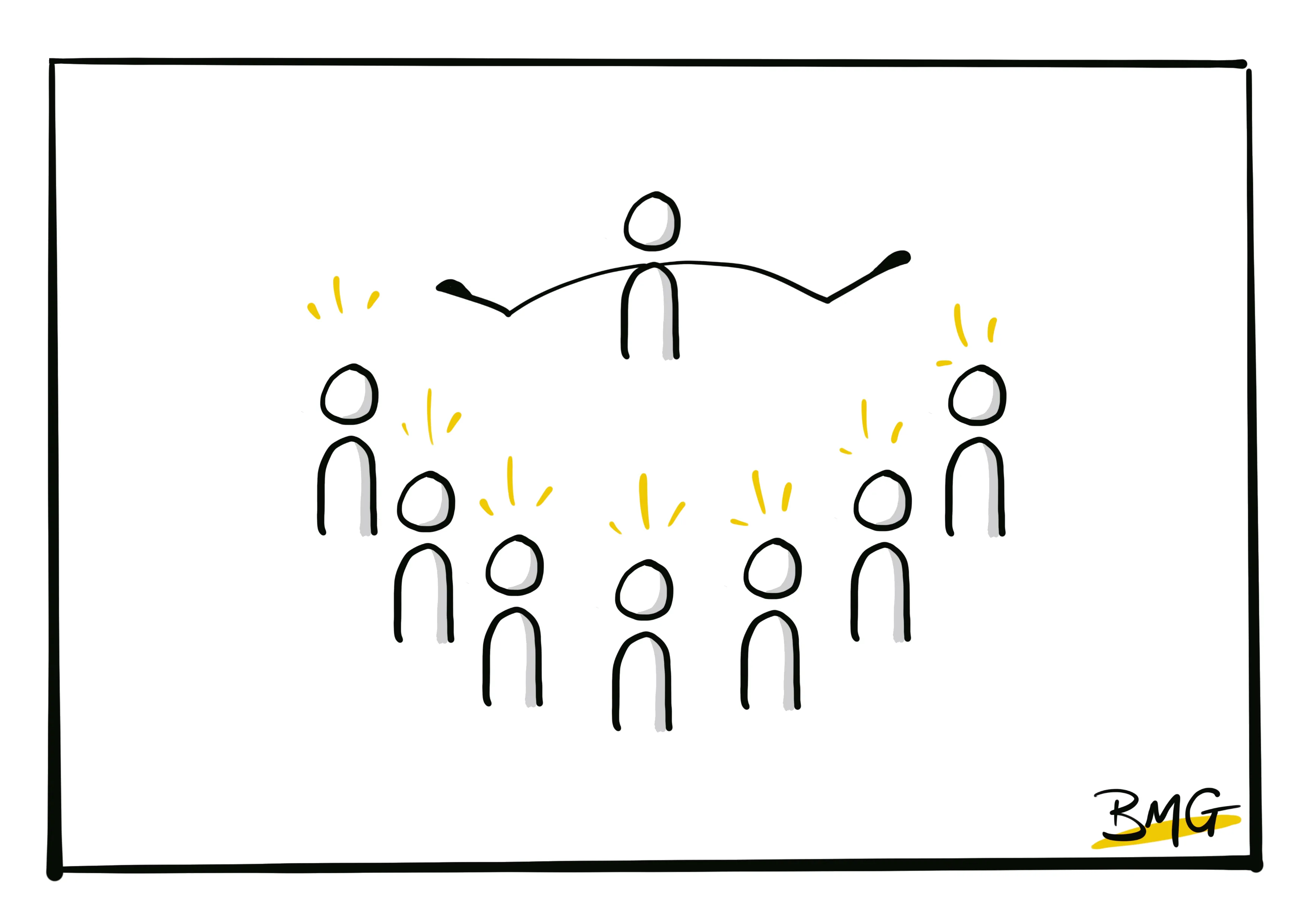
Few concepts are as powerful (yet often misunderstood) as the art of influence.
Whether you’re guiding a team through challenging projects, inspiring colleagues to embrace a new direction, or simply looking to deepen the connections within your organisation, understanding how to ethically and effectively influence others is a skill that can drive remarkable results.
In this series, we will be drawing inspiration from Robert Cialdini’s classic work, Influence: The Psychology of Persuasion.
Cialdini’s book has long been considered a cornerstone in the study of human behaviour, exploring why people say “yes” and how to ethically apply these principles in everyday interactions. The insights within its pages can be transformational - not just for marketers or salespeople, but for anyone looking to lead with greater impact and authenticity.
Each article will focus on one of the seven key principles outlined by Cialdini:
Commitment and Consistency
Liking
Scarcity
Social Proof
Unity
We’ll dive deep into how these principles can be applied in leadership and team settings, offering examples and actionable strategies that you can implement to build and maintain stronger, more cohesive teams.
By understanding and leveraging these principles, you can maintain environments where trust, motivation, and collaboration flourish, creating a workplace culture that achieves goals with integrity and purpose.
Whether you’re new to Cialdini’s work or looking for a fresh perspective on his (now) timeless insights, this series is designed to provide practical tools and inspiration for leaders at every level.
Let’s embark on this journey together, exploring the subtle yet powerful ways in which influence can shape the way we lead, connect, and achieve.
Commitment and Consistency
In leadership and when considering team dynamics, few principles carry as much weight as Commitment and Consistency.
This powerful duo taps into a basic psychological need for individuals to remain consistent with their decisions and actions, especially after making a public commitment.
Commitment and Consistency operate on a straightforward premise:
Once people make a choice or take a stand, they encounter personal and interpersonal pressures to behave consistently with that commitment.
This principle has profound implications for how leaders can drive action, build stronger teams, and achieve long-term success.
What is Commitment and Consistency?
As described in Cialdini’s Influence, the principle of commitment and consistency taps into a fundamental human desire: the need to align actions with prior commitments.
Once people commit to a course of action - whether small or significant -they are more likely to follow through and continue behaving in a way that’s consistent with that commitment.
“It is, quite simply, our nearly obsessive desire to be (and to appear) consistent with what we have already done.” , Robert Cialdini
Cialdini explains that this desire for consistency not only helps people simplify decision-making, but it also reinforces their self-image.
Once they’ve committed to something, even small steps, they are far more likely to escalate their engagement in order to stay consistent with that decision.
Consider an example from the book that references the “foot in the door” technique.
In this scenario, a researcher asked homeowners to place a small, inconspicuous sign in their windows promoting safe driving.
Later, those same homeowners were found to be much more likely to agree to a much larger, more intrusive billboard being placed in their front yards with the same message.
This highlights how small initial commitments can lead to larger, more consistent actions, as individuals strive to align their behaviour with previous choices.
This technique is particularly potent in leadership and team settings.
When leaders can gain a clear commitment from team members - be it to a project goal, a value, or even a method of working - the team is far more likely to follow through.
Moreover, if those commitments are made publicly, team members feel a social pressure to stay consistent, not just for their own sake but to maintain the respect and trust of their colleagues.
A quick pause
If this is helpful, the free guide goes deeper, and the newsletter brings ideas like this twice a week.
Building Momentum Through Commitment
Commitment is not about forcing decisions; it’s about inviting others to take the first step.

Even small commitments, like agreeing to take on a simple task, can create a sense of ownership and drive individuals to follow through on larger responsibilities later.
The power of this principle is that it builds momentum.
Once someone is on a path, they become more invested in staying the course, making it easier for leaders to build long-term engagement and drive performance.
Consistency as a Key to Trust
While commitment is the spark that ignites action, consistency is the fuel that sustains it.
Teams value leaders and colleagues who demonstrate consistency in their actions and decisions. It builds trust, strengthens relationships, and creates an environment in which individuals feel safe to invest their time and effort.
Consistency also sets a precedent for the team.
When leaders remain consistent in their words and actions, they serve as role models, encouraging others to do the same. This behaviour creates a ripple effect, reinforcing a culture of reliability and integrity within the team.
Examples of Commitment and Consistency
1. Project Ownership and Accountability
Scenario: A leader asks team members to publicly commit to owning specific pieces of a project during a team meeting. By stating their commitment to the ownership in front of their peers, team members are more likely to take full responsibility for their tasks.
Commitment Effect: Public commitments increase accountability, encouraging the team to deliver results on time and maintain high standards. Never underestimate the capacity of human beings to want to save face.
2. Setting Personal Goals
Scenario: During a performance review, an employee commits to improving their skills in a specific area. The manager follows up with small, achievable steps toward that goal and over time transfers this to the employee.
Consistency Effect: Over time, the employee becomes more invested in their own development, driven by the desire to stay consistent with their initial commitment, often building on the initial premise.
3. Team Agreements on Values
Scenario: At the beginning of a major project, the team collectively agrees on core values and working principles, such as open communication or respect for deadlines.
Commitment Effect: These values, once agreed upon and stated publicly, can create a culture where everyone feels obligated to adhere to them, knowing their peers expect consistency. You may need to reaffirm agreement from time to time in early stages.
4. Gradual Commitment to Larger Goals
Scenario: A leader begins by asking for a small commitment, such as dedicating 15 minutes a day to learning and development. As team members see gradual progress, the leader gradually increases their expectations.
Consistency Effect: The team becomes more engaged over time, as each small commitment reinforces the desire to stay consistent with their previous actions. See the excellent book Atomic Habits by James Clear for more on this.
Conclusion
The principle of Commitment and Consistency is a powerful tool for leaders aiming to create high-performing, engaged teams.
By inviting small commitments and nurturing a culture of consistency, leaders can guide their teams toward long-term success, where actions align with values and goals.
As Cialdini illustrates in Influence, once people commit to a course of action, they are motivated to maintain that commitment not only for practical reasons but also to reinforce their own self-image.
When applied thoughtfully, this principle can help leaders drive sustained commitment to team goals and ensure that consistency becomes the norm.
Yet, the true power of commitment and consistency lies in its authenticity.
When team members make meaningful commitments and leaders demonstrate consistency, the entire team benefits from a culture of accountability, trust, and shared purpose.
Remember, the path to extraordinary is walked with a thousand small steps, you’re doing great!
Want to learn more? Let's grow together!
Your Small Steps
How can I encourage team members to commit without pressuring them?
Encouraging small, voluntary commitments is key. Start by inviting team members to take ownership of specific tasks or goals in areas they’re passionate about. When commitments feel natural and aligned with personal interests, team members are more likely to follow through without feeling forced.
How can I maintain consistency in leadership without becoming rigid?
Consistency doesn’t mean inflexibility. It’s about demonstrating reliability and sticking to core values and principles. At the same time, it’s important to remain adaptable and open to feedback, adjusting plans when necessary while maintaining a steady leadership style.
How do small commitments lead to bigger actions?
Once someone commits to a small task, they’ve taken the first step. Psychologically, they become more invested in their own progress and are more likely to agree to larger responsibilities down the road, simply because it aligns with their desire to stay consistent with their initial action.
Can commitment and consistency work in a remote or hybrid team?
Yes, commitment and consistency are just as effective in remote teams. Public commitments in virtual meetings or group chats can still drive accountability, and consistency in communication,like regular check-ins and updates,helps reinforce reliability and trust, even from a distance.

Barry Marshall-Graham
Executive coach and leadership advisor
Get the Difficult Conversations Guide
A practical resource for leaders who want to say the thing that needs saying, without burning bridges or avoiding the moment.
Keep reading
13 March 2026
The Weight of Unshared Doubt
Why senior leadership feels lonelier as you rise, and why confidence is often just unshared doubt.

9 March 2026
Why Your Best Advice is the Problem
Why the rush to fix others is actually a specific insecurity, and how to stop.

6 March 2026
The Weight in Your Voice
Your words carry more weight than you realise. Calm authority is often a matter of pace, tone, and the courage to name what matters.

2 March 2026
The Quiet Drift You Inherit
Inherited teams rarely collapse in a moment. They drift. Resetting standards isn't about being harsh, it's about clarity, dignity, and trust.

27 February 2026
When Everyone Owns It
Shared ownership sounds healthy, but when everyone owns a decision, nobody owns the decision. Clarity needs a single accountable owner.
23 February 2026
The Private Ledger of Leadership
Senior leaders carry a private ledger of risks, promises, and people. Naming that inner load isn't weakness, it's how you lead without breaking.

20 February 2026
The Avoided Conversation Is a Decision
The conversation you're avoiding isn't neutral. It's a decision to let the current pattern continue, and that decision shapes the culture.

16 February 2026
Calm Authority in Tense Rooms
Authority isn't volume or force. It's the ability to hold a tense room steady, name what matters, and set a clear boundary without heat.

13 February 2026
The First Small Tolerance
Standards rarely collapse in a moment. They slip through the first small tolerance you let pass, then the next one feels easier.

9 February 2026
The Decision Vacuum
When decision rights are unclear, every meeting becomes a referendum. Clarity is less about answers and more about who owns the call.
