The Cost of Clarity
26 May 2025
Why Transparency Isn’t Always Comfortable (But Always Necessary)
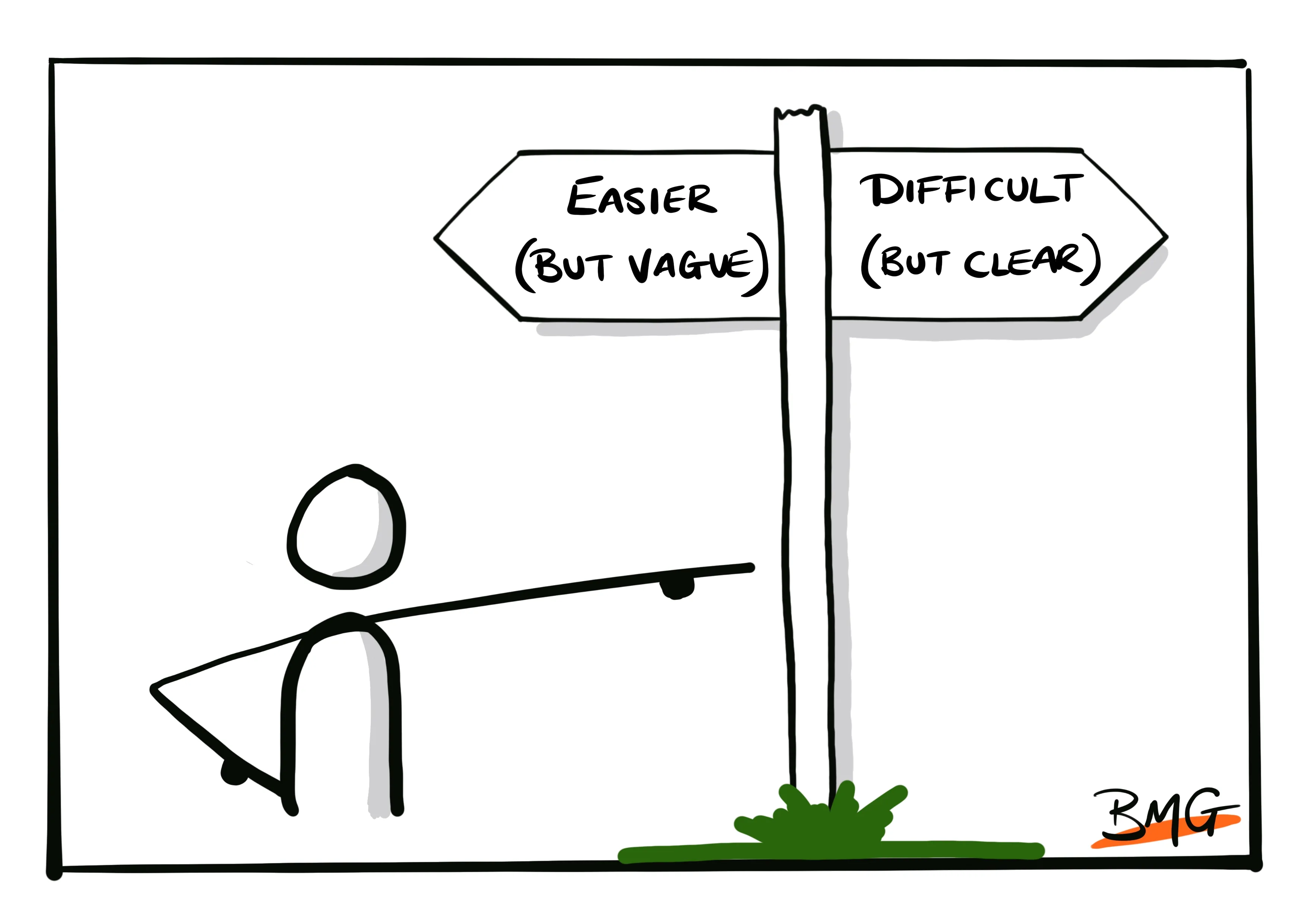
“Clear is kind. Unclear is unkind.”
, Brené Brown
Leadership often romanticises the idea of clarity. As though it’s always welcomed, always appreciated, always tidy.
But put in practice, clarity can feel sharp - on both sides.
It can trigger discomfort, challenge assumptions, and really disrupt the strongest of relationships.
Which, of course, is precisely why it matters.
Because clarity isn’t us just making issues palatable, we should strive to make them known and understood.
And while transparency might come with a short-term cost (awkward silences, defensive reactions, the occasional tension) it delivers long-term dividends: trust, alignment, momentum, and respect.
In my experience at least, clarity is rarely the easy choice.
But has always been the right one.
The Times I Didn’t Say It Straight
I’ve had moments in leadership where I softened the truth, diluted the message and deferred clarity in favour of harmony.
It felt easier in the moment.
But I learned the hard way: what you delay becomes heavier.
The message doesn’t disappear, it distorts, then comes back with more vigour … more weight.
I’ve also had moments where I’ve said it straight. Kindly, firmly, and with compassion. And even when it was hard, I saw how much people appreciated knowing.
Even if they didn’t like it, they could work with it.
And more importantly, I believe that they trusted me more because of it.
Clarity isn’t just about what you communicate, it’s about the relationship you’re building through communication.
And that’s what truly persists.
I am coming off the back of a week of really tough conversations and its required me to reset and think over what I know about clarity.
So let’s think about it together for a minute. What is it? What does it require?
And … what are the benefits of all that effort?
Clarity Exposes What’s True
To be clear is to let go of performance (for a little while at least).
It’s to name reality, even when it’s imperfect. Even when it’s inconvenient.
And in doing so, we remove the fog.
Clarity invites us to stop guessing … and to stop second-guessing.
To stop using energy to interpret what should have been directly communicated.
Unclear leadership sounds like:
“We’ll see how this plays out.”
“There might be some changes coming.”
“Let’s keep doing our best and hope for the right outcome.”
Clear leadership sounds like:
“Here’s what’s happening, and why.”
“This is what we expect, and how we’ll support it.”
“Some changes are coming. Here’s what I know, and here’s what’s still uncertain.”
Clarity doesn’t always mean certainty, it means owning what you do know and having the courage to say it.
Clarity Requires Courage
Clarity often comes at a cost.
You may not be liked in the moment.
You might be challenged.
You might trigger disappointment, resistance, or discomfort.
But courageous clarity is a hallmark of trust-worthy leadership.
It says: “I respect you enough to be completely honest with you.”
Too often, we delay clear messages in the name of empathy, which I openly admit is not one of my own strongest points. I have to work hard to bring empathy into my conversations.
But holding back truth creates confusion, not kindness.
Clarity isn’t cold … it’s compassionate when you think about it.
Even when it stings, it offers us something solid to stand on.
A quick pause
If this is helpful, the free guide goes deeper, and the newsletter brings ideas like this twice a week.
Clarity Protects Energy
Let me tell you this. Ambiguity is exhausting.
When we don’t know where we stand, we spin their wheels:
Trying to interpret unspoken messages
Managing their own uncertainty
Filling gaps with assumption or fear
Clarity gives us our energy back.
It allows us to channel effort into action, not analysis.
To engage with the work, not with guessing the politics behind it.
Those who choose clarity give their teams the gift of focus.
Clarity Builds a Culture of Trust
In unclear cultures, people learn to protect themselves. I’ve seen it, more times than you might think.
People hold back, hedge their language, and avoid difficult conversations.
In clear cultures, people feel safe enough to be real.
To ask questions. To name concerns. To challenge openly and honestly. To offer solutions, even when they’re not the domain expert.
Trust doesn’t require perfection. It requires consistency.
And clarity (when repeated and reinforced) builds the kind of consistency that people can rely on.
Reflection Prompts
Where in your work are you being vague out of discomfort or fear?
What are you asking your team to guess or assume, rather than simply telling them?
What conversations have you postponed that would offer relief if delivered with honesty?
What’s one truth you need to say more clearly (to yourself or others)?
How can you create a culture for others to be clear with you, too?
Final Thoughts
Clarity always costs something.
Comfort.
The illusion of harmony.
The ease of saying what people want to hear.
But clarity also buys something invaluable.
Trust.
Alignment.
Momentum and maturity and depth.
So the next time you hesitate before saying what needs to be said, remember:
You don’t lead through perfection. You lead through truth.
And every clear word, honestly delivered, lays another brick in the foundation of the culture you’re building.
Remember, the path to extraordinary is walked with a thousand small steps, you’re doing great!
Your Small Steps
What if clarity causes friction or negative reactions?
That’s okay. Friction isn’t failure - it’s often a sign you’ve touched something real. Clear communication invites alignment, even if it creates temporary discomfort.
Action:
Choose one upcoming message you’ve been tempted to sugar-coat. Write it clearly, then rework it for tone, not truth. Deliver it with empathy and firmness.
How can I be clear without sounding blunt or harsh?
Clarity and compassion can (and should) coexist. The key is tone. Be direct in message, soft in delivery. Clear doesn’t mean cold.
Action:
Before your next difficult conversation, practise aloud:
“What’s the truth I need to say?” and “How can I say it with care?”
Isn’t some ambiguity useful for flexibility?
Only when used intentionally. When ambiguity is habitual, it breeds mistrust. Clarity doesn’t mean rigidity, it means people know where they stand.
Action:
Audit a recent message or update. Did it invite action or ambiguity? Where could you make the outcome or expectation clearer?
What’s the biggest risk of not being clear?
Misalignment, wasted energy, disengagement and erosion of trust. People may fill gaps with their own stories, often more negative than reality.
Action:
Ask your team: “What feels unclear right now?” Then listen without defensiveness, and clarify openly.
How do I role-model clarity in everyday leadership?
Action:
In your next team sync, clearly state:
One thing we’re doing
One reason we’re doing it
One thing we’re not doing (and why)
What if I’m not sure what is clear?
Then start with honesty. Say what you do know, and frame the unknowns with context. Clarity isn’t about having all the answers, it’s about naming what’s true in the moment.
Action:
Use this script when needed:
“Here’s what I know. Here’s what’s still unfolding. I’ll keep you posted as we learn more.”

Barry Marshall-Graham
Executive coach and leadership advisor
Get the Difficult Conversations Guide
A practical resource for leaders who want to say the thing that needs saying, without burning bridges or avoiding the moment.
Keep reading
13 March 2026
The Weight of Unshared Doubt
Why senior leadership feels lonelier as you rise, and why confidence is often just unshared doubt.
9 March 2026
Why Your Best Advice is the Problem
Why the rush to fix others is actually a specific insecurity, and how to stop.
6 March 2026
The Weight in Your Voice
Your words carry more weight than you realise. Calm authority is often a matter of pace, tone, and the courage to name what matters.

2 March 2026
The Quiet Drift You Inherit
Inherited teams rarely collapse in a moment. They drift. Resetting standards isn't about being harsh, it's about clarity, dignity, and trust.

27 February 2026
When Everyone Owns It
Shared ownership sounds healthy, but when everyone owns a decision, nobody owns the decision. Clarity needs a single accountable owner.
23 February 2026
The Private Ledger of Leadership
Senior leaders carry a private ledger of risks, promises, and people. Naming that inner load isn't weakness, it's how you lead without breaking.

20 February 2026
The Avoided Conversation Is a Decision
The conversation you're avoiding isn't neutral. It's a decision to let the current pattern continue, and that decision shapes the culture.

16 February 2026
Calm Authority in Tense Rooms
Authority isn't volume or force. It's the ability to hold a tense room steady, name what matters, and set a clear boundary without heat.

13 February 2026
The First Small Tolerance
Standards rarely collapse in a moment. They slip through the first small tolerance you let pass, then the next one feels easier.
9 February 2026
The Decision Vacuum
When decision rights are unclear, every meeting becomes a referendum. Clarity is less about answers and more about who owns the call.
