The Paradox of Choice
27 October 2025
Why having many options make us more fatigued.
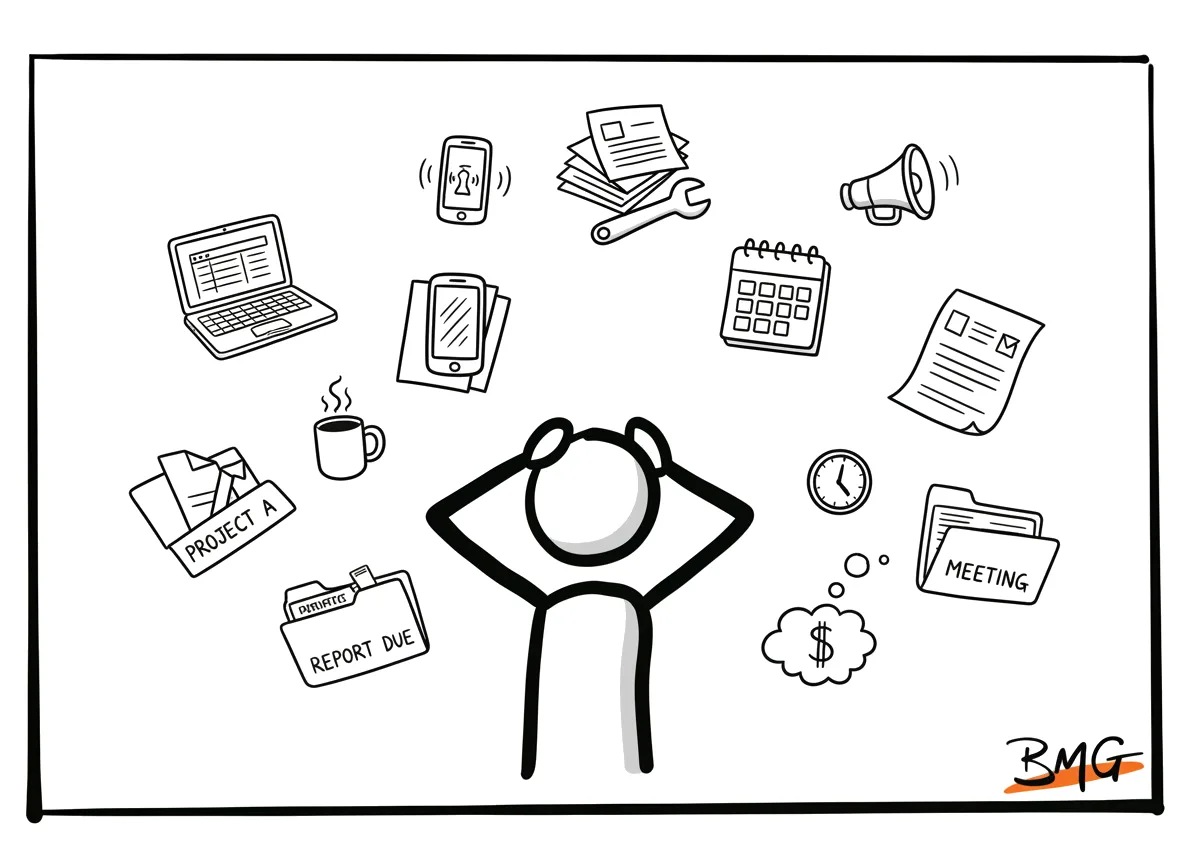
We live in an age of abundance. Endless opportunities. Infinite options. Every decision (from what to eat, to what to watch, to how to work) comes with dozens of alternatives.
Some call it freedom, but it doesn’t always feel that way.
Instead, we feel overwhelmed. Hesitant. Restless.
With every choice we make, we’re very often reminded of the hundreds we didn’t … the jobs we didn’t take, the paths we didn’t walk, the lives we didn’t live.
And so, instead of feeling empowered by choice, we become somewhat paralysed by it.
Psychologist Barry Schwartz called this the Paradox of Choice: the idea that while freedom is good, too much freedom can leave us anxious, indecisive, and dissatisfied.
Even when we get what we wanted.
The Science Behind the Paradox
Research shows that as the number of options increases, satisfaction decreases.
Why? Because our expectations rise in proportion.
When we choose between two things, we can kind of live with our decision, but when we choose between twenty, every outcome feels slightly disappointing.
Essentially, we can imagine all the ways another choice might have been better.
We don’t just fear missing out. We feel it. Often, In real time.
This is choice overload, and it shows up everywhere:
Endless Netflix menus.
Unfocused career paths.
Perpetual “what ifs” in leadership decisions.
The exhausting pursuit of “perfect.”
The abundance of choice creates the illusion of control while quietly eroding clarity.
From More - to Meaningful
The way out of the paradox isn’t through more analysis. It’s through alignment.
When we anchor our decisions in values, not options, the noise quiets down.
We stop asking, “What’s the best choice?” and start asking, “What’s the right choice?”
Leaders who learn this make faster, calmer decisions. They don’t chase perfect outcomes, they pursue meaningful ones.
The key I’ve found useful for me: I can’t optimise every choice, but I can own the ones that matter most.
Freedom, for me, is purposeful constraint.
Over time, I noticed a pattern.
The more I tried to weigh every possible decision, the more confused I became. I’d overthink, hesitate, and second-guess even the right calls.
Eventually, I realised that my clarity doesn’t come from having more options, it comes from knowing which ones to ignore. I’ll tell anyone that will listen … “No!” is one of the most powerful words in a leaders vocabulary.
When I began filtering decisions through my core values (growth, impact, integrity, balance) the confusion reduced instantly.
We don’t need to analyse every path. We just need to honour what matters most, and in doing so, I assure you that we rediscover something rare in modern life: peace and confidence in our choices.
A quick pause
If this is helpful, the free guide goes deeper, and the newsletter brings ideas like this twice a week.
Reflection Prompts
Where in your life are you overwhelmed by too many options?
What would change if you decided through values, not outcomes?
What choices could you remove to create more mental space?
How do you know when you’ve made a right enough decision?
What would it look like to choose simplicity, deliberately?
Final Thought
More choice doesn’t always mean more freedom. Sometimes it just means more noise.
The most fulfilled people aren’t those who have everything, they’re those who’ve learned to focus on just enough.
You can’t explore every path, but you can walk one path well.
So simplify.
Constrain.
Choose with clarity, then commit with courage.
Freedom doesn’t come from analysing every option.
It comes from considering fewer, chosen with intention.
Remember, the path to extraordinary is walked with a thousand small steps, and you’re doing great!
Your Small Steps
Why do I feel anxious even after making the “right” choice?
Because your mind fixates on what you didn’t choose. That’s loss aversion at work.
Action: Write down three reasons your current choice serves your values. Remind yourself of them when doubt creeps in.
How can I simplify choices at work?
Use filters: Does this align with our purpose? Will it move us forward? If not, it’s noise.
Action: Create a 3-question checklist to guide recurring decisions.
Isn’t choice good for creativity?
Yes, to a point. But creativity thrives on boundaries. Too much freedom leads to diffusion, not innovation.
Action: Add one constraint to your next project. Watch how focus sharpens creativity.
How do I stop overthinking decisions?
Set time limits and criteria. Decide once the criteria are met, not when it “feels perfect.”
Action: Next time you’re stuck, set a timer for 15 minutes. Choose when it goes off.
What if I make the wrong choice?
You will, sometimes. The goal isn’t perfection, it’s adaptability. Growth lives in course correction.
Action: Reframe mistakes as feedback loops. Every wrong turn narrows the path to what’s right.
How can I coach someone through choice overload?
Ask, “What matters most here?” and “What can you eliminate?” Most confusion dissolves through clarity, not complexity.
Action: Guide them to name one decision that would simplify three others.
How do I know if I’m stuck in the paradox?
If every decision feels heavier than it should, you’re in it. Too much choice, too little clarity.
Action: Step back. Define your top three life or leadership values. Let them lead every major decision for the next month.

Barry Marshall-Graham
Executive coach and leadership advisor
Get the Difficult Conversations Guide
A practical resource for leaders who want to say the thing that needs saying, without burning bridges or avoiding the moment.
Keep reading
13 March 2026
The Weight of Unshared Doubt
Why senior leadership feels lonelier as you rise, and why confidence is often just unshared doubt.
9 March 2026
Why Your Best Advice is the Problem
Why the rush to fix others is actually a specific insecurity, and how to stop.
6 March 2026
The Weight in Your Voice
Your words carry more weight than you realise. Calm authority is often a matter of pace, tone, and the courage to name what matters.

2 March 2026
The Quiet Drift You Inherit
Inherited teams rarely collapse in a moment. They drift. Resetting standards isn't about being harsh, it's about clarity, dignity, and trust.
27 February 2026
When Everyone Owns It
Shared ownership sounds healthy, but when everyone owns a decision, nobody owns the decision. Clarity needs a single accountable owner.
23 February 2026
The Private Ledger of Leadership
Senior leaders carry a private ledger of risks, promises, and people. Naming that inner load isn't weakness, it's how you lead without breaking.

20 February 2026
The Avoided Conversation Is a Decision
The conversation you're avoiding isn't neutral. It's a decision to let the current pattern continue, and that decision shapes the culture.

16 February 2026
Calm Authority in Tense Rooms
Authority isn't volume or force. It's the ability to hold a tense room steady, name what matters, and set a clear boundary without heat.

13 February 2026
The First Small Tolerance
Standards rarely collapse in a moment. They slip through the first small tolerance you let pass, then the next one feels easier.
9 February 2026
The Decision Vacuum
When decision rights are unclear, every meeting becomes a referendum. Clarity is less about answers and more about who owns the call.
