The Power of Thinking Time
22 September 2025
Why Stepping Back Moves You Forward
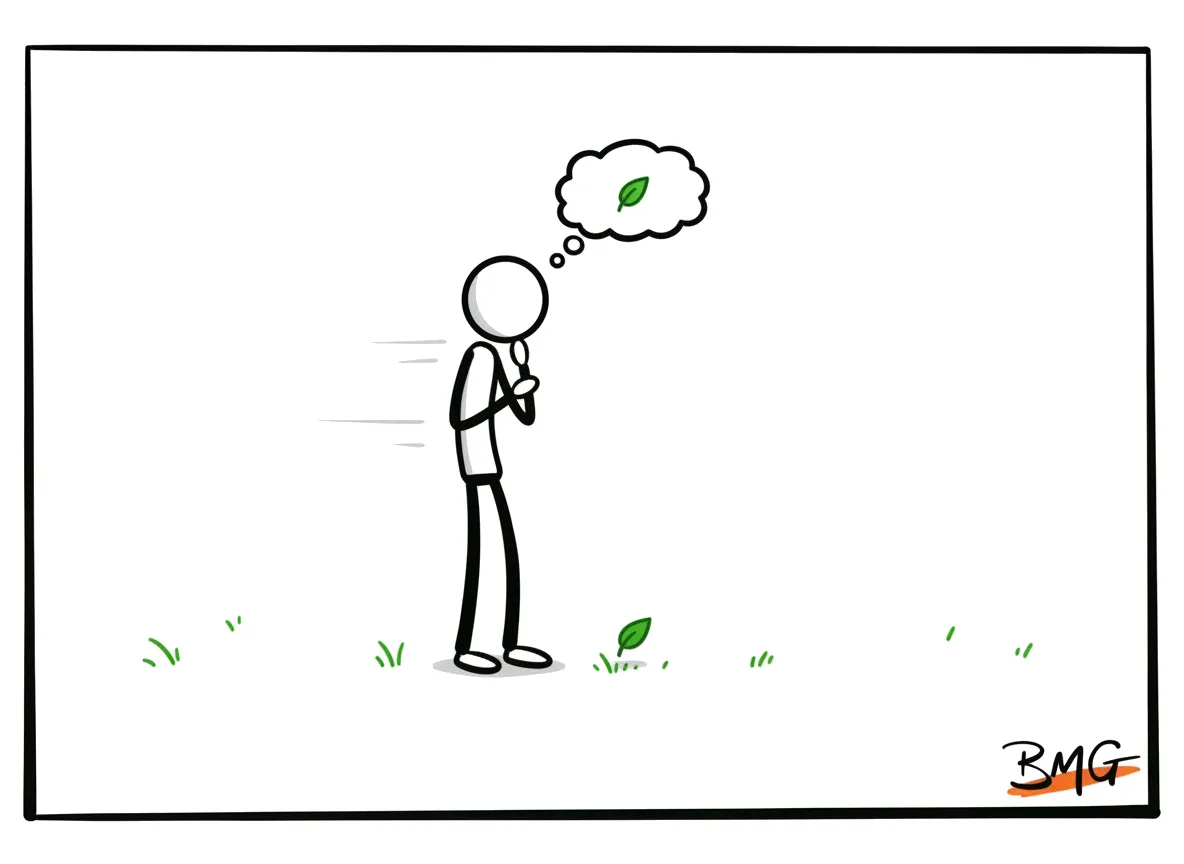
“I take two weeks a year to just read and think, where I’m not interrupted by work or anything else. This is how I’ve come up with many new ideas.”
, Bill Gates
If you’re like most successful people, you spend your days buried in tasks, calls, and emails. You’re productive, sure - but are you thinking?
Busyness masquerades as progress, but without intentional time to reflect, explore, and imagine, we’re not steering our boat, we’re simply rowing harder.
This is the paradox of modern leadership:
We crave new ideas, fresh insights, and better decisions, but we rarely create the conditions for them to emerge.
The Models
Bill Gates famously retreats twice a year for a Think Week. He checks out (completely) for seven days of uninterrupted reading, note-taking, and idea exploration. His legacy of innovation is not just built on execution, but on creating space to think deeply.
More recently, writers and creators like Sahil Bloom have popularised the “Think Day” - a shorter but equally intentional pause.
One day away from the treadmill of tasks, designed for reflection, creativity, and strategic clarity.
The lesson I take from both concepts?
It’s not about the length of time. It’s about the quality of attention.
Why Thinking Time Works
When we step away from busyness, several things happen:
Perspective expands: Distance reveals patterns invisible up close.
Creativity ignites: Novel ideas emerge when the brain isn’t consumed by execution.
Decisions improve: Reflection helps align action with values, not just urgency.
Energy renews: Pausing creates space for recovery, preventing burnout.
Neuroscience backs this up:
Our brains need “default mode” time (periods of rest and wandering thought) to process, connect, and innovate.
Making It Work for You
You don’t need to disappear into the woods for a week - although I don’t know about you, but that sounds pretty nice to me sometimes. The actually principle applies at any scale:
Think Hour – block 60 minutes in your week to step back. No screens. No calls. Just space.
Think Day – once a month, clear your calendar. Journal, read, reflect. Ask better questions.
Think Week – once (or twice if you are one of the lucky few) a year, retreat fully. Recharge. Immerse yourself in exploration and vision.
It doesn’t matter how long. What matters is that you choose (very deliberately) to prioritise thinking as highly as you would doing.
A quick pause
If this is helpful, the free guide goes deeper, and the newsletter brings ideas like this twice a week.
Personal Reflection
I’ve noticed that my best ideas never come in the middle of endless calls or email chains. They come on walks, in quiet mornings, or during rare days when I’ve stepped out of the daily grind.
How many times have you noticed that some of your very best ideas come over the weekend or on holiday?
Whenever I give myself permission to think (without the guilt of not “doing”)I realise that thought itself is action. It’s the kind of action that shapes everything else.
The hardest part for me personally isn’t the practice.
It’s giving myself permission to pause.
Reflection Prompts
When was the last time you gave yourself uninterrupted space to think?
What decision or challenge in your life most deserves a Think Hour, Day or Week right now?
How much of your productivity is actually just activity?
What’s one small experiment you could run to test the power of thinking time this week?
Final Thoughts:
A life of busyness is not the same as a life of progress.
Whether it’s a week in the woods like Gates, a day of silence like Bloom, or simply an hour away from noise, the practice is the same: create space for thought.
It’s in that space that clarity emerges, creativity sparks, and direction presents itself.
So don’t wait for a holiday, a crisis, or permission.
Take your Think Hour, Day, or Week … and remember:
The time you spend thinking is never wasted.
It’s the deepest investment you can make in the life you want to build.
Remember, the path to extraordinary is walked with a thousand small steps, your’e doing great!
Your Small Steps
Isn’t this just a luxury for million/billionaires?
Not at all. You don’t need a cabin in the woods. Start with one hour a week. The key is intentionality, not scale.
Action: Block your calendar for a 60-minute “Think Hour” this week and protect it fiercely.
What do I actually do during a Think Day?
Read, journal, map out ideas, reflect on goals, or simply walk. The absence of busyness creates the space for clarity.
Action: Pick one key question to guide your day: “What matters most right now?”
Won’t I fall behind if I step away?
Ironically, stepping back helps you get ahead. Time away improves focus and decision quality.
Action: Track how your next Think Hour impacts your clarity and energy …you’ll likely gain time back - by some order of magnitude.
How do I stop my mind from wandering to tasks?
Expect restlessness. Write down stray to-dos on a notepad, then return to reflection. Structure helps free the mind.
Action: Begin your session with a short breathing exercise to transition out of urgency.
Can teams do this, or is it just individual?
Teams benefit greatly. Collective reflection leads to alignment and innovation.
Action: Schedule a quarterly “Think Session” with your team, free of agenda, to explore big questions.
What if I struggle to sit still?
Thinking doesn’t have to be static. Walk, dictate notes, sketch ideas. The key is space, not stillness.
Action: Try a walking Think Hour. Leave your phone behind and carry a small notebook.
How often should I do this?
As often as needed. Start small and build rhythm. The benefit compounds.
Action: Choose your entry point: Think Hour, Think Day, or Think Week. Book the first one now.

Barry Marshall-Graham
Executive coach and leadership advisor
Get the Difficult Conversations Guide
A practical resource for leaders who want to say the thing that needs saying, without burning bridges or avoiding the moment.
Keep reading
13 March 2026
The Weight of Unshared Doubt
Why senior leadership feels lonelier as you rise, and why confidence is often just unshared doubt.

9 March 2026
Why Your Best Advice is the Problem
Why the rush to fix others is actually a specific insecurity, and how to stop.
6 March 2026
The Weight in Your Voice
Your words carry more weight than you realise. Calm authority is often a matter of pace, tone, and the courage to name what matters.

2 March 2026
The Quiet Drift You Inherit
Inherited teams rarely collapse in a moment. They drift. Resetting standards isn't about being harsh, it's about clarity, dignity, and trust.

27 February 2026
When Everyone Owns It
Shared ownership sounds healthy, but when everyone owns a decision, nobody owns the decision. Clarity needs a single accountable owner.
23 February 2026
The Private Ledger of Leadership
Senior leaders carry a private ledger of risks, promises, and people. Naming that inner load isn't weakness, it's how you lead without breaking.

20 February 2026
The Avoided Conversation Is a Decision
The conversation you're avoiding isn't neutral. It's a decision to let the current pattern continue, and that decision shapes the culture.

16 February 2026
Calm Authority in Tense Rooms
Authority isn't volume or force. It's the ability to hold a tense room steady, name what matters, and set a clear boundary without heat.

13 February 2026
The First Small Tolerance
Standards rarely collapse in a moment. They slip through the first small tolerance you let pass, then the next one feels easier.

9 February 2026
The Decision Vacuum
When decision rights are unclear, every meeting becomes a referendum. Clarity is less about answers and more about who owns the call.
