The Private Ledger of Leadership
23 February 2026
Senior leaders carry a private ledger of risks, promises, and people. Naming that inner load isn't weakness, it's how you lead without breaking.
The Problem
There's a part of senior leadership that rarely gets named.
It isn't the visible workload.
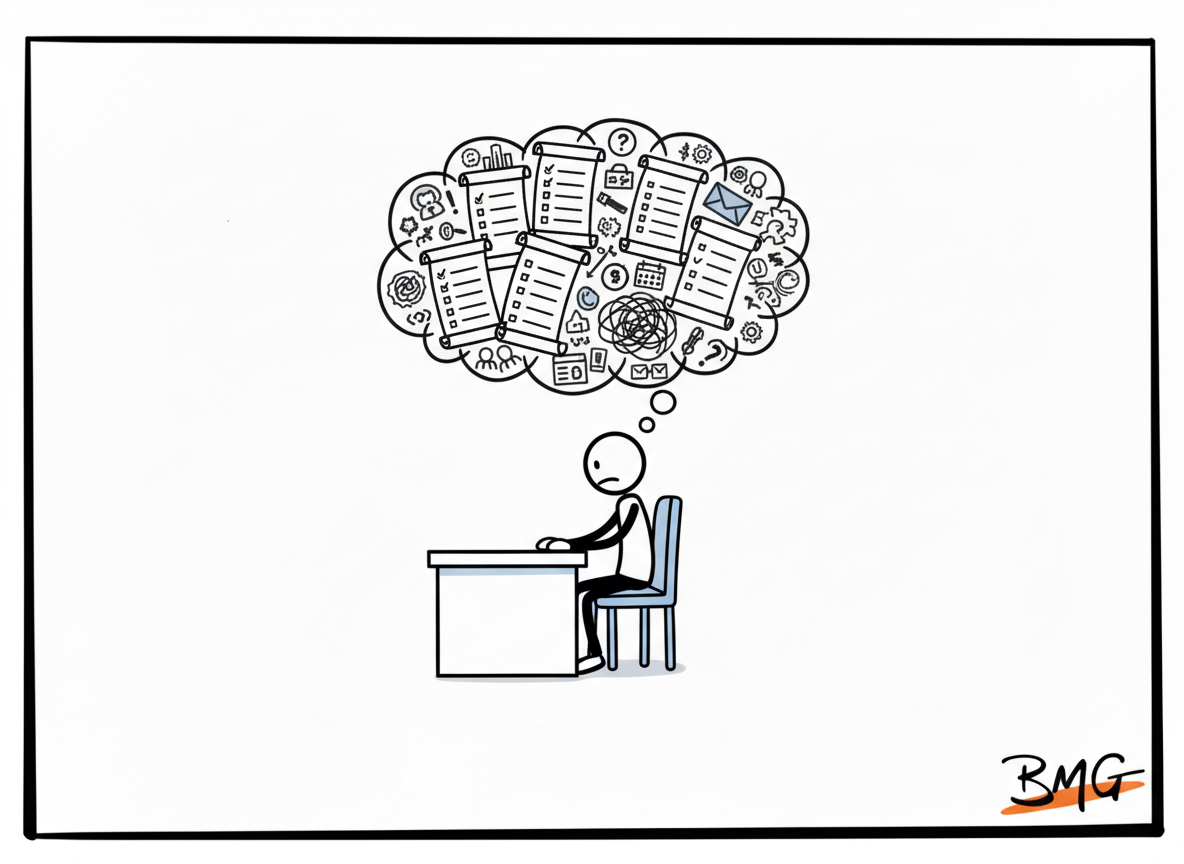
It's the private ledger in your head, the list you carry that nobody else sees.
It includes the risks you've noticed but not yet shared, the people issues you're holding because it isn't the right time, and the promises you've made to the board, to the team, and to yourself.
The list is quiet, but it's heavy.
I think of a someone I once worked with. They would leave the executive meeting with three extra decisions in their head that nobody else knew were now thiers. A supplier risk, a quiet resignation, a board question that was coming. They couldn't share them yet, but they changed the way they walked into every meeting for the next week.
The cost of this inner load shows up in the edges of your day.
The tightness before a difficult meeting.
The late night email you send because you can't settle.
The feeling that you're responsible for everything, even when you aren't.
The Reframe
The inner load isn't a personal flaw., it's an occupational reality.
Leadership creates a private ledger because you see more, you carry more, and you're often expected to hold it quietly.
The work isn't to pretend the ledger doesn't exist. The work is to manage it with intention, so it doesn't leak into your decisions, your relationships, or your health.
It helps to treat the ledger as a signal, not a verdict.
If the list is growing, something in the system needs attention. That might be pace, it might be clarity, or it might be support. The ledger is information, and when you listen to it early, you can adjust before the cost arrives.
That shift alone can lower the weight you carry.
It changes your posture.
What the Ledger Holds
The ledger holds decisions that aren't yet made.
These are the choices you're turning over in your head while the team is focused on delivery. You mightn't be ready to speak them out loud, but they're already shaping how you lead.
It holds the risks you see early, the market shift that might derail the plan., the senior hire you're uncertain about, or perhaps the cultural tension you feel between two parts of the organisation.
You can sense it, but you can't yet prove it.
It also holds the trade offs you're weighing. Ship now or wait for quality. Promote a loyal leader or bring in new capability. Protect morale or push pace.
These choices aren't just operational, they shape the character of the organisation, and they sit heavily in the ledger.
This ledger isn't a sign that you're doing leadership wrong.
It's a sign that you're in it.
How the Load Shows Up
The inner load leaks in small ways.
You become short in meetings because your mind is already full, skip reflection because you feel behind, and default to control because the uncertainty feels unsafe.
Sleep is often the first indicator. Not because you don't have time to sleep, but because your mind doesn't believe it's safe to switch off. When the ledger is full, your body stays alert and your mind continues to race.
This leads to an obvious a psychological cost. You start to sense what's unsaid in the room, and you hold the tension of competing priorities.
Over time, that weight can make you feel older than you should.
The risk isn't just burnout.
The risk is that you begin to lead from the ledger instead of clarity.
A quick pause
If this is helpful, the free guide goes deeper, and the newsletter brings ideas like this twice a week.
Making the Load Shareable
The inner load can be made shareable when you name it, even privately.
When you can name the ledger, you can separate what's real from what's noise.
Writing it down has helped for me. A simple private list that separates decisions, risks, and people issues can reduce the mental loop.
The ledger is heavy in your head, but lighter on paper because it's a shape.
If you can, review the ledger with one trusted person once a week.
That small act often reduces the sense of isolation and brings back perspective.
It's also worth looking at which parts of the ledger are self imposed. Many senior leaders carry expectations they never agreed to. They assume they must be the calmest, the smartest, the most certain person in the room.
That's a story, not a rule.
When you release the story, you release weight.
Personal Reflection
I've carried this ledger more times than I care to admit.
I've held decisions in my head for too long because I wanted to protect the team from uncertainty.
I told myself it was responsible ... it was lonely.
The shift for me came when I noticed how the load was shaping my behaviour. I was becoming sharper, less patient, and more controlling. That wasn't my leadership style, and was far form the person I have worked hard to be.
It was the weight speaking.
There was a night I sat at the kitchen table at 11 pm, rewriting an important update for the third time. The words were fine. The problem was the ledger behind them. I hadn't named the risk I was carrying, so it kept leaking into the tone. Once I named it, the update became simpler - and clearer.
When I began to name the ledger, first to myself and then to a trusted peer, the load eased.
I can't say the problems disappeared, but they became manageable.
I could lead from clarity again.
Reflection Prompts
What's on my private ledger right now that I haven't named?
Which part of the load is real, and which part is a story I'm telling myself?
Who could hold one piece of this complexity with me?
What structure would reduce the number of decisions I carry?
Where's the load shaping my behaviour in ways I don't like?
Final Thought
The inner load of leadership isn't a failure.
It's a signal that you're carrying real responsibility.
The question is whether you carry it alone, or whether you build the structures and relationships that make it lighter.
You can lead with the ledger, but you don't have to be defined by it.
The path to extraordinary is walked with a thousand small steps, you’re doing great!
Your Small Steps
How do I know if my inner load is too high?
If you feel constantly on edge, if you can't switch off, or if you're leading from control rather than clarity, your load is probably too heavy. Those are early signals worth respecting.
Small Step: Write down the top five things you're holding and rate how much control you've over each.
What if I feel I can't share any of it?
You don't need to share everything. You need one safe place to think out loud. That could be a peer, a mentor, or a coach. The goal is perspective, not venting.
Small Step: Identify one person you trust and book a thirty minute conversation focused on your current load.
How do I stop carrying decisions that belong elsewhere?
Decision rights are the antidote. If you're carrying decisions that could sit lower in the organisation, it's a signal that ownership is unclear.
Small Step: List three decisions you're carrying and decide which one you could delegate with clear boundaries.
What if the organisation expects me to be the calmest person?
You can be calm without being invulnerable. Calm isn't the absence of emotion, it's the ability to stay grounded while naming what's real.
Small Step: Practise saying, I'm holding a lot right now, and I'm still clear on our next step.
How do I reduce the nightly mental loop?
Your mind loops when it doesn't trust the system. Create a small closing ritual that tells your brain the work is contained for the day.
Small Step: End the day by writing the three decisions you'll make tomorrow, then close your laptop.
How do I prevent the load from leaking into my tone?
Notice the moments when you become sharp or impatient. That's often the load speaking. Pause before you respond and choose your tone deliberately.
Small Step: When you feel rushed, take one breath and ask a clarifying question before you answer.

Barry Marshall-Graham
Executive coach and leadership advisor
Get the Difficult Conversations Guide
A practical resource for leaders who want to say the thing that needs saying, without burning bridges or avoiding the moment.
Keep reading
6 March 2026
The Weight in Your Voice
Your words carry more weight than you realise. Calm authority is often a matter of pace, tone, and the courage to name what matters.

2 March 2026
The Quiet Drift You Inherit
Inherited teams rarely collapse in a moment. They drift. Resetting standards isn't about being harsh, it's about clarity, dignity, and trust.
27 February 2026
When Everyone Owns It
Shared ownership sounds healthy, but when everyone owns a decision, nobody owns the decision. Clarity needs a single accountable owner.
20 February 2026
The Avoided Conversation Is a Decision
The conversation you're avoiding isn't neutral. It's a decision to let the current pattern continue, and that decision shapes the culture.

16 February 2026
Calm Authority in Tense Rooms
Authority isn't volume or force. It's the ability to hold a tense room steady, name what matters, and set a clear boundary without heat.

13 February 2026
The First Small Tolerance
Standards rarely collapse in a moment. They slip through the first small tolerance you let pass, then the next one feels easier.
9 February 2026
The Decision Vacuum
When decision rights are unclear, every meeting becomes a referendum. Clarity is less about answers and more about who owns the call.

6 February 2026
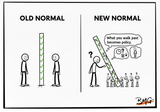
The Standard You Walk Past
How small exceptions become the quiet rule, and why leaders must name the slip before it sets the team's real expectations.
2 February 2026
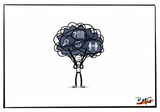
The Private Load of Public Roles
Senior roles can feel heavier as private responsibility accumulates, decisions multiply, and there are fewer safe places to speak plainly.
30 January 2026
Conviction Without Force
How to hold a clear position without pushing, and why steady conviction builds more trust than intensity ever will over time.