The Quiet Drift You Inherit
2 March 2026
Inherited teams rarely collapse in a moment. They drift. Resetting standards isn't about being harsh, it's about clarity, dignity, and trust.
The Problem
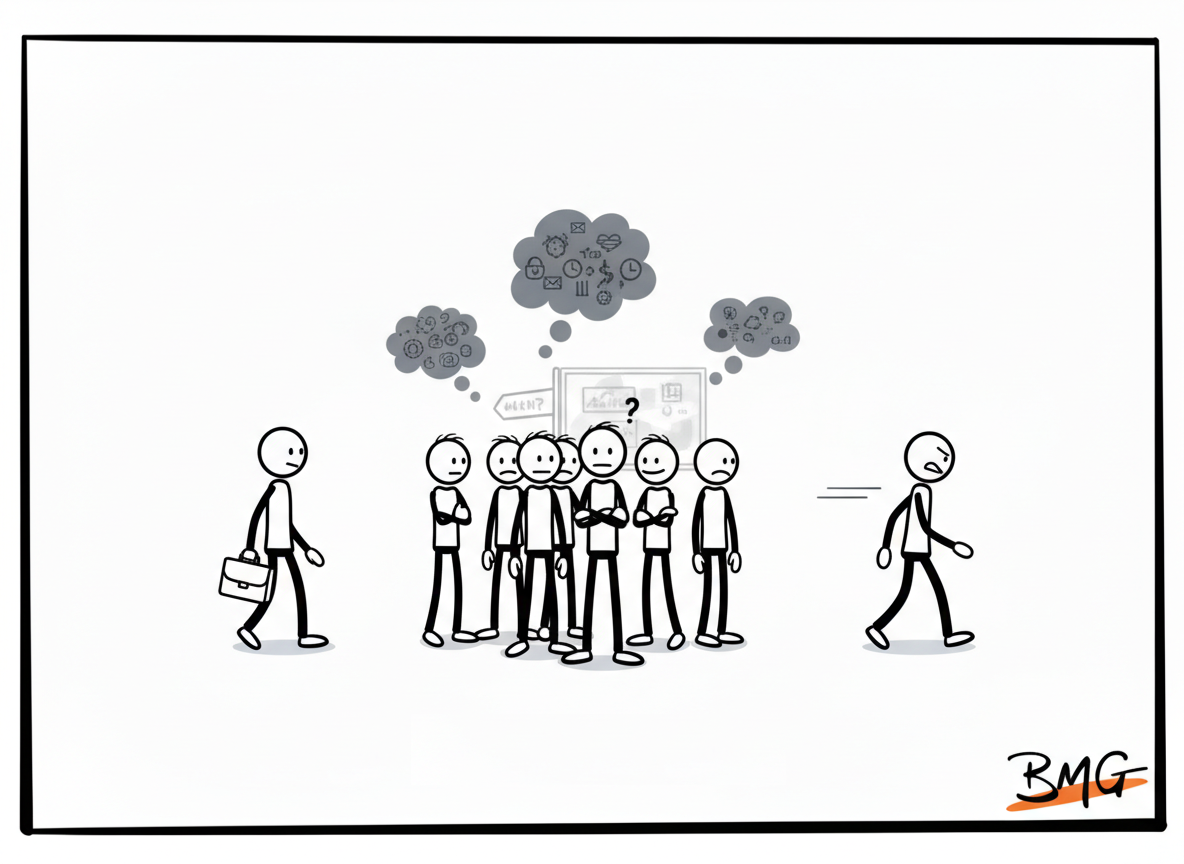
Stepping into an inherited team often looks easier from the outside than it feels on the inside.
The work is moving, people are busy, and the culture appears functional.
Then you notice the quiet drift. Meetings start late. Commitments soften. Feedback is vague. Performance is uneven, and nobody names it.
I've seen it in a product team where every release note was late by a few days.
Nobody was worried because the product still shipped. The cost showed up in the handoffs, the overnight fixes, and the quiet frustration of dependent teams. The standard had moved, but the team had stopped seeing it.
You can feel the tension between raising the bar and keeping the peace. You want to respect what came before, but also know that the current standard won't carry the organisation forward.
This is where many senior leaders stall.
They sense it, but they delay the reset because they don't want to be seen as the new person who immediately changes everything.
In the early 1:1's you often hear the same phrase, this is just how we do it or that's the way its's always been done. It's said kindly, often (annoyingly) with pride.
It's also a warning sign that the standard is now cultural, not explicit.
The Reframe
Standards aren't pressure. They're clarity.
They tell people what good looks like so they can succeed without guessing. Resetting standards isn't an act of harshness, it's an act of care for the team; and the organisation.
The drift you inherit is rarely malicious, and usually the result of small tolerances that accumulated over time. That means it can be corrected, but only if you're willing to name, and work at it.
The reset is usually less dramatic than you fear.
It's a series of small, clear statements about what matters and why. People often feel relieved when the standard is named, because it ends the uncertainty of guessing.
The discomfort is short.
The clarity lasts.
How Drift Takes Root
Drift starts with exceptions.
A deadline slips, then another - a meeting starts ten minutes late, then fifteen - a leader says, we'll let it go this time, and the team learns that the line is movable.
If people don't know the exact standard, they'll assume the easiest version of it. That isn't laziness on their part, its part of being human.
Being crystal clear is the antidote.
Inherited teams often carry unspoken rules. There might be a person who's protected, a behaviour that used to be tolerated, or a process that has become ritual rather than value. Those rules are rarely written down, but they shape the culture.
You'll often hear, "we're doing our best", and that's usually true. Your task isn't to deny their effort, but to separate effort from your standard. They can't hold both at the same time.
This is why the drift you inherit isn't just about performance, it's about the collective agreement of what matters.
If that agreement is fuzzy, everything else becomes harder.
A quick pause
If this is helpful, the free guide goes deeper, and the newsletter brings ideas like this twice a week.
Why Inherited Drift Feels Personal
People have histories with the previous leader.
Some are loyal, some are resentful. Most are simply used to the way things have been.
That history makes the reset feel personal.
To som, you aren't just changing a process, you're challenging a norm. Sometimes a norm thats been built over years under the previous leadership. That's why standards work can trigger defensiveness, even if you're calm and fair.
Always remember, you aren't there to criticise the past.
You're there to name the future.
Resetting Without Breaking Trust
The most effective resets start with naming.
Be specific about what's slipping and why it matters. If you say, we need higher standards, people will nod. If you say, our updates are late and that blocks other teams, people can act.
Connect the standard to the work, not to your own preferences. The team needs to see that this is about outcomes and reliability, not about your personal style.
Invite people into the reset. Ask where they feel the drift too. Most teams know what's slipping. They just need permission to name it without fear.
If it helps, give examples of what the standards looks like in practice.
Show the team a strong update, a clean handover, or a well run meeting. People often want to meet the bar, they just need to see the shape of it.
Pair your examples with calm feedback in the moment. That's how the standard moves from a statement to a shared habit. Small corrections today prevent larger resets later on.
Finally, reinforce the new standard publicly. When someone meets it, name it. When someone misses it, address it.
The quickest way to rebuild trust is to show that the standard is real and fair.
Reflection Prompts
Where do I see drift that I haven't yet named?
What standard matters most to the outcomes I'm accountable for?
What small tolerance am I allowing that teaches the wrong lesson?
How can I connect the standard to the work, not to my preferences?
Who in the team would welcome a clearer line?
Final Thought
Inherited drift isn't a verdict on the team.
It's a signal that the standard needs to be named again.
When you reset with clarity and care, you give people a fair chance to succeed.
The kindest thing you can do for an inherited team is to make the standard clear and consistent.
The path to extraordinary is walked with a thousand small steps, you’re doing great!
Your Small Steps
How do I raise standards without blaming the past?
Name the current reality and the future need. Focus on what good looks like now, not what was wrong before.
Small Step: Write a short statement that starts with, To succeed this quarter, we need...
What if I'm still new to the team?
You can still name standards while you're building relationships. People want clarity, especially when it helps them do their work well.
Small Step: Pick one clear standard and communicate it with the reason behind it.
How do I handle a strong performer who's drifting?
Separate contribution from behaviour. You can appreciate their impact and still hold the line on the standard that's slipping.
Small Step: Have a short conversation that starts with appreciation, then names the specific behaviour you need to change.
What if the team pushes back?
Expect some pushback. It often means the standard hasn't been clear. Stay calm, repeat the reason, and hold the line.
Small Step: Prepare one sentence that explains why this standard matters to the team's goals.
How do I keep the reset from fading?
Reinforcement builds culture. Name what you see, and address what you don't want. Consistency matters more than intensity.
Small Step: Add a two minute standards check to your weekly meeting and keep it simple.
How do I know which standard to start with?
Start with the one that creates the most downstream pain. That's usually the most visible and the most shared.
Small Step: Ask your team where missed expectations create the biggest knock on effects.

Barry Marshall-Graham
Executive coach and leadership advisor
Get the Difficult Conversations Guide
A practical resource for leaders who want to say the thing that needs saying, without burning bridges or avoiding the moment.
Keep reading
6 March 2026
The Weight in Your Voice
Your words carry more weight than you realise. Calm authority is often a matter of pace, tone, and the courage to name what matters.

27 February 2026
When Everyone Owns It
Shared ownership sounds healthy, but when everyone owns a decision, nobody owns the decision. Clarity needs a single accountable owner.
23 February 2026
The Private Ledger of Leadership
Senior leaders carry a private ledger of risks, promises, and people. Naming that inner load isn't weakness, it's how you lead without breaking.
20 February 2026
The Avoided Conversation Is a Decision
The conversation you're avoiding isn't neutral. It's a decision to let the current pattern continue, and that decision shapes the culture.

16 February 2026
Calm Authority in Tense Rooms
Authority isn't volume or force. It's the ability to hold a tense room steady, name what matters, and set a clear boundary without heat.

13 February 2026
The First Small Tolerance
Standards rarely collapse in a moment. They slip through the first small tolerance you let pass, then the next one feels easier.
9 February 2026
The Decision Vacuum
When decision rights are unclear, every meeting becomes a referendum. Clarity is less about answers and more about who owns the call.

6 February 2026
The Standard You Walk Past
How small exceptions become the quiet rule, and why leaders must name the slip before it sets the team's real expectations.
2 February 2026
The Private Load of Public Roles
Senior roles can feel heavier as private responsibility accumulates, decisions multiply, and there are fewer safe places to speak plainly.
30 January 2026
Conviction Without Force
How to hold a clear position without pushing, and why steady conviction builds more trust than intensity ever will over time.