The Subtle Art of Doing Nothing
12 January 2026
Why doing nothing is rarely neutral, and often the riskiest choice of all
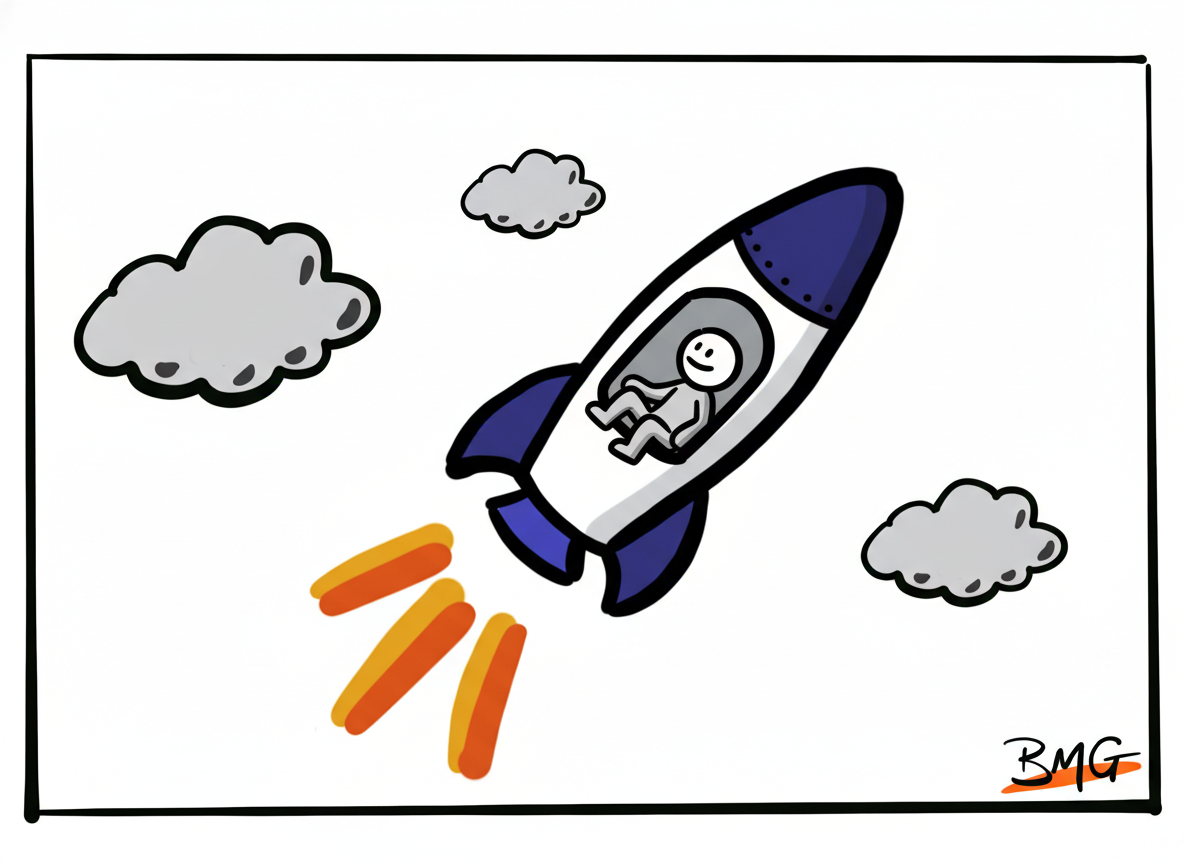
Before Christmas, I wrote about how sometimes the most productive thing you can do is… nothing.
To pause. To stop pushing. To resist the urge to force progress when your energy, clarity, or timing isn’t there.
I meant it! But! And this matters…
There’s context.
There’s a difference between a deliberate pause and default inaction.
Between choosing stillness to recover … and staying still because change feels uncomfortable. Between rest that restores … and waiting that quietly avoids responsibility.
They can look identical from the outside.
Internally, they are worlds apart.
This is where many individuals, teams, and organisations get stuck, mistaking “doing nothing” as wisdom, when in reality it’s familiarity dressed up as caution.
And that’s where Status Quo Bias quietly takes hold.
Why the Status Quo Feels So Compelling
Status quo bias is often reinforced by loss aversion, the psychological tendency to feel potential losses more strongly than equivalent gains.
The downside of change feels immediate and concrete:
- Disruption
- Risk
- Effort
- Accountability
The upside, by contrast, feels abstract and uncertain.
So our brains quietly tip the scales. We tolerate small inefficiencies. We excuse outdated tools. We accept routines that no longer serve us, because they’re familiar.
Over time, that familiarity masquerades as wisdom.
How the System Teaches Us Not to Change
What’s powerful about status quo bias is that it doesn’t just live in people, it lives in systems:
- Defaults and legacy processes signal “this is how things are done.”
- Cautious leadership language (“let’s not rock the boat”) legitimises inaction.
- Past success becomes proof that the current approach must still be right.
Before long, ways of working stop being choices and start becoming identity.
“We’re just not that kind of organisation.”
“This is how we operate.”
“This has always worked for us.”
Until it doesn’t.
(SPOILER - It never does)
The Cost of Delay
The danger of the status quo isn’t sudden failure, it’s incremental decline disguised as stability.
Opportunities quietly pass.
Inefficiencies compound.
Teams learn that initiative isn’t rewarded.
And when change finally becomes unavoidable, it’s larger, messier, and more expensive than it ever needed to be.
The irony is that by waiting for the “right moment”, we often create the very crisis we were trying to avoid.
I’m Not Immune (Nobody is)
Looking back, the moments I’ve regretted most were not the times I tried something new and got it wrong.
They were the times I knew something wasn’t working, but let it continue because it felt easier to leave it alone.
The routines that felt comfortable.
The risks that felt personal.
And the costs of change that felt heavier than the costs of delays.
Until, eventually, (of course) the delays cost more.
Again, they always do - I’m now old enough to have enough of these behind me to make that statement with absolute authority and confidence.
With this experience, I’ve realised something simple but powerful: comfort is not the same as safety. Often, it’s just familiarity wearing a convincing disguise.
A quick pause
If this is helpful, the free guide goes deeper, and the newsletter brings ideas like this twice a week.
Making Inaction Visible
Good leaders don’t force change for the sake of it.
They do something more subtle, and far more effective.
They reframe inaction as a decision with consequences.
They ask:
- “What is this costing us over the next 6-12 months?”
- “What are we protecting - performance, or comfort?”
- “If this were not already in place, would we choose it today?”
And instead of demanding big, risky transformation, they lower the psychological price of experimentation:
- Small tests
- Reversible steps
- Two-way-door thinking
- Safe-to-fail experiments
Momentum builds when people realise they’re not choosing between everything and nothing, but between thoughtful movement and quiet drift.
Reflection Prompts
Where in your work or life are you tolerating “good enough”?
What small problem has been left untouched for far too long?
What story are you telling yourself to justify staying put?
If you were starting from scratch today, what would you do differently?
What is the real cost of not changing, emotionally, financially, culturally?
Final Thought
The status quo survives not because it’s best, but because it’s familiar.
But stability that avoids reflection isn’t stability at all. It’s slow erosion.
Progress doesn’t require reckless change. It requires honest seeing.
So the next time you’re tempted to wait, pause and ask yourself:
Am I choosing wisely, or simply choosing what’s easiest to defend?
Doing nothing is never neutral, and thats why it’s a very subtle art you need to master.
My challenge to you today is to think of doing nothing as just something quieter than full-on action.
And leadership begins the moment you make that choice visible - to yourself, and everyone else.
Remember, the path to extraordinary is walked with a thousand small steps, you’re doing great!
Your Small Steps
Isn’t doing nothing sometimes the right choice?
Yes, when it’s a deliberate pause to recover, reflect, or regain clarity. It becomes a problem when inaction is driven by fear, comfort, or avoidance rather than intention.
Small step: Ask yourself, “Am I pausing to think, or pausing to avoid?” Write down the answer honestly.
How can I tell if we’re stuck in status quo bias as a team?
Listen for familiar phrases like “we’ve always done it this way” or “now isn’t the right time.” These often signal comfort masquerading as caution.
Small step: In your next meeting, ask one simple question: “If this wasn’t already in place, would we choose it today?”
What’s the difference between patience and procrastination?
Patience has a purpose and a review point. Procrastination doesn’t. One creates space for better decisions; the other quietly delays them.
Small step: Add a date to every “we’ll revisit this later” decision, even if it’s just two weeks away.
How do I make change feel less risky for people?
Lower the psychological cost. Instead of asking for full commitment, invite small, reversible experiments.
Small step: Identify one low-risk test you could run for 30 days rather than a permanent change.
Why does the status quo feel safer even when it isn’t?
Because familiarity reduces cognitive effort and protects us from blame if things go wrong. It feels safer, even when it quietly erodes performance.
Small step: Write down the real cost of not changing over the next 6–12 months, financially, emotionally, and culturally.
What role do leaders play in reinforcing inaction?
More than they realise. Language like “let’s not rock the boat” sends a powerful signal that comfort is valued over progress.
Small step: Pay attention to your own language this week, and replace one cautious phrase with a curious question.
How do I apply this to my own life, not just work?
Status quo bias shows up in routines, habits, and roles we’ve outgrown. Personal change often stalls for the same reasons organisational change does.
Small step: Identify one routine that no longer serves you and make the smallest possible adjustment, not a full overhaul.
Barry Marshall-Graham
Executive coach and leadership advisor
Get the Difficult Conversations Guide
A practical resource for leaders who want to say the thing that needs saying, without burning bridges or avoiding the moment.
Keep reading
13 March 2026
The Weight of Unshared Doubt
Why senior leadership feels lonelier as you rise, and why confidence is often just unshared doubt.
9 March 2026
Why Your Best Advice is the Problem
Why the rush to fix others is actually a specific insecurity, and how to stop.
6 March 2026
The Weight in Your Voice
Your words carry more weight than you realise. Calm authority is often a matter of pace, tone, and the courage to name what matters.

2 March 2026
The Quiet Drift You Inherit
Inherited teams rarely collapse in a moment. They drift. Resetting standards isn't about being harsh, it's about clarity, dignity, and trust.
27 February 2026
When Everyone Owns It
Shared ownership sounds healthy, but when everyone owns a decision, nobody owns the decision. Clarity needs a single accountable owner.
23 February 2026
The Private Ledger of Leadership
Senior leaders carry a private ledger of risks, promises, and people. Naming that inner load isn't weakness, it's how you lead without breaking.
20 February 2026
The Avoided Conversation Is a Decision
The conversation you're avoiding isn't neutral. It's a decision to let the current pattern continue, and that decision shapes the culture.

16 February 2026
Calm Authority in Tense Rooms
Authority isn't volume or force. It's the ability to hold a tense room steady, name what matters, and set a clear boundary without heat.

13 February 2026
The First Small Tolerance
Standards rarely collapse in a moment. They slip through the first small tolerance you let pass, then the next one feels easier.
9 February 2026
The Decision Vacuum
When decision rights are unclear, every meeting becomes a referendum. Clarity is less about answers and more about who owns the call.
