The Two-Minute Rule
1 December 2025
(No ... not the one often used to steal someone's seat)
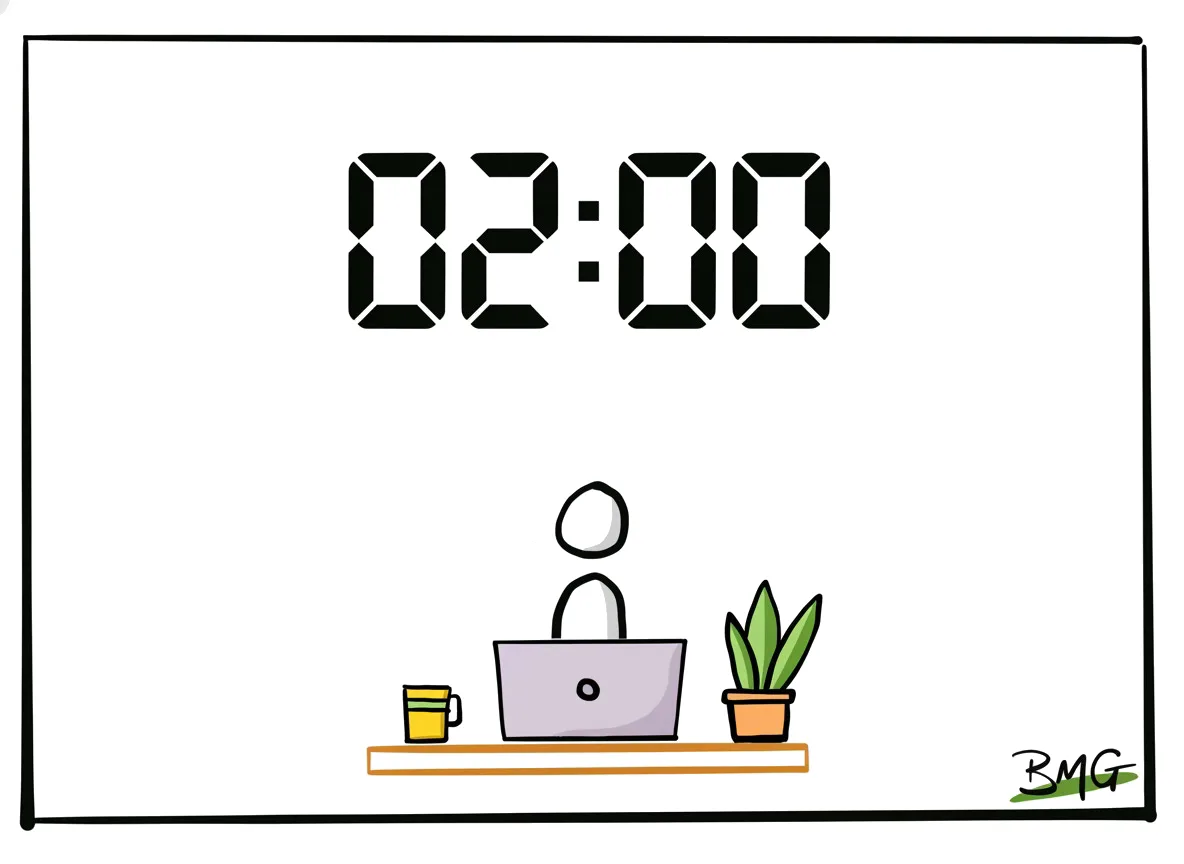
Are you one of those people that people don’t struggle with doing the work but REALLY struggle with STARTING the work.
That moment where your brain whispers,
“Not now. Later. When you have more energy. When you have more time.”
You wait for motivation, clarity … you’re waiting for the perfect moment, but the perfect moment rarely comes.
And so nothing begins.
This is where the Two-Minute Rule comes in - a habit so simple it feels almost silly, yet it is powerful enough to revolutionise your relationship with productivity, discipline, and progress.
The Rule: Commit to Just Two Minutes
If something feels heavy, overwhelming, or unmanageable, don’t commit to finishing it.
Commit to two minutes.
Two minutes of:
Writing the first sentence
Tidying one corner of a room
Reading one page
Doing 10 push-ups
Sending one email
Breathing deeply before a difficult task
Opening the document you’ve been avoiding
Two minutes is small enough that your brain can’t resist it.
And once you begin, you’ll often continue … because your action generates energy, not the other way around.
This is the psychology of momentum.
Motion dissolves resistance.
Starting creates motivation.
Why It Works
The Two-Minute Rule bypasses the biggest barrier to progress: our emotional resistance to starting.
You’re not trying to be perfect.
You’re not trying to finish.
You’re simply building the habit of beginning.
And beginnings compound.
Two minutes becomes ten.
Ten becomes a productive hour.
A productive hour becomes a highly productive day.
You don’t need discipline for the entire mountain, just enough to take the first step.
My Own Reflection
When I look at my own patterns, I can see that the tasks I avoided longest were often the tasks that took the least time once I started.
It wasn’t the work that was difficult.
It was the starting that felt hard - too many possibilities - too much to think about - what if, what if, what if.
I’ve used this rule more times than I can count - especially with writing, reading, exercise, and difficult emails. Every single time, those first two minutes broke the spell of avoidance.
And every single time, I ended up doing far more than I expected.
I’m reminded me of a simple truth when I think this rule:
When you lower the barrier to entry, you raise the odds of success.
Reflection Prompts
What’s one task you’ve been avoiding that two minutes could unlock?
When during the day are you most likely to resist starting something important?
What changes when you give yourself permission to begin without needing to finish?
How often do you wait for motivation instead of creating it?
Final Thought
The next time something feels overwhelming, don’t aim for the finish line.
Aim for two minutes.
Success isn’t built in grand sweeping effort - it’s built in tiny, repeatable things - either way, the essential piece is actually starting.
So …
Start small.
Stay kind.
Let momentum do the rest.
Remember, the path to extraordinary is walked with a thousand small steps, you’re doing great!
Your Small Steps
What if two minutes isn’t enough to make progress?
Two minutes is enough to begin, and beginning is the only part you were resisting.
Action: Choose one two-minute task today and let yourself stop at two minutes if you want to.
What if I stop after two minutes and feel guilty?
That’s the old perfectionism speaking. The win is the start.
Action: Celebrate the start as a success. Track it for a week.
Can this really work for big goals?
Absolutely. Small starts create consistency, and consistency builds results.
Action: Take a big goal and break it into a daily two-minute entry point.
What if I still don’t feel motivated after two minutes?
Stop. You kept your promise. Progress is still progress.
Action: Try again tomorrow. Habit beats intensity.
How can I teach this to my team?
Action: Begin your next team meeting by celebrating a two-minute victory story.

Barry Marshall-Graham
Executive coach and leadership advisor
Get the Difficult Conversations Guide
A practical resource for leaders who want to say the thing that needs saying, without burning bridges or avoiding the moment.
Keep reading
13 March 2026
The Weight of Unshared Doubt
Why senior leadership feels lonelier as you rise, and why confidence is often just unshared doubt.
9 March 2026
Why Your Best Advice is the Problem
Why the rush to fix others is actually a specific insecurity, and how to stop.
6 March 2026
The Weight in Your Voice
Your words carry more weight than you realise. Calm authority is often a matter of pace, tone, and the courage to name what matters.

2 March 2026
The Quiet Drift You Inherit
Inherited teams rarely collapse in a moment. They drift. Resetting standards isn't about being harsh, it's about clarity, dignity, and trust.
27 February 2026
When Everyone Owns It
Shared ownership sounds healthy, but when everyone owns a decision, nobody owns the decision. Clarity needs a single accountable owner.
23 February 2026
The Private Ledger of Leadership
Senior leaders carry a private ledger of risks, promises, and people. Naming that inner load isn't weakness, it's how you lead without breaking.
20 February 2026
The Avoided Conversation Is a Decision
The conversation you're avoiding isn't neutral. It's a decision to let the current pattern continue, and that decision shapes the culture.

16 February 2026
Calm Authority in Tense Rooms
Authority isn't volume or force. It's the ability to hold a tense room steady, name what matters, and set a clear boundary without heat.

13 February 2026
The First Small Tolerance
Standards rarely collapse in a moment. They slip through the first small tolerance you let pass, then the next one feels easier.
9 February 2026
The Decision Vacuum
When decision rights are unclear, every meeting becomes a referendum. Clarity is less about answers and more about who owns the call.
