The Two Sides of Motivation
9 May 2025
Lessons from Herzberg’s Dual Theory
“What motivates people to work? It’s not what you might think.”
, Frederick Herzberg
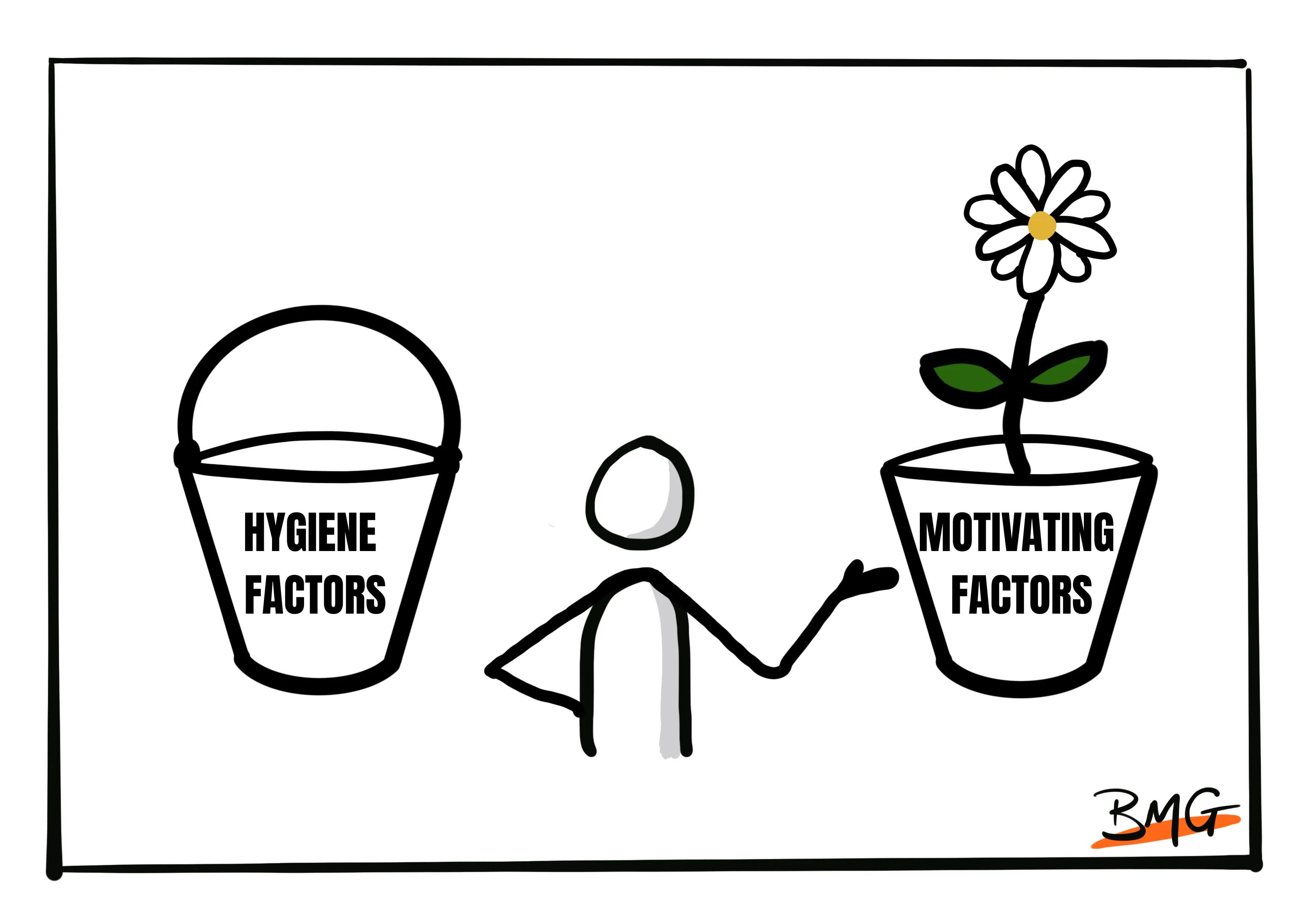
Frederick Herzberg’s Dual-Factor Theory, sometimes called the Motivation-Hygiene Theory, offers a powerful lens for leaders and individuals alike: motivation doesn’t stem from a single source but rather from two distinct and independent factors.
Some elements create satisfaction and drive, while others, when missing, create dissatisfaction but don’t necessarily motivate when present.
Understanding this separation is vital to nurturing environments where people truly thrive.
Herzberg’s research revealed two categories at play:
Hygiene Factors
These include salary, company policies, work conditions, interpersonal relationships, and job security. When these are inadequate, dissatisfaction grows. However, improving them doesn’t necessarily create satisfaction; it merely neutralises unhappiness.
Motivators
These involve achievement, recognition, meaningful work, responsibility, and personal growth. Their presence actively drives engagement, satisfaction, and performance.
The mistake many organisations make is focusing purely on hygiene factors - offering better perks, nicer offices, or small pay raises - assuming these will motivate teams.
In reality, improvements like these merely stop the complaints. True motivation springs from enriching the work itself, connecting people to purpose, growth, and achievement.
As leaders, understanding which factors we’re addressing can help us design better roles, foster deeper engagement, and avoid mistaking comfort for motivation.
Personal Reflection
For me, this means recognising that making people “not unhappy” is NOT the same as making them fulfilled. The absence of dissatisfaction is not the presence of motivation.
It’s easy to fall into the trap of thinking that surface fixes (a better chair, a pay bump, a fresh job title) will ignite engagement. But these are stabilisers, not accelerators. They create a baseline of comfort, not a spark of energy.
Real leadership demands that we dig beneath these surface satisfactions and tap into what truly moves people: purpose, ownership, challenge, and growth.
I’ve learned that when we treat people like they’re something that needs fixing, we focus on what’s broken or lacking. But when we view them as potential to be nurtured, we focus on what could be … on helping them stretch, evolve, and contribute meaningfully.
This shift isn’t always easy. It requires listening deeply, being patient with discomfort, and letting go of the illusion that we can motivate someone by ticking boxes. I’ve seen the difference it makes when people are entrusted with real responsibility, when their growth is noticed and named, when their work feels connected to something that matters.
Motivation isn’t manufactured; it’s cultivated. It grows in the soil of meaningful work, is fed by the water of recognition, and flourishes under the sunlight of autonomy and trust.
Our role as leaders isn’t to push people harder … it’s to tend the environment in which their best selves can take root.
A quick pause
If this is helpful, the free guide goes deeper, and the newsletter brings ideas like this twice a week.
Reflection Prompts
Where in your environment are you focusing more on hygiene factors than true motivators?
How might you redesign roles or goals to offer more achievement, ownership, or growth?
What assumptions are you making about what motivates your team (or yourself)?
Are there moments when you confuse a lack of complaints with genuine engagement?
How often do you actively recognise meaningful contributions rather than surface-level achievements?
Final Thought
Motivation isn’t a one-dimensional force … it’s a dance between avoiding pain and pursuing purpose.
Herzberg’s insight reminds us that fixing what’s wrong is not the same as creating what’s right. Removing friction doesn’t guarantee flow. Easing dissatisfaction doesn’t generate drive.
The organisations that fall short are often the ones mistaking silence for satisfaction. A team that isn’t complaining isn’t necessarily thriving, they might just be surviving. It takes courage and curiosity to go further: to ask what brings someone to life at work, not just what holds them back.
True leaders don’t just clean up dissatisfaction; they cultivate meaning.
They don’t just manage roles; they shape opportunities for growth, stretch, and ownership.
They don’t assume motivation; they create the conditions for it to emerge naturally.
In understanding the two sides of motivation, we learn that hygiene factors keep the lights on but motivators light the fire.
If we want to build high-performing, human-centred teams, then not only must we prevent the negative … we must intentionally plant the seeds of the positive.
That’s how we move from coping to thriving.
Remember, the path to extraordinary is walked with a thousand small steps, you’re doing great!
Your Small Steps
What’s the difference between hygiene factors and motivators?
Hygiene factors prevent dissatisfaction; motivators create satisfaction and engagement.
Can hygiene factors ever become motivators?
Not directly - improving hygiene factors stops dissatisfaction but doesn’t usually inspire active motivation.
Why do organisations often focus on hygiene factors?
They’re more visible and easier to control (e.g., salary changes, office upgrades) compared to the deeper cultural work needed for true motivation.
How can leaders apply Herzberg’s theory day-to-day?
Focus on designing meaningful work, offering growth opportunities, recognising real contributions, and granting autonomy.
Can poor hygiene factors completely negate motivators?
Yes , if the basic work environment is unsafe or unfair, no amount of meaningful work will fully overcome the dissatisfaction.
Is this theory still relevant in today’s world of work?
Absolutely. If anything, the modern workforce demands even greater attention to purpose, meaning, and growth.
How can individuals use this theory for self-motivation?
By seeking roles and projects that offer personal growth, meaning, and opportunities to achieve, rather than solely chasing pay or titles.
Barry Marshall-Graham
Executive coach and leadership advisor
Get the Difficult Conversations Guide
A practical resource for leaders who want to say the thing that needs saying, without burning bridges or avoiding the moment.
Keep reading
13 March 2026
The Weight of Unshared Doubt
Why senior leadership feels lonelier as you rise, and why confidence is often just unshared doubt.
9 March 2026
Why Your Best Advice is the Problem
Why the rush to fix others is actually a specific insecurity, and how to stop.
6 March 2026
The Weight in Your Voice
Your words carry more weight than you realise. Calm authority is often a matter of pace, tone, and the courage to name what matters.

2 March 2026
The Quiet Drift You Inherit
Inherited teams rarely collapse in a moment. They drift. Resetting standards isn't about being harsh, it's about clarity, dignity, and trust.
27 February 2026
When Everyone Owns It
Shared ownership sounds healthy, but when everyone owns a decision, nobody owns the decision. Clarity needs a single accountable owner.
23 February 2026
The Private Ledger of Leadership
Senior leaders carry a private ledger of risks, promises, and people. Naming that inner load isn't weakness, it's how you lead without breaking.

20 February 2026
The Avoided Conversation Is a Decision
The conversation you're avoiding isn't neutral. It's a decision to let the current pattern continue, and that decision shapes the culture.

16 February 2026
Calm Authority in Tense Rooms
Authority isn't volume or force. It's the ability to hold a tense room steady, name what matters, and set a clear boundary without heat.

13 February 2026
The First Small Tolerance
Standards rarely collapse in a moment. They slip through the first small tolerance you let pass, then the next one feels easier.
9 February 2026
The Decision Vacuum
When decision rights are unclear, every meeting becomes a referendum. Clarity is less about answers and more about who owns the call.
