Unleash The Winner Effect: Harness Small Wins to Fuel Consistent Triumphs
23 September 2024
Master the Psychology of Winning & Turn Every Victory into Momentum for Long-Term Success
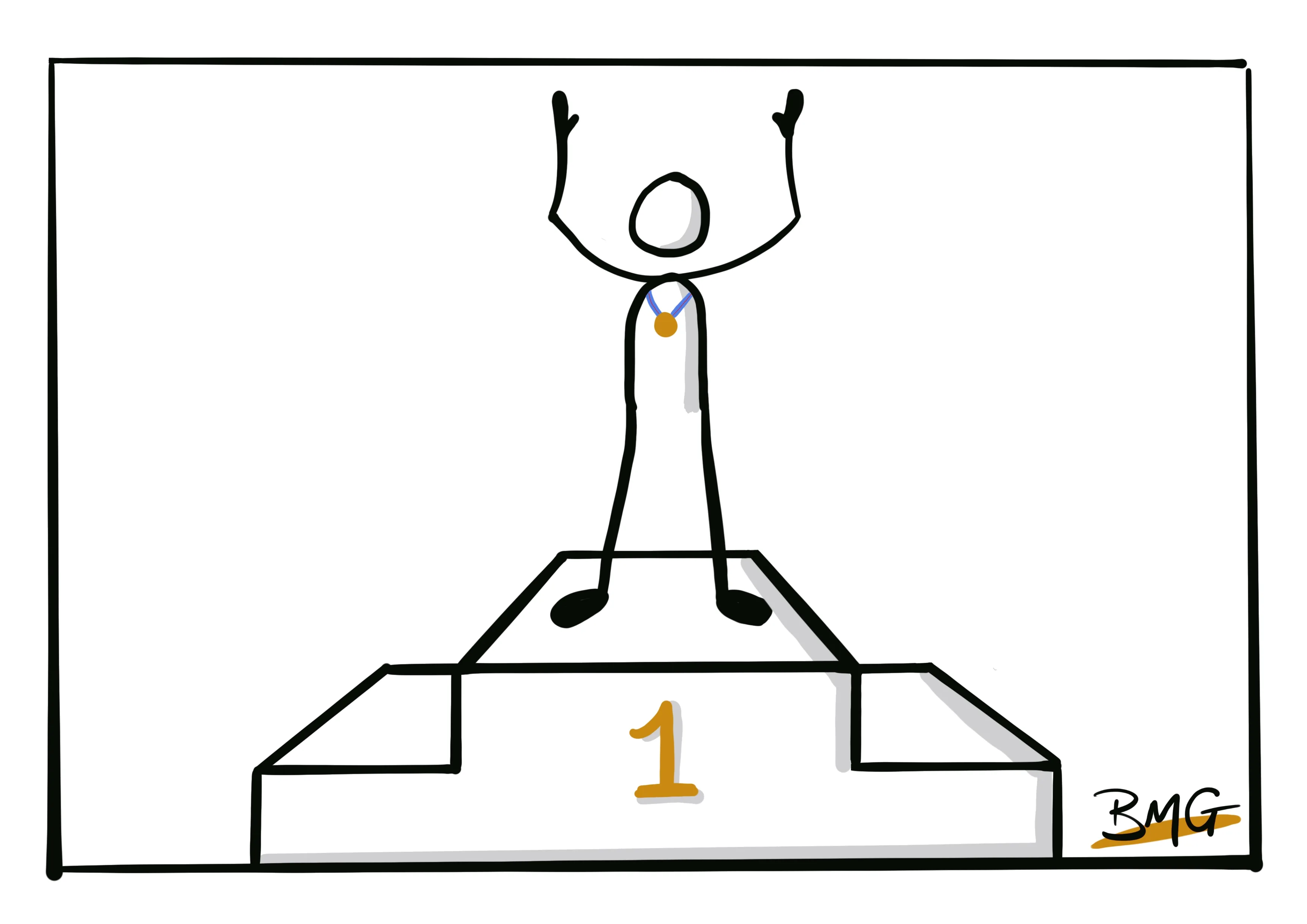
Small victories often pave the way for greater achievements.
This phenomenon, known as The Winner Effect (by Ian Robertson), reveals how accomplishing smaller goals builds confidence and fuels a cycle of ongoing success. By harnessing this powerful principle, anyone can unlock their potential and create a momentum that drives them toward ever-increasing triumphs.
Understanding the Winner Effect offers a clear strategy for turning every win, no matter how small, into the foundation for long-term success.
Key Takeaways
Small wins increase confidence and motivation, making larger goals feel more achievable. Each small victory serves as a stepping stone that builds momentum and reinforces the belief that success is within reach. By breaking big goals into manageable tasks, you lay a solid foundation for long-term achievement.
Celebrating small victories helps build a positive mindset and encourages further progress. Every small win triggers dopamine release, creating feelings of reward and satisfaction that make you more eager to continue. This positive reinforcement keeps you motivated and propels you forward, even when the larger goal feels distant.
Using the Winner Effect can improve performance in various areas like business, personal growth, and sports. The psychological and neurological boost that comes with success creates a cycle of increased confidence and ambition, helping individuals and teams perform better, overcome challenges, and stay focused on their goals.
Consistency is key to sustaining momentum. By setting small, achievable goals and staying dedicated, even in the face of setbacks, you can maintain the positive cycle of the Winner Effect. This consistency ensures that each small step contributes to long-term success.
Reframing setbacks as learning opportunities is essential for maintaining progress. Rather than seeing failures as obstacles, view them as part of your growth. This mindset allows you to turn challenges into stepping stones, keeping the momentum alive and pushing you closer to your goals.
The Science Behind the Winner Effect
Understanding the Neurological Basis
The Winner Effect is more than just a mental boost of confidence; it’s deeply rooted in how our brain chemistry responds to success. When we win, especially in competitive situations, our brain undergoes significant changes that set us up for future success. This isn’t just an abstract notion,it’s a biological response that primes us for more victories.
At the core of this process is the release of dopamine, often referred to as the brain’s “reward chemical.” When you succeed, dopamine surges, creating feelings of pleasure and satisfaction. This makes the brain take note:
Winning feels good, let’s do that again!
But the effects don’t stop there.
Winning also alters the brain’s neural pathways, strengthening connections related to confidence and decision-making. This is akin to the brain sharpening its tools for future challenges, enabling you to approach subsequent competitions or tasks with an increased sense of capability and self-assurance.
Continuous victories can lead to a rise in testosterone levels.
Testosterone, commonly associated with physical strength, also plays a key role in dominance and competitive behaviour. As testosterone levels rise, so too does the drive for further success. This increased drive can lead to more assertive behaviour, risk-taking, and a greater tolerance for challenges, all of which further contribute to the likelihood of future wins.
Understanding the neurological basis of the Winner Effect is crucial, especially for leaders and coaches - however, while this neurological momentum is beneficial, it’s important to be aware of its double-edged nature.
The heightened confidence from repeated wins can sometimes lead to overconfidence or risky behaviour, as the brain becomes more accustomed to the thrill of success.
The Role of Dopamine in Small Wins
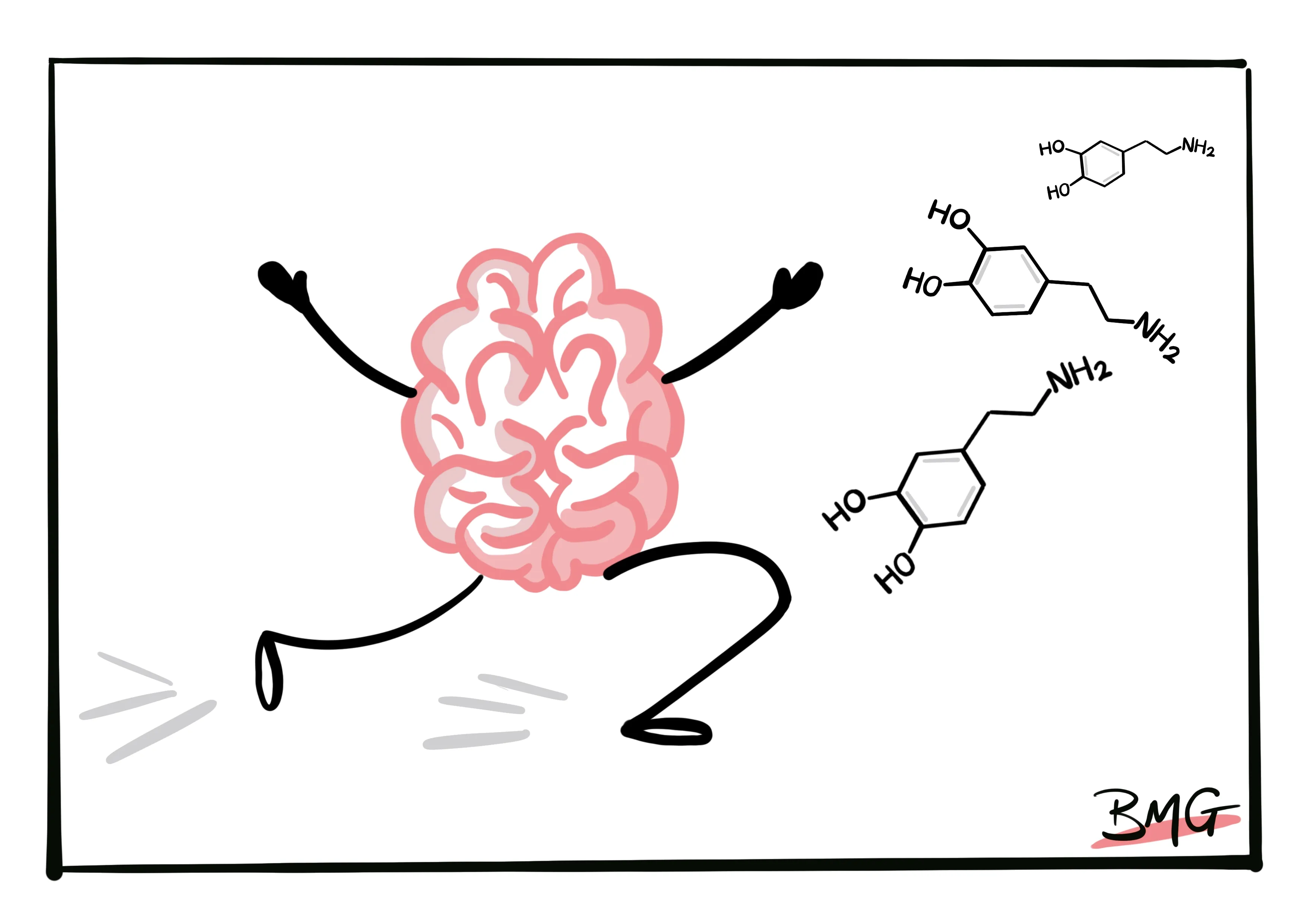
Dopamine, commonly referred to as the “feel-good” neurotransmitter, is a key player in the Winner Effect, particularly when it comes to the accumulation of small wins.
Each time you experience a success, no matter how small, your brain rewards you by releasing dopamine. This rush of dopamine makes you feel happy, energised, and motivated, providing an instant reward for your efforts.
But dopamine’s influence extends beyond the immediate pleasure.
It also strengthens the neural pathways associated with the actions that led to the win. Essentially, it reinforces the behaviours and strategies that brought about the success, making it more likely that you’ll repeat them in the future.
This is how small wins build momentum: they create a positive feedback loop where dopamine motivates you to keep pursuing more of the same behaviours, ultimately increasing your chances of future success.
How Success Breeds Success
Success operates like a snowball rolling downhill - it picks up size and momentum with each turn.
When you experience a win, whether it’s a small personal achievement or a major career breakthrough, it does more than provide immediate satisfaction; it fundamentally shifts your mindset. With each victory, your confidence grows, creating a psychological ripple effect that impacts your willingness to face new challenges and take calculated risks.
This increased self-belief is critical.
After a win, you’re more likely to feel empowered, pushing you to step outside of your comfort zone and tackle larger, more complex tasks. The shift is subtle but profound: success makes you bolder, more willing to embrace uncertainty, and better equipped to handle setbacks. As a result, you open yourself up to even more opportunities for success.
This is where the cycle of success comes into play.
The more you win, the more you’re willing to engage with situations that could lead to further victories, reinforcing the belief that success is attainable.
Over time, this creates a self-perpetuating loop: confidence leads to more wins, and more wins further fuel your confidence. In this way, success breeds more success, with each small win laying the foundation for future triumphs.
For leaders, recognising this phenomenon is crucial. By creating environments where small wins are celebrated and leveraged, you can help others tap into this powerful cycle, creating momentum that leads to sustained success for both individuals and teams.
Strategies to Cultivate the Winner Effect
Setting Achievable Goals
One of the most effective strategies for leveraging the Winner Effect is to start by setting clear, achievable goals.
While it’s important to have ambitious dreams and long-term objectives, the key to building momentum lies in breaking these larger goals into smaller, more manageable tasks. Each of these tasks becomes an opportunity for a small win, which in turn fuels your confidence and motivation.
Think of this process as climbing a ladder. Each rung represents a small, attainable milestone that brings you closer to the top. By focusing on one step at a time, you prevent yourself from feeling overwhelmed by the enormity of the final goal, and instead, you experience a series of manageable victories that build a sense of progress and accomplishment.
The psychological benefits of achieving these smaller goals are profound.
Each success, no matter how small, triggers the brain’s reward system, releasing the aforementioned dopamine and reinforcing the behaviour that led to the win. This helps you stay motivated, focused, and energised as you move toward your larger aspirations.
The other benefit, of course, is that setting achievable goals gives you the flexibility to adjust your course along the way.
With each win, you gain insights and learn valuable lessons, allowing you to refine your approach and make better decisions for the future. This process ensures that your long-term objectives remain within reach while giving you the motivation needed to keep moving forward, one step at a time.
The key is to ensure that each goal feels challenging but attainable; difficult but not overwhelming. This creates a positive cycle of progress that builds confidence and drives sustained success.
Celebrating Small Victories
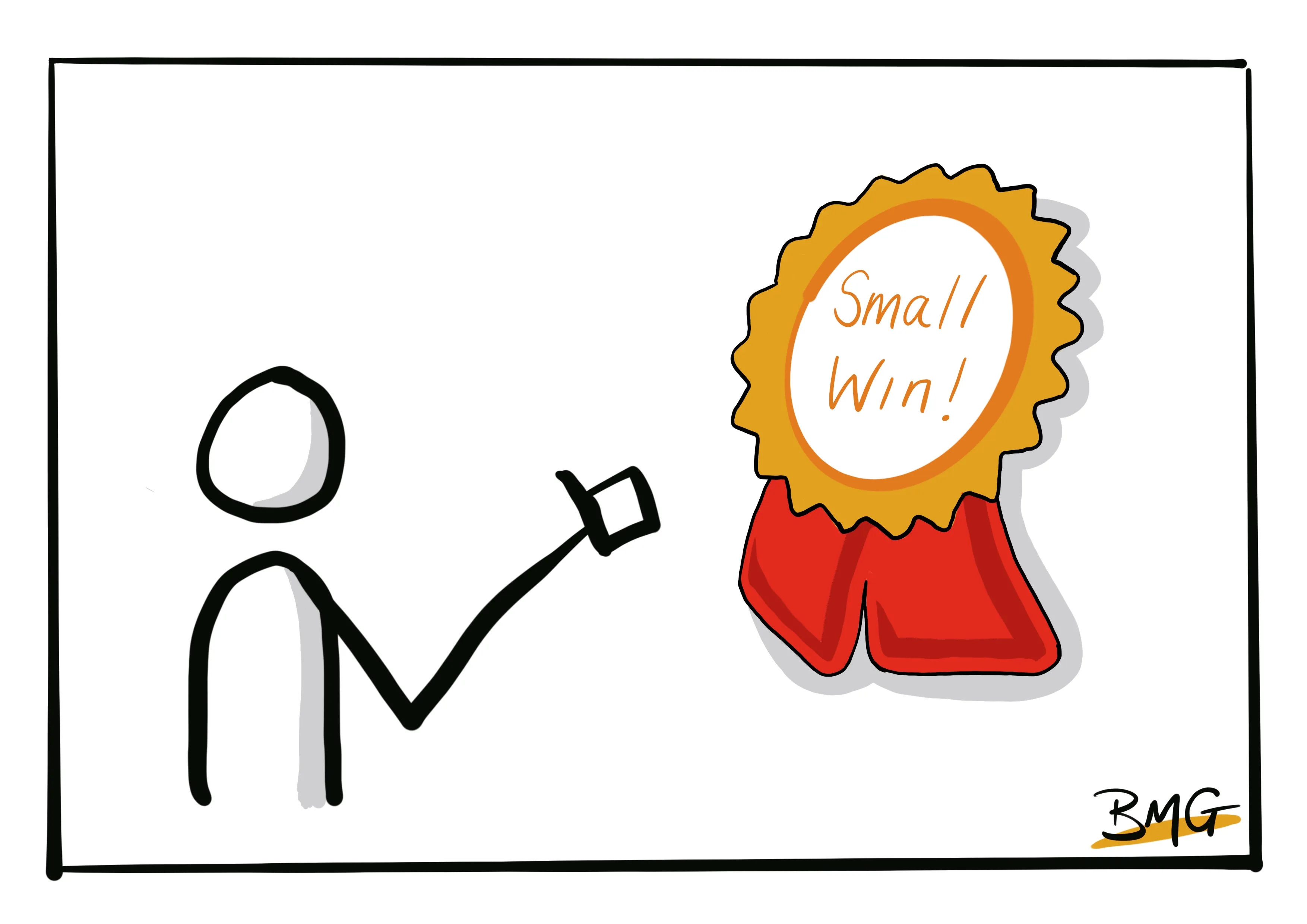
While it’s natural to focus on big wins and major milestones, the real power of progress often lies in celebrating the small victories along the way.
These seemingly minor achievements are crucial for maintaining momentum and motivation. Each time you acknowledge a small success, you reinforce the behaviours and strategies that led to it, increasing the likelihood of future wins.
The act of celebrating small victories isn’t just about boosting morale, it has a direct neurological benefit, as you have read above. So, by celebrating the small wins, you’re essentially training your brain to associate effort and progress with positive feelings, making you eager to tackle the next challenge. As you get into the habit of celebrating regularly - because the wins are small, right? - this starts a loop of good feeling and positivity.
The celebrations don’t have to be extravagant. It could be as simple as acknowledging your progress at the end of the day, sharing your success with a colleague or friend, or treating yourself to something you enjoy.
The key is to make the celebration meaningful enough that it reinforces the behaviour.
From a leadership perspective, recognising small wins in your team is equally important. It helps maintain morale, creates a positive culture, and perhaps most importantly, reminds everyone that progress is being made, even when the larger goal is still in the distance.
By regularly celebrating these small victories, you create a sense of momentum and shared purpose that propels everyone forward.
In the long run, these small celebrations build confidence and provide the energy needed to keep striving for bigger goals. It’s a simple yet powerful strategy for turning short-term success into long-term achievement.
A quick pause
If this is helpful, the free guide goes deeper, and the newsletter brings ideas like this twice a week.
Building a Positive Evidence “Cookie Jar”
A powerful way to maintain confidence and resilience in the face of challenges is to build what I like to call a “Positive Evidence Cookie Jar” - a mental or physical repository filled with past successes.
Each time you achieve something, no matter how small, store it in this reservoir of positive evidence.
When self-doubt or negative thoughts begin to creep in, you can mentally reach into this jar and pull out a ‘cookie’, essentially a reminder of what you’ve already accomplished. This serves as instant proof of your abilities and reinforces your belief that success is within reach.
Your brain has an incredible ability to shape your perception of reality based on what you focus on.
By consistently turning your attention to past successes, you train your brain to look for more of the same. Over time, this positive focus cultivates a mindset that is resilient against setbacks and bolsters your confidence in tackling future challenges. It’s a strategy that not only counters negative thinking but also helps you maintain the momentum needed for ongoing success.
Applications of the Winner Effect
Athletic Performance Enhancement
In the world of sports, the Winner Effect can be a pivotal factor in shaping an athlete’s performance.
Athletes who secure small victories, whether it’s winning a match, setting a personal best, or even excelling during training, often find themselves gaining momentum. These early wins serve as confidence boosters, enhancing their motivation and belief in their ability to succeed in future competitions.
The psychological uplift combined with the biological effects of dopamine and testosterone makes each successive performance more likely to result in victory.
This phenomenon mirrors what biologists have observed in animals: after winning a few easy battles, an animal becomes much more likely to win future, more challenging encounters. Human athletes experience a similar pattern.
Small victories on the field can lead to greater success down the line, creating a winning streak that propels them to achieve more than they initially thought possible.
Coaches and sports psychologists often tap into this principle, helping athletes build momentum by focusing on incremental wins that can translate into major triumphs.
Business and Leadership
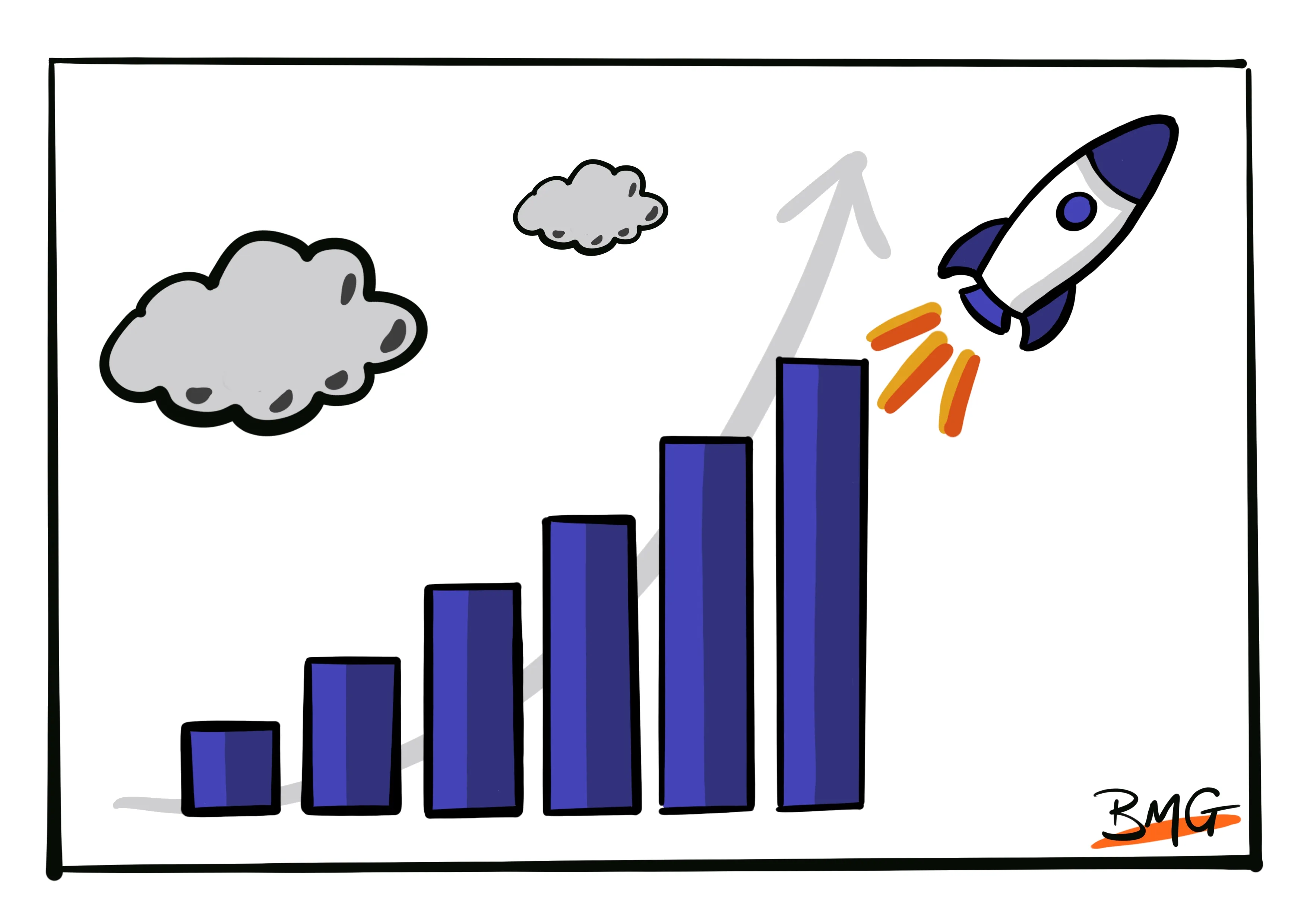
In business (and leadership), the Winner Effect can be a highly effective tool for driving team and organisational success.
As we have seen previously, leaders who set and achieve small, incremental goals create a track record of success that not only boosts their own confidence but also inspires those around them.
By consistently hitting these smaller milestones, leaders build momentum, creating and maintaining a culture of achievement and progress. This creates a positive feedback loop where each win fuels further ambition, encouraging teams to strive for greater results.
For example, a software development lead who consistently meets deadlines and exceeds expectations demonstrates leadership by example. These small victories, when celebrated and acknowledged properly, will motivate other teams to follow suit. It’s a pattern I have observed time and again as I have built high-performing teams. Success breed success. Period.
The Winner Effect in this context doesn’t just elevate the individual leader - it raises the performance level of the entire team, then department, then organisation - creating a cycle of success that truly drives long-term organisational growth.
Personal Development and Growth
On a personal level, the Winner Effect can be a powerful tool for achieving goals and driving personal growth.
By focusing on and celebrating small victories, individuals can steadily build the self-confidence and resilience needed to tackle larger challenges. This approach is especially valuable for those facing difficulties or trying to break bad habits.
For instance, someone aiming to lose some weight might celebrate milestones like shedding their first couple of pounds. These small successes create a sense of progress and motivation, making it more likely that they’ll stick with their journey.
The Winner Effect isn’t just about achieving big wins; it’s about cultivating a mindset that makes winning more likely.
By intentionally recognising and celebrating small steps forward, individuals can create the same positive feedback loop highlighted above for athletes and teams, reinforcing their belief in their own abilities.
Over time, these small victories accumulate, boosting confidence and generating the momentum needed to achieve even larger, more ambitious goals. Whether it’s mastering a new skill, breaking a habit, or advancing in a career, the principle of focusing on small wins is crucial for sustained personal growth.
Overcoming Obstacles and Maintaining the Winner Effect

Identifying and Challenging Self-Doubt
Self-doubt can be a subtle yet powerful adversary, often creeping in when you’re on the path to success. The first step in overcoming it, is recognising when these negative thoughts arise.
When you catch yourself thinking, “I’m not good enough” or “I can’t do this,” take a moment to pause and reflect. Ask yourself if this belief aligns with the evidence of your past achievements (maybe using the cookie jar you’ve built).
In many cases, you’ll find that self-doubt is unfounded, a fleeting emotion rather than a reflection of reality. These reminders in your “Cookie Jar” serve as a powerful antidote to self-doubt, allowing you to see that your past victories have prepared you to handle present and future challenges.
By consciously challenging self-doubt with evidence of your abilities, you can shift your mindset and maintain the momentum needed to keep the Winner Effect alive.
Reframing Negative Narratives
Negative narratives, the stories we tell ourselves about failure and setbacks, can be one of the greatest obstacles to maintaining momentum.
Instead of allowing these narratives to hold you back, it’s important to consciously shift your perspective and focus on what can be learned from each experience. For example, if you didn’t win a race or achieve a desired goal, rather than dwelling on the loss, consider the experience you gained and how it has prepared you for future challenges.
You failed. So try again. One more time. Only this time, with more experience.
By reframing setbacks as opportunities for growth, you transform obstacles into stepping stones. This mental shift is key to keeping the Winner Effect alive, as it allows you to maintain a forward-looking mindset.
Every misstep becomes part of your journey toward success, helping you refine your strategies and strengthen your resolve. In doing so, you build resilience and keep momentum moving in a positive direction, ensuring that even in the face of challenges, you continue progressing toward your goals.
Sustaining Momentum Through Consistency
Consistency is the backbone of maintaining the Winner Effect.
The secret to sustained success lies in setting small, achievable goals and celebrating each victory, no matter how minor it may seem.
Every small win adds to the momentum, creating a trail of successes that fuels future triumphs. By focusing on steady progress, you build an undeniable momentum that reinforces the belief in your ability to succeed.
It’s important to remember that the journey to success is rarely a straight line. It’s filled with setbacks and challenges, but consistency ensures that each step forward, no matter how small, is progress.
Often, winning looks like a series of small victories interspersed with losses that weren’t strong enough to keep you down. The key is to remain focused and committed, celebrating the small wins as they accumulate into greater achievements.
By identifying self-doubt, reframing negative thoughts, and maintaining consistency, you keep the Winner Effect alive and thriving.
Each step forward, even in the face of setbacks, reinforces your confidence, creates positive momentum, and brings you closer to your larger goals.
Conclusion
In the grand scheme of things, it’s the small wins that stack up to create monumental success.
The Winner Effect shows us that by focusing on these tiny victories, we can build a solid foundation of confidence and momentum.
Whether in athletics, business, or personal growth, the key is to break down larger goals into manageable steps, celebrating each achievement along the way. These small wins not only fuel future successes but also help in overcoming self-doubt and reframing setbacks.
Even the greatest leaders and athletes began with small, deliberate steps.
By recognising and celebrating your little triumphs, and learning from your missteps, you keep the momentum alive.
Remember, Rome wasn’t built in a day, but they laid the bricks every hour.
Consistency is the key to success.
So, keep laying those bricks - your empire of success is being built one small win at a time.
Remember, the path to extraordinary is walked with a thousand small steps, you’re doing great!
Want to learn more? Let's grow together!
Your Small Steps
What is the Winner Effect?
The Winner Effect is a psychological phenomenon where past successes boost confidence and increase the likelihood of future successes. It involves brain changes that make winning more likely.
How can I use small wins to achieve bigger goals?
By setting and achieving small, manageable goals, you build confidence and momentum. Celebrating these small victories helps to keep you motivated and focused on your larger goals.
What role does dopamine play in the Winner Effect?
Dopamine is a brain chemical that is released when you achieve a goal. It creates feelings of pleasure and reward, encouraging you to pursue more successes and reinforcing the Winner Effect.
How can I overcome setbacks and still maintain momentum?
Setbacks are inevitable, but by reframing them as learning opportunities, you can turn them into stepping stones for future success. Focus on what you’ve learned and how it prepares you for the next challenge, rather than seeing it as failure.
How do I stay consistent when motivation fades?
Consistency is built by breaking goals into smaller, manageable tasks and focusing on progress over perfection. Even when motivation fades, sticking to daily habits and routines helps you stay on track. Celebrating small wins also reignites motivation.
Can the Winner Effect work for teams as well as individuals?
Yes, teams can also benefit from the Winner Effect. By setting collective goals and celebrating small victories as a team, the positive momentum can drive greater collaboration, confidence, and success, creating a winning culture.
What if self-doubt stops me from making progress?
When self-doubt creeps in, challenge it by recalling your past successes. Keep a mental or physical list of your achievements to counteract negative thoughts and remind yourself of what you’re capable of.
How can I celebrate small victories without losing focus on bigger goals?
Celebrating small victories doesn’t mean you lose sight of your larger goals. In fact, recognising these milestones keeps you motivated and provides encouragement for the long journey. Each small win is a building block toward your bigger objectives.

Barry Marshall-Graham
Executive coach and leadership advisor
Get the Difficult Conversations Guide
A practical resource for leaders who want to say the thing that needs saying, without burning bridges or avoiding the moment.
Keep reading
13 March 2026
The Weight of Unshared Doubt
Why senior leadership feels lonelier as you rise, and why confidence is often just unshared doubt.
9 March 2026
Why Your Best Advice is the Problem
Why the rush to fix others is actually a specific insecurity, and how to stop.

6 March 2026
The Weight in Your Voice
Your words carry more weight than you realise. Calm authority is often a matter of pace, tone, and the courage to name what matters.

2 March 2026
The Quiet Drift You Inherit
Inherited teams rarely collapse in a moment. They drift. Resetting standards isn't about being harsh, it's about clarity, dignity, and trust.

27 February 2026
When Everyone Owns It
Shared ownership sounds healthy, but when everyone owns a decision, nobody owns the decision. Clarity needs a single accountable owner.
23 February 2026
The Private Ledger of Leadership
Senior leaders carry a private ledger of risks, promises, and people. Naming that inner load isn't weakness, it's how you lead without breaking.

20 February 2026
The Avoided Conversation Is a Decision
The conversation you're avoiding isn't neutral. It's a decision to let the current pattern continue, and that decision shapes the culture.

16 February 2026
Calm Authority in Tense Rooms
Authority isn't volume or force. It's the ability to hold a tense room steady, name what matters, and set a clear boundary without heat.

13 February 2026
The First Small Tolerance
Standards rarely collapse in a moment. They slip through the first small tolerance you let pass, then the next one feels easier.

9 February 2026
The Decision Vacuum
When decision rights are unclear, every meeting becomes a referendum. Clarity is less about answers and more about who owns the call.
