A Book for the Conversation You Keep Putting Off
2 November 2026
High-Fidelity Leadership is a book to read and return to when a conversation needs to happen. Here's how I hope you'll make it useful to you.
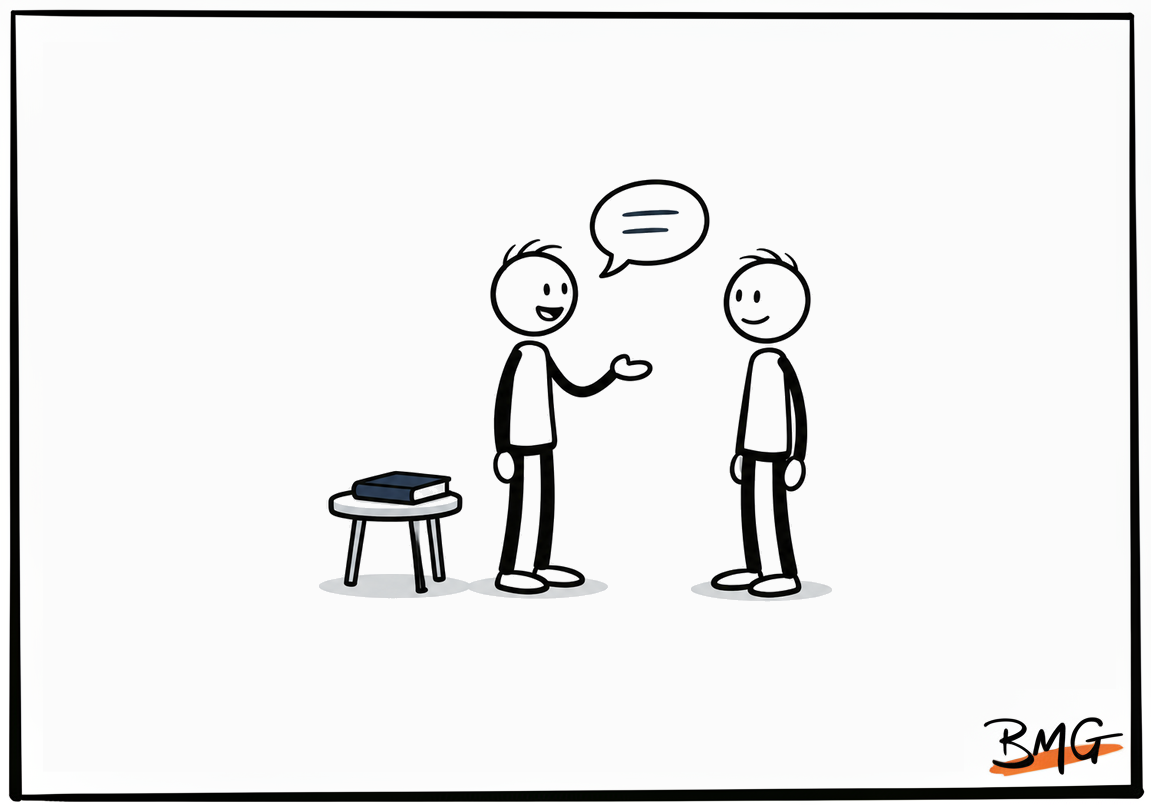
I'd quite like this book to acquire a few bent corners.
You may prefer to keep yours immaculate, which is entirely reasonable. But when I think about High-Fidelity Leadership being useful, I imagine someone returning to a particular section before a conversation, pencilling something in the margin or deciding that an opening line needs changing because they'd never say it like that.
That's what I wrote it for.
The situations are familiar enough. A good person's work has started to slip. A commitment hasn't held, again. A colleague agrees with you in the meeting, but the agreement doesn't seem to survive the walk back to their desk. You care about the relationship, and you also need something to change.
It's easy to spend a surprising amount of time preparing for that conversation without getting any closer to having it. We rehearse the difficult bit, imagine the reply and occasionally become annoyed with someone for an answer they haven't actually given us.
I wanted the book to help at that point: when you've thought about the situation enough to know it needs attention, and now you need a way into the real conversation.
Somewhere To Begin, Somewhere To Return
There are ten core conversation chapters in High-Fidelity Leadership, covering problems with standards, commitments, influence, boundaries and the fit between a person and their role. Each finishes with a 3-2-1 Snapshot: three red flags, two preparation questions and one opening line.
The snapshots give you a way back into the relevant chapter when time is short. They sit alongside fuller explanations, preparation and guidance on the resistance you might encounter. You can read the book through, then return to the section that fits what's happening in front of you.
I'd start with the Safety Rails and Part I, even if you already know which conversation you're interested in. How you arrive matters. Being clear about the work is rather different from arriving with a case against the person already assembled in your head.
The scripts are there to help you find words. The alternative phrasebook gives you more ways to express them. Say a possible opening aloud and listen to yourself. If you can't imagine yourself saying it, change it. Keep the meaning clear, but use language you can stand behind when the other person looks back at you.
They may tell you something you didn't know. They may disagree with your account. You may need to correct your own understanding. Preparation should leave room for that; a script can't do the listening for you.
Start With One Situation
You don't need to arrive at work with a list of ten conversations and a new determination to have them all before lunch. Your colleagues would be entitled to wonder what had happened over the weekend.
Choose one situation that matters. Read the relevant section, work through the preparation and decide what you need to understand as well as what you need to say. There may be a straightforward conversation to have. There may be a formal process or other support you need to use. The book's Safety Rails are there for a reason, and the scripts don't replace your judgement or your organisation's responsibilities.
Afterwards, come back to the situation. What did you learn? What did you agree? Has anything changed in the work? The conversation is part of leading; following through belongs to the same job.
If you'd like a feel for the book before opening it, you can watch me read an extract from the introduction.
You'll find the book and edition details here. If you'd like somewhere to think before choosing a chapter, there's also a free companion, The Conversation You Keep Carrying. Sign up for book updates to download it. It gives you private space to examine one situation, and you don't send your worksheet answers to me.
Thank you to everyone who's encouraged me while I've been writing and getting the book ready. If you read it, I'd love to hear what you recognise, what you disagree with and which pages you find yourself coming back to.
And if an opening line ends up crossed out and rewritten in the margin, that sounds like a good start.
The path to extraordinary is walked with a thousand small steps, you’re doing great!

Barry Marshall-Graham
Executive coach and leadership advisor
Get the Difficult Conversations Guide
A practical resource for leaders who want to say the thing that needs saying, without burning bridges or avoiding the moment.
Keep reading
26 October 2026
What Your Team Learns When You Fix It Quietly
When you quietly improve someone's work, they may never see the judgement behind your changes. What would help them do it differently next time?
14 September 2026
Rest Is Not a Reward for Finishing Everything
A proper break doesn't solve every leadership problem, but it can reveal the habits, dependencies and noise that constant availability keeps hidden.
31 August 2026
The Sentence They Nearly Said
A pause or changed expression may lead to the useful part of a conversation, but noticing it doesn't give the coach permission to decode it.
24 August 2026
You Cannot Coach Someone You Are Secretly Judging
Second-hand information may be useful, but once it becomes a character verdict it changes the leader’s listening, questions and tone.
17 August 2026
A Good Question Can Be Badly Timed
The wording may be excellent, but a coaching question can still arrive before the relationship or the moment is ready to carry it.
10 August 2026
Whose Goal Is It Anyway?
A goal can be strategically sensible and still feel unowned. The answer is honest internalisation, not coaching somebody into believing it was their idea.
3 August 2026
The Leader Who Uses Coaching to Avoid Leading
Coaching can create room for another person to think, but it can also help a leader postpone the feedback, standard or decision that belongs to them.
27 July 2026
Advice Wearing a Hat
A coaching question can sound wonderfully curious while quietly steering somebody towards the answer their leader already prefers.
20 July 2026
The Emotional Cost of Being the Reliable One
Reliability earns trust, but it can also turn one capable leader into the place where unfinished work, uncertainty, and organisational risk accumulate.
13 July 2026
The Relief of Finally Saying the Thing
An overdue conversation occupies far more space than the words themselves. Relief begins when reality is finally allowed back into the room.