Beyond Your To-Do List
29 September 2025
Finding Joy and Purpose in What You Do
“It is not a daily increase, but a daily decrease. Hack away at the inessentials.” - Bruce Lee
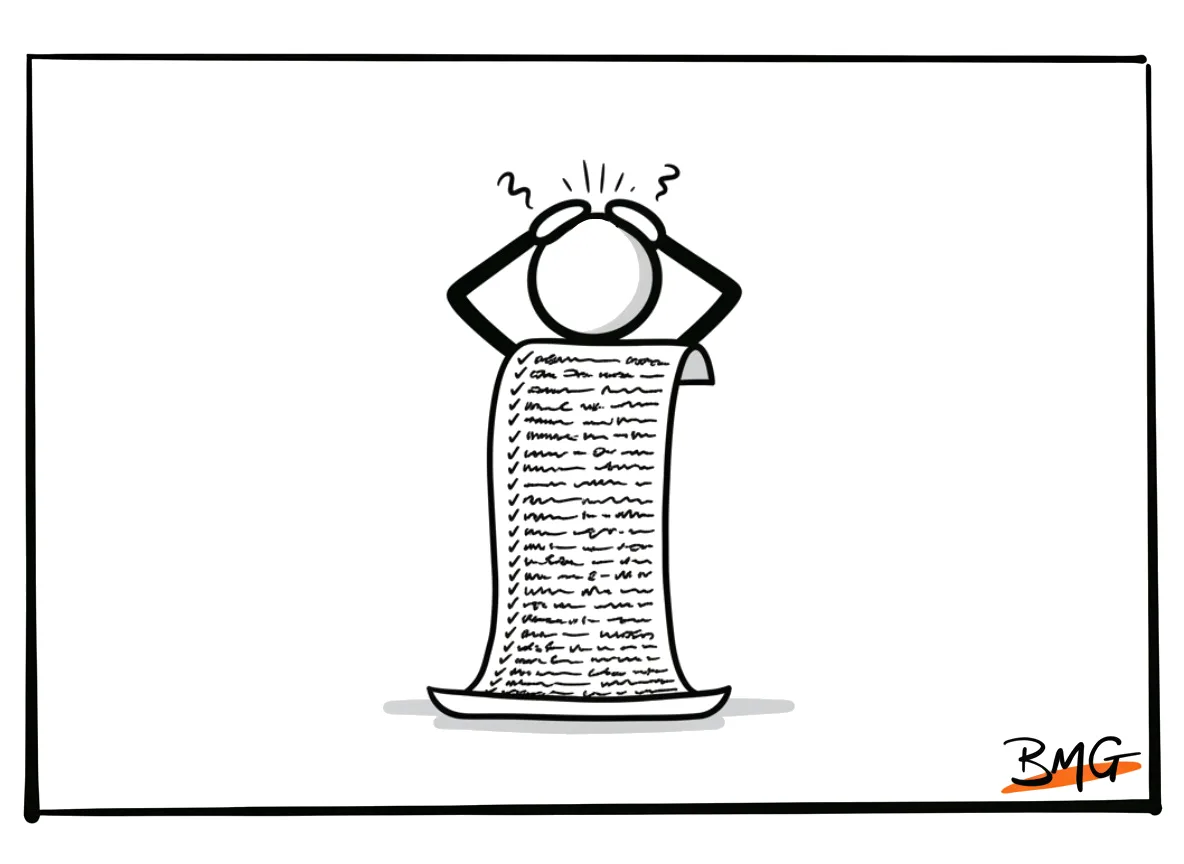
For years, my life was dominated by to-do lists.
Every morning began with one, every evening ended with one.
No matter how many tasks I crossed off, the guilt always lingered.
If I did all my tasks, I felt like I was being ruled by the list. If I didn’t, I felt like I had failed.
The truth is, most of us treat to-do lists as a dumping ground for self-criticism. They capture the “have tos,” and not the “want tos.”.
They rarely consider how we’ll approach the task.
Instead of becoming tools for progress, our lists quietly drain our energy and amplify our inner critic.
Rethinking Our List
Here’s a shift that I would like you to consider: it’s not just about what you’re doing, but how you’re doing it.
Tell a child to tidy their room, and good luck with that. Invite them to tidy together while chatting about the day that's been or the one to come, and suddenly the task becomes achievable - enjoyable even.
The same principle applies to us as adults.
When I began reframing tasks with how I would do them (making them collaborative, meaningful, or enjoyable), the resistance to them dropped away.
My list stopped feeling like a burden to carry and started feeling like a guide through progress.
The Power of the “Big Three”
One person I coached was trapped in the same cycle … endless meetings, a suffocating to-do list, long double-digit days. The work product and output were fine, great sometimes, but they were burning out.
We changed one thing: instead of a list of dozens, they focused on three high-leverage actions each day. The ones that would make everything else either easier or irrelevant.
The result? Their productivity skyrocketed, their days felt lighter, and (perhaps most importantly) they felt proud of what they had accomplished at the end of every day.
The secret wasn’t doing more. It was about doing what mattered, in ways that felt purposeful.
Joy is Not Optional. It’s Fuel.
There’s a common fear that if we only did things we enjoyed, we’d avoid hard work, but I have found the opposite is true. We enjoy being useful. We thrive on impact. We want to create, contribute, and serve.
When I used to focus on finding ways to enjoy the process (even something as simple as shifting the environment or reframing the purpose), the guilt faded.
Productivity stopped being about endurance. It became about energy.
And with more energy, my output improved too.
I got to this article today because lately I’ve lost touch with my joy. The cloud of what needs to be done drops like a fog over what I want to get done.
This morning, as I sat down to write, I asked myself: would I want to receive from someone miserable and checking things off just for the sake of it, or from someone engaged, energised, and alive in their work?
When I reflect on my years of living by the to-do list, I see a pattern. The bad stress came from tasks I forced myself through - late, tired, disengaged.
Looking back, those were never pieces of work I was proud of.
But the good stress (the kind that stretched me without breaking me) was always connected to purpose. Those were the projects I look back on with pride and a giant smile on my face, not guilt.
Joy was never found in thinking about the size of the list and how many I managed to get done. Real joy is the quality of what was on it, and more importantly … the spirit in which I approached it.
A quick pause
If this is helpful, my free guide goes deeper, and the newsletter brings ideas like this twice a week.
My book, High-Fidelity Leadership, explores these same themes in more depth, with practical frameworks for standards, clarity, and the conversations that leaders avoid for too long.
Reflection Prompts
Does your to-do list energise you or drain you?
Which tasks on your list feel purposeful, and which are just noise or padding?
How might you reframe a task by changing how you’ll do it?
What would your “Big Three” be today?
Where in your life are you chasing guilt-driven productivity instead of energy-driven progress?
Final Thought
A to-do list should serve you, not shackle you.
When you shift from “have to” to “get to” … when you design tasks around joy and purpose, and when you narrow focus to the few things that matter most, the guilt dissolves.
The secret isn’t in doing more.
It’s in doing what matters - deliberately, joyfully, and with impact.
The life you want isn’t built through lists alone.
It’s built through energy, presence, and purpose.
Remember, the path to extraordinary is walked with a thousand small steps, and you’re doing great!
Your Small Steps
How do I stop feeling guilty about unfinished tasks?
Guilt comes from misaligned expectations. Narrow your focus to the Big Three each day and let the rest be optional.
Action: Choose three high-impact tasks for tomorrow and commit to only those.
Isn’t this just about positive thinking?
Not at all. It’s about structuring your approach. The “how” of a task is often what makes it achievable.
Action: Reframe one dreaded task today by writing how you’ll make it enjoyable or collaborative.
What if I can’t enjoy certain work?
Not every task is fun, but most can be reframed to connect with impact, service, or growth.
Action: Link the task to a larger purpose: Ask, “Who benefits from me doing this well?”
Does this mean abandoning long lists completely?
No. Lists are useful for capturing our intent, but working from an endless list is paralysing.
Action: Keep one “capture list” for everything, and one “action list” with only the top three.
Can this apply outside of work?
Yes. Household chores, exercise, and even conversations can be reframed through “how” and purpose.
Action: Choose one personal task this week and consciously make it enjoyable.
How do I make this stick?
By treating it as practice, not perfection. The goal is not a perfect list; it’s a better relationship with your time and energy.
Action: Reflect weekly: What gave you energy? What drained you? Adjust accordingly.

Barry Marshall-Graham
Executive coach and leadership advisor
Get the Difficult Conversations Guide
A practical resource for leaders who want to say the thing that needs saying, without burning bridges or avoiding the moment.
Keep reading
31 August 2026
The Sentence They Nearly Said
A pause or changed expression may lead to the useful part of a conversation, but noticing it doesn't give the coach permission to decode it.
24 August 2026
You Cannot Coach Someone You Are Secretly Judging
Second-hand information may be useful, but once it becomes a character verdict it changes the leader’s listening, questions and tone.
17 August 2026
A Good Question Can Be Badly Timed
The wording may be excellent, but a coaching question can still arrive before the relationship or the moment is ready to carry it.
10 August 2026
Whose Goal Is It Anyway?
A goal can be strategically sensible and still feel unowned. The answer is honest internalisation, not coaching somebody into believing it was their idea.
3 August 2026
The Leader Who Uses Coaching to Avoid Leading
Coaching can create room for another person to think, but it can also help a leader postpone the feedback, standard or decision that belongs to them.
27 July 2026
Advice Wearing a Hat
A coaching question can sound wonderfully curious while quietly steering somebody towards the answer their leader already prefers.
20 July 2026
The Emotional Cost of Being the Reliable One
Reliability earns trust, but it can also turn one capable leader into the place where unfinished work, uncertainty, and organisational risk accumulate.
13 July 2026
The Relief of Finally Saying the Thing
An overdue conversation occupies far more space than the words themselves. Relief begins when reality is finally allowed back into the room.
6 July 2026
The Sideways Shove
Peer conflict cannot be solved with the Manager Card. Influence begins when leaders stop pushing across borders and repair the working relationship.
29 June 2026
Clarity Under Pressure
Authority is tested when the room tightens. Clear leaders make reality, uncertainty, and the next decision visible without adding drama.