First Principles Thinking
15 February 2025
How to Lead and Coach with a Clear Mind
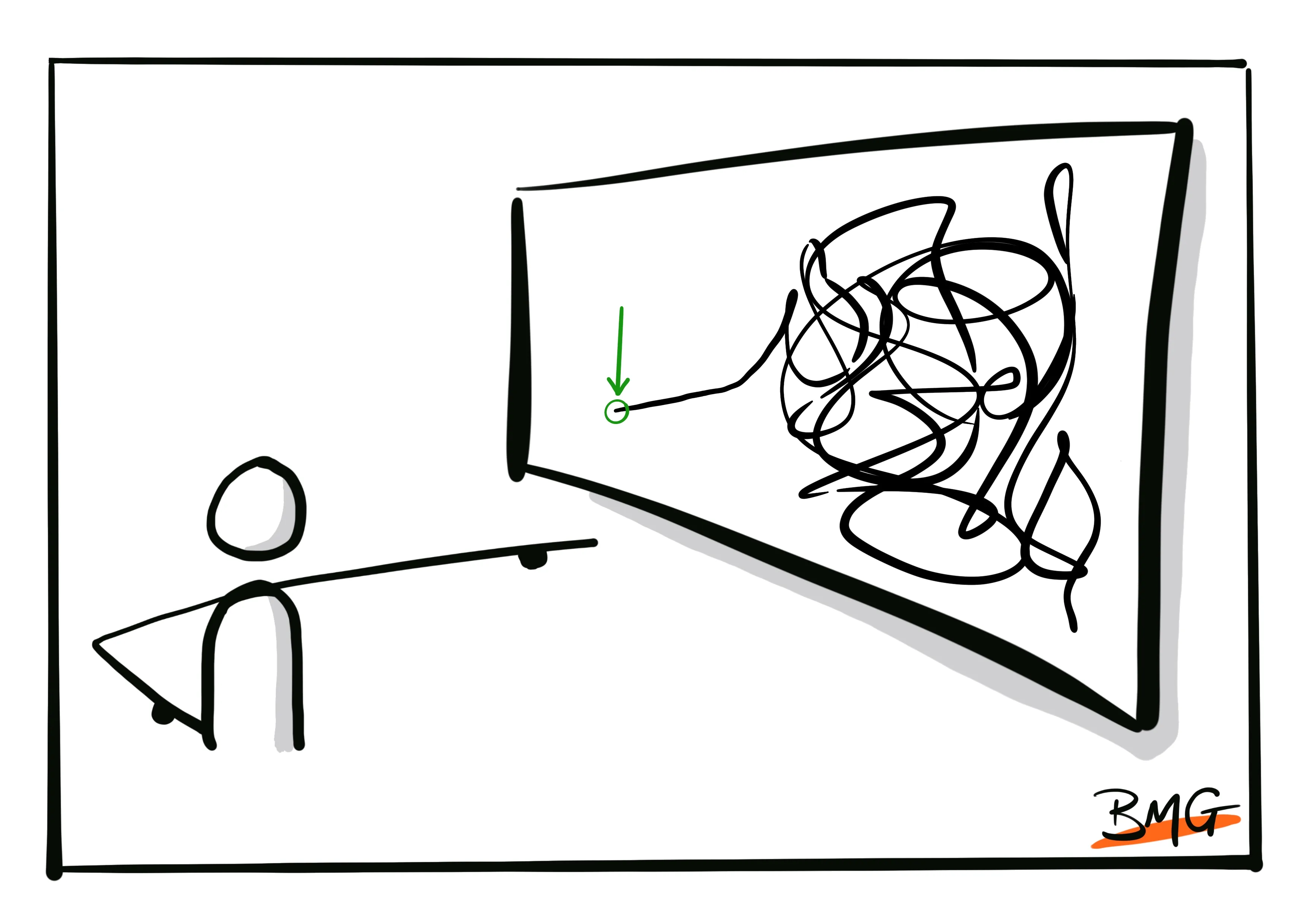
Most leaders don’t realise how much of their thinking is shaped by convention.
We inherit playbooks from previous leaders, follow industry best practices, and repeat approaches that seem to work. When faced with a problem, the default reaction is to ask how others have solved it and apply the same strategy.
But there’s a flaw in this approach. A rather serious flaw as it turns out.
Best practices are often just historical solutions to different problems - ones that existed in a different time, with different constraints, and for different people and very often in wildly different scenarios. In blindly following them, we risk solving problems that no longer exist, reinforcing inefficiencies, and stifling any opportunity for creativity.
This is where First Principles Thinking comes in. Instead of reasoning by analogy (copying what already exists), it forces us to break things down to their core truths and build solutions from the ground up.
Consider the difference between tweaking an old system or breaking that old system down to the root problem(s) it solved and redesigning it … to be exactly what’s needed today.
What is First Principles Thinking?
First Principles Thinking is a mental model that pushes you to strip away assumptions, challenge norms, and rebuild a problem from its fundamental truths.
Elon Musk is probably most famous for using this approach. When designing SpaceX rockets, he didn’t ask, “How do people normally build rockets?” He asked, “What are the raw materials needed to build a rocket, and why do they cost so much?”

By breaking the problem down to its basic components, he discovered that he could reduce costs dramatically. He found that because the underlying materials weren’t expensive, the current cost must be in the way they were traditionally put together and deployed.
The same logic applies in leadership and coaching.
Instead of asking:
How have other companies solved this?
What does the playbook say?
What worked last time?
Try asking:
What is the real problem we are solving?
What are the fundamental truths about this challenge?
If we were designing a solution from scratch today, what would it look like?
This approach breaks down complexity, reveals hidden any assumptions, and unlocks truly creative solutions.
How This Applies to Leadership
Most leaders and decision makers unknowingly operate with secondhand thinking**.** They rely on:
The way things have always been done.
Strategies copied from competitors.
Legacy processes built for past constraints.
Here’s how applying First Principles Thinking can challenge that:
Strategy and Decision-Making
The most common leadership trap is copying industry norms and delving right into standard methodologies rather than designing a unique approach.
For example, many organisations push for immediate hiring when teams are overwhelmed. First Principles Thinking forces us to ask:
What problem are we actually solving? (Is it really a headcount issue, or is work mismanaged and poorly planned?)
If we couldn’t hire, how else could we solve this? (Automation? Process? Prioritisation?)
What is the simplest and most effective way to get this result?
Leaders who think and operate this way build leaner, smarter, and more effective organisations, operating at levels of high performance that would never be achieved otherwise.
Problem-Solving in Teams
When teams struggle, managers often default to ADDITIONAL process - adding new rules, more meetings, and tighter controls.
But First Principles Thinking asks:
What is the actual root cause?
If we had no existing structures, how would we design this team to perform at its best?
Are we adding complexity when we should be removing friction?
Instead of patching broken processes, great leaders redesign from the root problem up**. Grab that red pen and start eliminating process steps instead of adding new ones!**
A quick pause
If this is helpful, my free guide goes deeper, and the newsletter brings ideas like this twice a week.
My book, High-Fidelity Leadership, explores these same themes in more depth, with practical frameworks for standards, clarity, and the conversations that leaders avoid for too long.
Personal Leadership Growth
Some leaders believe career growth follows a fixed path - a perceived linear climb up the corporate ladder. But First Principles Thinking challenges this:
What is the fundamental purpose of leadership?
If job titles didn’t exist, how would I grow my impact?
What unique skills and experiences will make me a better leader?
This mindset shifts leadership from climbing a predefined ladder to crafting a personalised path of mastery**.** Some of the best and most productive gatherings I have had the privilege to be a part of have involved leaving job titles, rank, and ego, at the door.
How This Applies to Coaching
We know that great coaching is about helping people think more clearly**.** Creating clarity where there was none.
Most coaching conversations start with a person describing a problem with a particular, and probably familiar to you reading this, type of framing:
“I need to get better at time management.”
“I’m struggling to delegate.”
“Our team isn’t working well together.”
But these are surface-level statements.
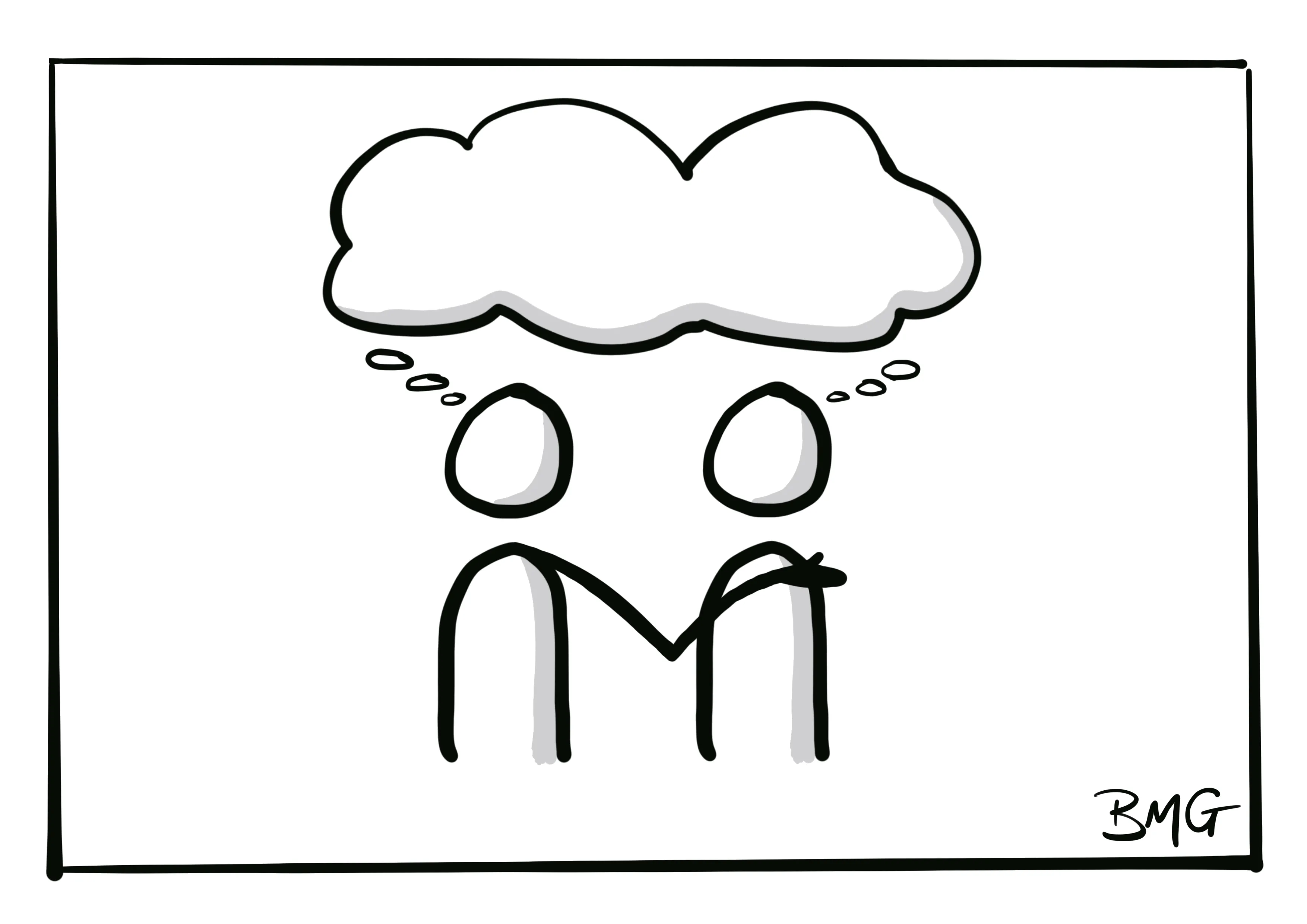
A First Principles Coach digs deeper:
1. The Time Management Myth
Instead of, “How can you manage your time better?” ask,
“What actually makes something worth your time?”
“What if the goal isn’t efficiency, but elimination?”
“What’s the fundamental problem you’re trying to solve?”
Often, the real issue isn’t time management, it’s saying yes to too many things, lack of clarity on priorities, or fear of letting go.
2. The Delegation Dilemma
Instead of, “How can you delegate more?” ask,
“What are you afraid will happen if you delegate?”
“What makes you believe you need to be involved in this?”
“What if the problem isn’t delegation, but control?”
Coaching with First Principles shifts the focus from surface behaviours to root beliefs**.**
From Default Thinking to First Principles
Most leaders and coaches operate in default mode - tweaking, adjusting, and refining what already exists. But First Principles Thinking demands a reset.
When you stop taking things at face value and start breaking problems down to their essence, you unlock simpler, clearer, and more effective solutions.
Three practical takeaways:
Next time you face a challenge, strip it down to its fundamentals. What is the core truth behind this problem?
Question every assumption. Are you following a playbook because it’s right, or just because it’s what others do?
Encourage this thinking in your teams. The best leaders don’t provide answers … they ask better questions.
The best solutions aren’t found in best practices and methodologies.
They’re built from First Principles.
Remember, the path to extraordinary is walked with a thousand small steps, you’re doing great!
Your Small Steps
What is First Principles Thinking in leadership?
First Principles Thinking is a problem-solving approach that breaks issues down to their fundamental truths, rather than relying on conventional wisdom or best practices. In leadership, it helps leaders challenge assumptions, rethink processes, and design better strategies from the ground up.
How is First Principles Thinking different from best practices?
Best practices rely on past solutions that worked in a specific context, often leading to incremental improvements rather than breakthroughs. First Principles Thinking rebuilds solutions from scratch, ensuring they fit the current problem, team, and constraints, rather than just copying what others have done.
When should leaders apply First Principles Thinking?
Use First Principles Thinking when:
A process or system feels outdated or unnecessarily complex.
You’re facing a big decision and don’t want to default to industry norms.
The team is struggling with a recurring issue despite multiple attempts to fix it.
You’re innovating or looking for a radically better way of doing something.
How can First Principles Thinking improve decision-making?
By questioning why something is done a certain way and stripping it down to its core elements, leaders can make clearer, more rational decisions without being influenced by assumptions, biases, or outdated thinking. It helps avoid knee-jerk reactions and leads to strategic, long-term solutions.
How can coaches use First Principles Thinking?
Coaches can challenge surface-level assumptions by asking deeper questions like:
What’s the real problem you’re trying to solve?
What are you assuming that might not be true?
If you had to start from scratch, how would you approach this?
This approach helps clients break free from limiting beliefs and find more effective, personalised solutions.
What are some common leadership mistakes that First Principles Thinking can fix?
Blindly following industry trends without questioning if they truly fit the company.
Adding complexity instead of removing friction when solving problems.
Hiring to fix workload issues instead of optimising processes and priorities.
Treating symptoms instead of root causes in team performance issues.
How can I develop a First Principles mindset as a leader?
Get comfortable questioning everything .. even your own beliefs.
Practice breaking problems down into their most basic elements before seeking solutions.
Encourage your team to challenge assumptions rather than accept “the way things are.”
Read widely outside your industry to expand your perspective and avoid echo chambers.

Barry Marshall-Graham
Executive coach and leadership advisor
Get the Difficult Conversations Guide
A practical resource for leaders who want to say the thing that needs saying, without burning bridges or avoiding the moment.
Keep reading
31 August 2026
The Sentence They Nearly Said
A pause or changed expression may lead to the useful part of a conversation, but noticing it doesn't give the coach permission to decode it.

24 August 2026
You Cannot Coach Someone You Are Secretly Judging
Second-hand information may be useful, but once it becomes a character verdict it changes the leader’s listening, questions and tone.

17 August 2026
A Good Question Can Be Badly Timed
The wording may be excellent, but a coaching question can still arrive before the relationship or the moment is ready to carry it.
10 August 2026
Whose Goal Is It Anyway?
A goal can be strategically sensible and still feel unowned. The answer is honest internalisation, not coaching somebody into believing it was their idea.
3 August 2026
The Leader Who Uses Coaching to Avoid Leading
Coaching can create room for another person to think, but it can also help a leader postpone the feedback, standard or decision that belongs to them.

27 July 2026
Advice Wearing a Hat
A coaching question can sound wonderfully curious while quietly steering somebody towards the answer their leader already prefers.
20 July 2026
The Emotional Cost of Being the Reliable One
Reliability earns trust, but it can also turn one capable leader into the place where unfinished work, uncertainty, and organisational risk accumulate.

13 July 2026
The Relief of Finally Saying the Thing
An overdue conversation occupies far more space than the words themselves. Relief begins when reality is finally allowed back into the room.

6 July 2026
The Sideways Shove
Peer conflict cannot be solved with the Manager Card. Influence begins when leaders stop pushing across borders and repair the working relationship.
29 June 2026
Clarity Under Pressure
Authority is tested when the room tightens. Clear leaders make reality, uncertainty, and the next decision visible without adding drama.