How the Right Pressure Moves You Forward
25 August 2025
Learn to spot the kind of stress that sharpens your growth
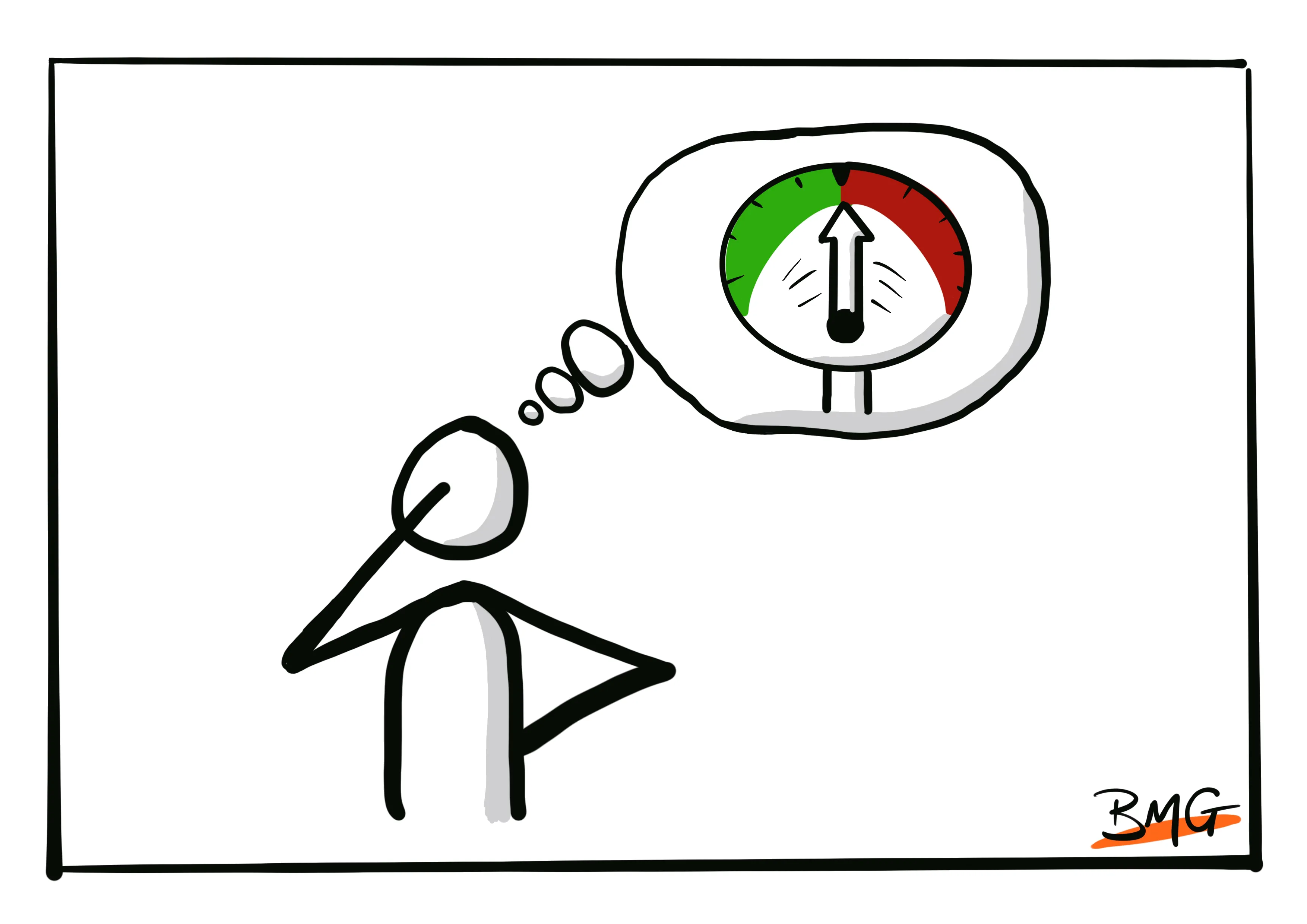
“It’s not the stress that kills us, it is our reaction to it.”
, Hans Selye
I was thinking this week … why do some people thrive under pressure while others crack?
Why does one stretch session leave us energised and another feeling hollow?
We often lump all stress into a single category which is something to avoid, manage, or minimise. But I think that’s a costly mistake.
Not all stress is bad. In fact, some of it is absolutely necessary.
In the pursuit of success, growth, and a meaningful life, stress is not our enemy, which feels weird to write … but it’s true.
The real challenge is distinguishing between the stress that fuels our progress, and the stress that slowly erodes it.
The Distinction That Changes Everything
Good stress challenges. Bad stress corrodes.
This is more than semantics.
Psychologists refer to good stress as eustress - the kind that comes with healthy challenge, motivation, and a sense of meaning. It’s the feeling before a big presentation, the nerves before your first marathon, the push of a bold deadline that lights up your creative circuits.
Distress, by contrast, is toxic. It’s chronic, unrelenting, and misaligned with purpose. It piles up in inboxes and impossible demands, saps your energy, clouds your focus, and dulls your edge.
In other words: good stress makes you stronger … bad stress wears you down.
The Markers of Good Stress
So what makes stress good?
Look for these qualities:
Time-bounded – It has a clear start and end. Think deadlines or performance goals.
Voluntary – You chose it. You signed up to stretch. Ownership makes a difference.
Meaningful – There’s purpose behind the pressure. It connects to something you care about.
Recoverable – It’s intense, but there’s space to rest. Without rest, all stress becomes bad stress.
Good stress feels like: “This is tough, but I’m learning something.”
Bad stress feels like: “This is never-ending, and I’m drowning.”
The Growth Zone Model
Picture three concentric circles:
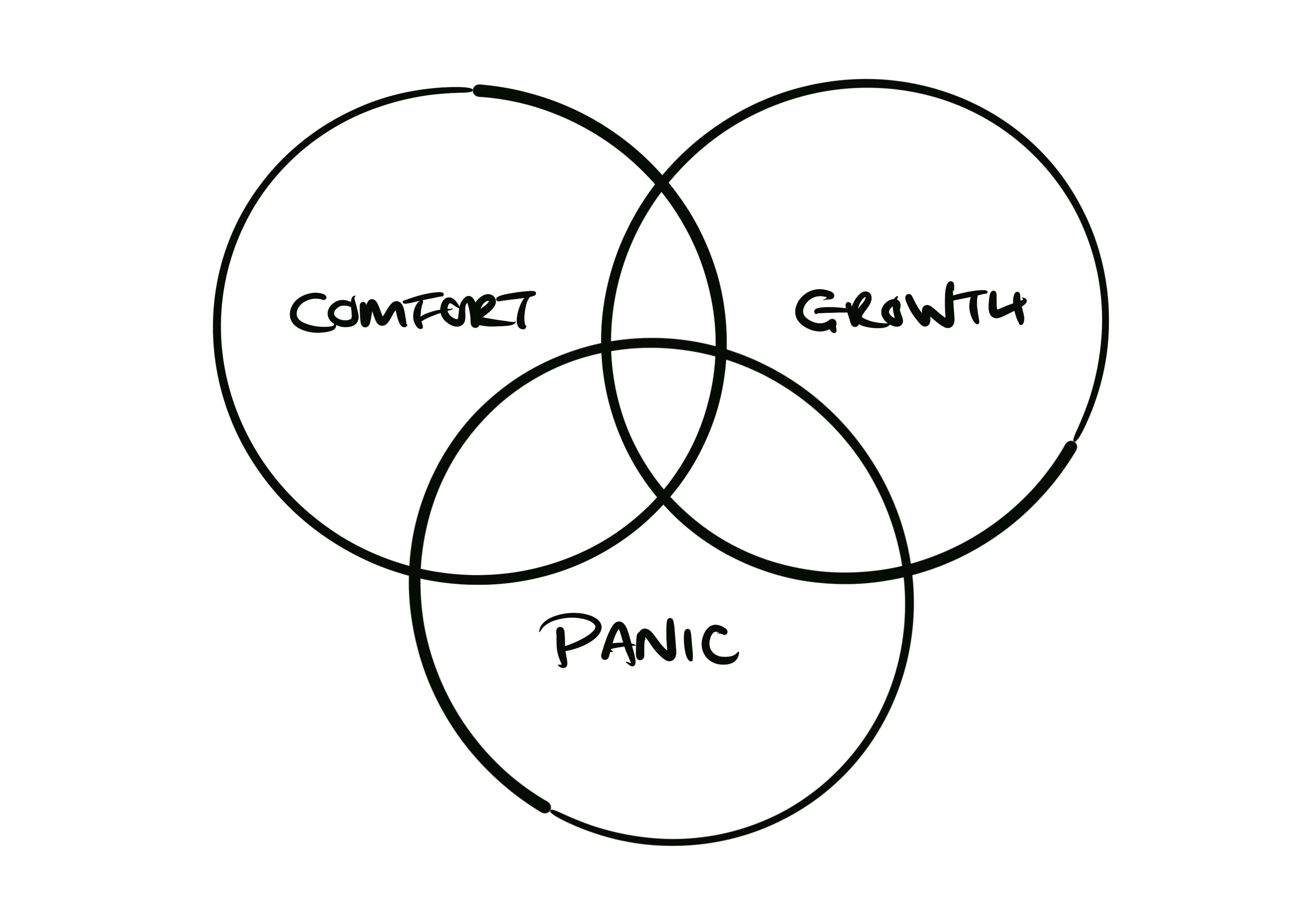
Comfort Zone – Safe, familiar, but no real growth.
Growth Zone – Slightly uncomfortable, energising, where development happens.
Panic Zone – Overwhelming, disorienting, damaging over time.
Great leaders, performers, and creators live in the growth zone by design.
They curate just enough pressure to stretch … but not snap.
They oscillate between challenge and recovery like seasoned athletes. They train stress, instead of being owned by it.
Personal Reflection
For me, learning the difference between good and bad stress changed how I approached almost everything.
At one point some years ago, I began to notice a pattern.
The stress that pushed me to grow (though uncomfortable in the moment to be completely honest) always seemed to lead to work I was proud of. I was engaged in the process, energised by the challenge, and the results felt meaningful.
This was good stress, and it had a signature: focus, purpose, momentum.
Then, of course, there was the other kind.
The kind fuelled by tiredness, unclear boundaries, or saying yes when I should have said no.
That stress felt heavy right from the off.
Often, when I looked back at the results, I felt disappointed. The energy was wrong. The process was strained. I didn’t enjoy it, and the output never aligned with my best work.
Noticing those patterns changed the way I made decisions. I stopped chasing urgency and started tuning into alignment. Was this challenge going to stretch me or drain me?
That question became a new compass.
And with it, I’ve since been spending my energy where it counts.
A quick pause
If this is helpful, my free guide goes deeper, and the newsletter brings ideas like this twice a week.
My book, High-Fidelity Leadership, explores these same themes in more depth, with practical frameworks for standards, clarity, and the conversations that leaders avoid for too long.
Reflection Prompts
Where in your life do you feel stretched (but energised)?
What stressors currently feel chronic, draining, or misaligned with your values?
What does your recovery routine look like, and is it enough to sustain your pace?
When was the last time you intentionally stepped into your growth zone?
Final Thought
Growth isn’t effortless … but it shouldn’t be endless grind either.
We are often sold a lie that success is forged only through relentless hustle, late nights, and an ever-heavier workload.
But the truth is: not all stress is created equal.
Some stress sharpens us. It challenges our edges, expands our capacity, and leaves us changed - for the better. This is eustress (the good kind). The kind that fuels deep work, meaningful risk, and creative breakthroughs.
But beyond that tipping point lies distress … a constant undercurrent of pressure that erodes focus, diminishes joy, and eventually breaks what we’re trying to build.
The trouble is, when we are in full flow with something and neck deep in problems to solve, it’s easy to lose sight of that edge until we’ve already crossed it.
That’s why self-awareness is non-negotiable.
High performers don’t just tolerate stress, they track it. They listen to their bodies, observe the quality of their work, notice when tension starts to spill into their tone or team dynamics. They learn the difference between the kind of stress that leads to mastery and the kind that leads to burnout.
And they act on it.
Because getting ahead in life is about leaning into the right things.
The kind of challenges that align with your values, stretch your skills, and light you up from the inside out.
Work with your energy, not against it.
Choose progress over pressure … alignment over exhaustion.
So here’s the lesson:
Don’t chase stress. Choose it.
Seek the kind that moves you forward not the kind that wears you down.
Your ability to stress smartly might just be your greatest advantage.
Remember, the path to extraordinary is walked with a. thousand small steps, you’re doing great!
Your Small Steps
What’s the difference between stress and burnout?
Burnout is the result of prolonged bad stress without adequate recovery. Stress in itself isn’t harmful but sustained misalignment and overload are.
Action: Audit your recovery time this week. Are you refuelling enough?
How can I tell if stress is helping me grow?
Check how you feel after the stress event. Good stress may tire you, but it leaves a sense of momentum or learning. Bad stress lingers as tension or resentment.
Action: Journal for five minutes after a tough task - note energy, mood, and clarity.
Is all pressure in the workplace negative?
Not at all. When pressure is clear, bounded, and aligned to purpose, it creates focus and flow. Ambiguity and overload are what turn pressure toxic.
Action: Next time pressure builds, clarify expectations and boundaries before reacting.
Can I turn bad stress into good stress?
Sometimes. Reframing, setting clearer boundaries, or connecting to purpose can help. But if the environment is toxic, the answer may lie in stepping away.
Action: Reframe one task today by asking, “What could this teach me?”
What role does coaching play in managing stress?
A coach can help you spot patterns, uncover hidden stressors, and design systems that keep you in the growth zone,not the panic zone.
Action: Book a coaching session (or reflect with a trusted peer or accountability partner) to explore your current stress mix.
How do high performers manage constant stress?
They don’t eliminate stress, they manage their inputs and outputs. They choose high-value challenges, recover deeply, and avoid distractions that waste energy.
Action: Cut one non-essential task from your day. Use that time to breathe, reflect, or walk.
Isn’t all growth a little uncomfortable?
Yes … and that’s the point. Growth isn’t supposed to feel easy. But discomfort is different from damage. One shapes you. The other silently breaks you.
Action: Track one moment this week when you stretched with purpose. Celebrate it.

Barry Marshall-Graham
Executive coach and leadership advisor
Get the Difficult Conversations Guide
A practical resource for leaders who want to say the thing that needs saying, without burning bridges or avoiding the moment.
Keep reading
31 August 2026
The Sentence They Nearly Said
A pause or changed expression may lead to the useful part of a conversation, but noticing it doesn't give the coach permission to decode it.
24 August 2026
You Cannot Coach Someone You Are Secretly Judging
Second-hand information may be useful, but once it becomes a character verdict it changes the leader’s listening, questions and tone.
17 August 2026
A Good Question Can Be Badly Timed
The wording may be excellent, but a coaching question can still arrive before the relationship or the moment is ready to carry it.
10 August 2026
Whose Goal Is It Anyway?
A goal can be strategically sensible and still feel unowned. The answer is honest internalisation, not coaching somebody into believing it was their idea.
3 August 2026
The Leader Who Uses Coaching to Avoid Leading
Coaching can create room for another person to think, but it can also help a leader postpone the feedback, standard or decision that belongs to them.
27 July 2026
Advice Wearing a Hat
A coaching question can sound wonderfully curious while quietly steering somebody towards the answer their leader already prefers.
20 July 2026
The Emotional Cost of Being the Reliable One
Reliability earns trust, but it can also turn one capable leader into the place where unfinished work, uncertainty, and organisational risk accumulate.
13 July 2026
The Relief of Finally Saying the Thing
An overdue conversation occupies far more space than the words themselves. Relief begins when reality is finally allowed back into the room.
6 July 2026
The Sideways Shove
Peer conflict cannot be solved with the Manager Card. Influence begins when leaders stop pushing across borders and repair the working relationship.
29 June 2026
Clarity Under Pressure
Authority is tested when the room tightens. Clear leaders make reality, uncertainty, and the next decision visible without adding drama.