Stillness is a Skill
14 October 2025
In a world addicted to constant motion, stillness has power.
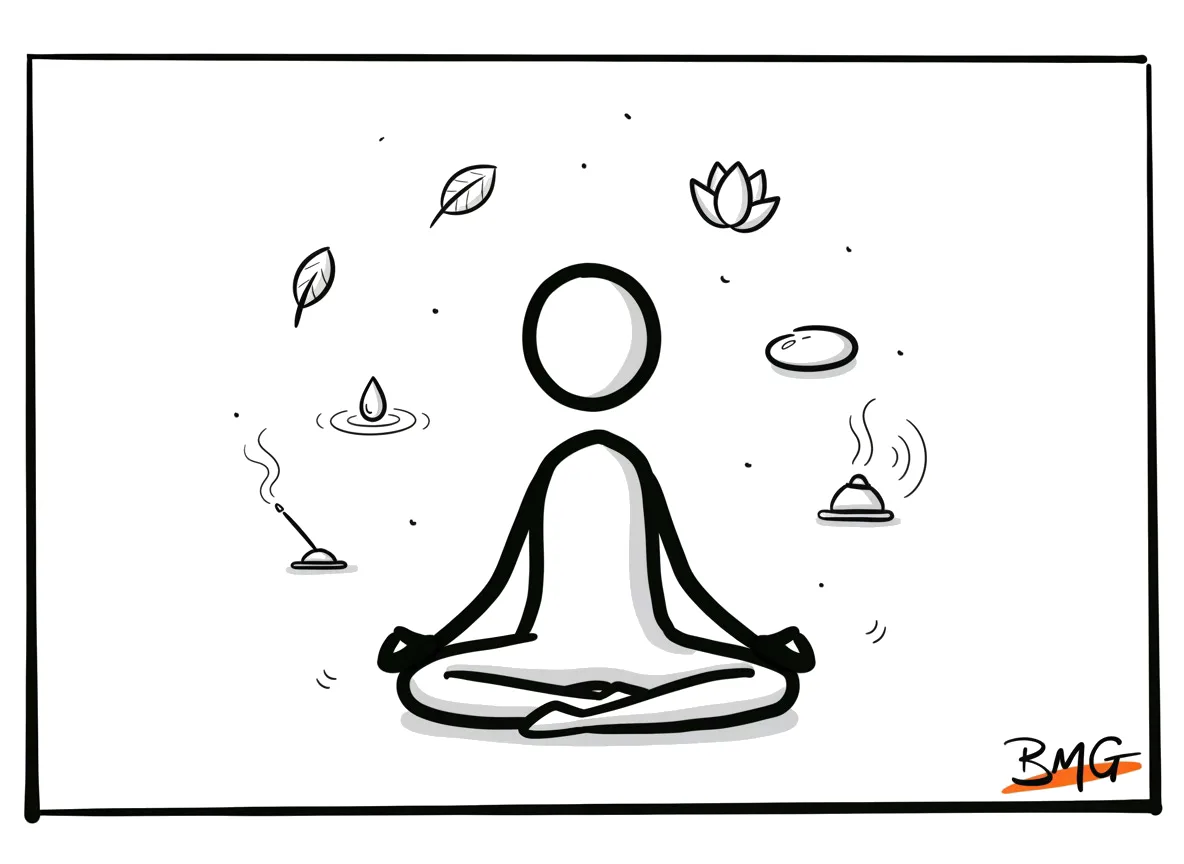
We wake up to notifications, rush through routines, move from meeting to meeting, and even try to fall asleep scrolling. Our moments of supposed rest are still often filled with mental noise … planning, worrying, replaying.
We tell ourselves we are “too busy to stop”, but beneath the surface, what we’re really afraid of is stillness.
Be honest, when everything goes quiet, we’re left face to face with our thoughts - the doubts, the questions, and the things we avoid by keeping busy.
But the irony is this: the quieter you become, the more clearly you see.
Stillness isn’t the absence of motion. It’s the mastery of it.
Learning that skill might be one of the most important leadership and life lessons of all.
From Restless to Ready
Stillness isn’t natural in modern life. It’s learned. Trained. Practised.
When you deliberately pause (not as escape, but as discipline), your nervous system recalibrates. Your thinking slows, but your awareness sharpens. You move from reacting to responding. Noise to nuance.
The best leaders I know don’t rush their decisions. They sit with uncertainty. They listen, observe, and wait for the truth to surface because they know that calmness isn’t a lack of drive; it’s a mark of control.
In a world obsessed with doing, stillness becomes a competitive advantage.
It’s what allows us to see patterns others miss, to hear what’s not being said, to recover faster and lead with clarity instead of fatigue.
The Science of Stillness
Neuroscience backs what ancient philosophy has long known: your brain performs best when given space.
Moments of stillness activate the default mode network, which is the part of the brain responsible for creativity, reflection, and problem-solving.
It’s why ideas come in the shower or on walks, not in meetings.
Physiologically, stillness activates the parasympathetic nervous system … the body’s natural “rest and restore” mode. Heart rate slows, stress hormones drop, and presence returns.
It’s not just good for your mind , it’s medicine for your whole system.
Reflection Prompts
When was the last time you allowed yourself to stop (fully!!) without guilt?
Where in your week could you create intentional pauses for stillness?
What happens inside you when things get quiet?
How would your leadership change if you learned to respond, not react?
What would a “still moment” look like in your daily rhythm?
Final Thoughts
Stillness is not weakness.
Its strength under control.
In noisy situations, anyone can shout. In stillness, you learn to listen, and from that listening, your next right action becomes clear.
The world doesn’t need more speed. It needs more groundedness.
It needs people who can hold chaos without becoming chaotic themselves.
So practise the pause. Sit in silence. Learn the discipline of doing nothing, and watch how much more powerful everything you do becomes.
Because stillness isn’t the opposite of progress.
It’s the foundation of it.
Be. Here. Now.
Remember, the path to extraordinary is walked with a thousand small steps, and you’re doing great!
Your Small Steps
Isn’t stillness just another word for doing nothing?
Not at all. Stillness is active awareness. It’s the reset between moments of motion that sharpens everything that follows.
Action: Take a one-minute pause between tasks today. Don’t fill it. Just breathe.
How can I find stillness when my schedule is relentless?
You don’t find it, you make it. Even brief pauses compound over time.
Action: Block two five-minute windows in your day as “pause time.” Protect them like meetings.
What if I feel restless or uncomfortable when things get quiet?
That’s normal. Stillness surfaces emotion and truth. Over time, it becomes easier (even addictive).
Action: Notice what arises in silence instead of judging it. Write it down.
Can stillness really improve performance?
Absolutely. The best thinkers, leaders, and athletes all use it. Recovery fuels readiness.
Action: End your workday with two minutes of stillness before closing your laptop.
How do I know if I’m practising stillness well?
When you begin responding to life with more clarity and less reactivity, you’ll know it’s working.
Action: At the end of the week, reflect … did you pause more, rush less, listen deeper?

Barry Marshall-Graham
Executive coach and leadership advisor
Get the Difficult Conversations Guide
A practical resource for leaders who want to say the thing that needs saying, without burning bridges or avoiding the moment.
Keep reading
31 August 2026
The Sentence They Nearly Said
A pause or changed expression may lead to the useful part of a conversation, but noticing it doesn't give the coach permission to decode it.
24 August 2026
You Cannot Coach Someone You Are Secretly Judging
Second-hand information may be useful, but once it becomes a character verdict it changes the leader’s listening, questions and tone.
17 August 2026
A Good Question Can Be Badly Timed
The wording may be excellent, but a coaching question can still arrive before the relationship or the moment is ready to carry it.
10 August 2026
Whose Goal Is It Anyway?
A goal can be strategically sensible and still feel unowned. The answer is honest internalisation, not coaching somebody into believing it was their idea.
3 August 2026
The Leader Who Uses Coaching to Avoid Leading
Coaching can create room for another person to think, but it can also help a leader postpone the feedback, standard or decision that belongs to them.
27 July 2026
Advice Wearing a Hat
A coaching question can sound wonderfully curious while quietly steering somebody towards the answer their leader already prefers.
20 July 2026
The Emotional Cost of Being the Reliable One
Reliability earns trust, but it can also turn one capable leader into the place where unfinished work, uncertainty, and organisational risk accumulate.
13 July 2026
The Relief of Finally Saying the Thing
An overdue conversation occupies far more space than the words themselves. Relief begins when reality is finally allowed back into the room.
6 July 2026
The Sideways Shove
Peer conflict cannot be solved with the Manager Card. Influence begins when leaders stop pushing across borders and repair the working relationship.
29 June 2026
Clarity Under Pressure
Authority is tested when the room tightens. Clear leaders make reality, uncertainty, and the next decision visible without adding drama.