The Power of Inversion
30 June 2025
How Thinking Backwards Moves You Forwards
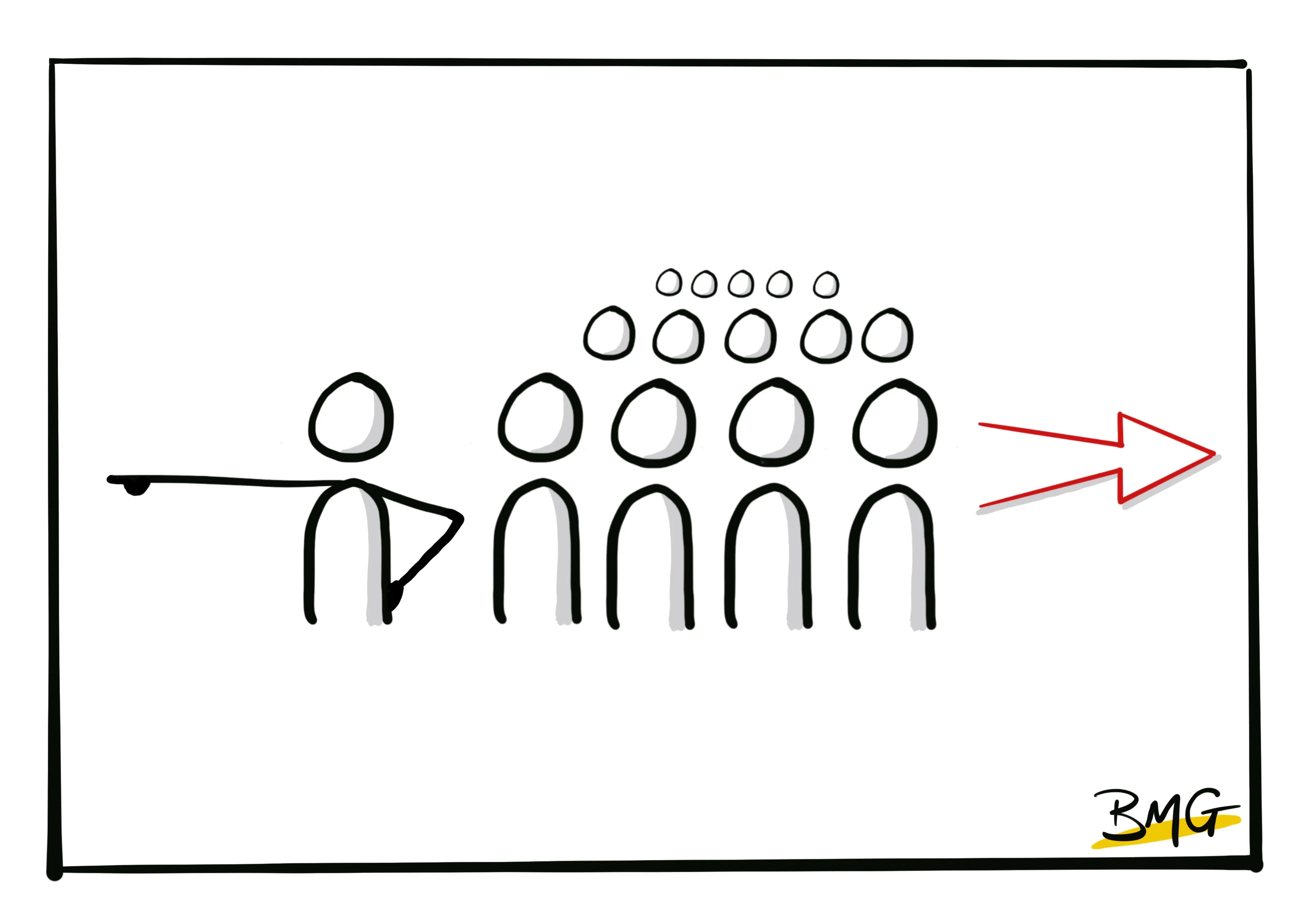
Invert, always invert: Turn a situation or problem upside down. Look at it backward. What happens if all our plans go wrong? Where don’t we want to go, and how do you get there? Instead of looking for success, make a list of how to fail,and then avoid those things.”
, Charlie Munger
What if the best way to move forward … is to think backwards?
Inversion is a mental model used by mathematicians, strategists, leaders and many more besides. It invites us to not only look at thing we want to achieve but at all the things we want to avoid.
It flips the lens.
Instead of asking, “How do I succeed?”, ask, “How could I fail?”
This simple shift in perspective unlocks insight, sharpens clarity, and genuinely prevents us from stumbling into avoidable mistakes.
Used wisely, inversion is a leadership superpower. So why is it that the vast majority of us don’t use its power, and just as many have never heard the concept?
The Core Idea: What Is Inversion Thinking?
Inversion is the practice of looking at things from the opposite direction.
It asks: If I wanted the opposite outcome, what would I do?
The idea gained popularity through thinkers like Charlie Munger (Warren Buffett’s business partner), who famously (as quoted in full above) said:
“Invert, always invert. Many hard problems are best solved when they are addressed backward.”
Munger’s point is simple: by identifying what not to do, we often discover what we must do.
Rather than asking:
“How do I build trust?”, ask “What breaks trust?”
“How do I lead better?”, ask “What undermines good leadership?”
“How do I create a strong culture?”, ask “What kills team culture?”
This process prevents blind spots and anchors decisions in reality - not just your ambition to succeed with them.
Inversion in Action
Here’s how inversion shows up in the real world:
In Life
Instead of listing resolutions, ask: “What would guarantee another year of burnout?” Then work backward from there.
Want to be a better parent or partner? Ask: “What behaviours would drive disconnection?”
Want more peace? Consider: “What currently fills my life with noise?”
In Leadership
Don’t just ask how to improve team morale. Ask: “What demoralises this team?”
Struggling with communication? Flip it: “What creates confusion here?”
Planning strategy? Ask: “What assumptions would make this plan fail?”
In every example, inversion works because it cuts through vague ideals and focuses on real-world friction.
It’s clarity through contrast.
How Inversion Strengthens Leadership
Leaders are trained to think forward: to envision, to strategise, to motivate, to inspire, to plan.
But that can blind us to pitfalls hiding in plain sight.
When used intentionally, inversion:
Sharpens risk assessment
Surfaces overlooked dependencies
Forces clarity around success criteria
Creates robust contingency thinking
Strengthens decision-making under uncertainty
It’s precautionary intelligence when you think about it, and it builds foresight grounded in awareness and not assumption.
A quick pause
If this is helpful, my free guide goes deeper, and the newsletter brings ideas like this twice a week.
My book, High-Fidelity Leadership, explores these same themes in more depth, with practical frameworks for standards, clarity, and the conversations that leaders avoid for too long.
My Own Reflection
I used to avoid inversion because it felt … pessimistic. I preferred vision boards, strategy sessions, motivational quotes.
But over time, I’ve realised that clarity comes from rigour and pure optimism cannot be relied on alone.
When I’ve paused to ask, “What would derail this?”, I’ve uncovered blockers that would’ve stayed invisible until it was too late.
And when I’ve asked teams, “What would make this idea fail fast?”, the honesty and insight that followed has improved every outcome.
We don’t do this to be cynical.
We do it because good leadership faces all sides of the truth - even the uncomfortable ones.
I was asked this week by a member of my team … “Where do you get the energy from?” … And by another “You always have plans for every outcome, how?”
I use inversion to look at everything that could go wrong first, and work back from there. 99 times out of 100, I’ll have a plan for “that thing that nobody thought could happen”.
It’s like that Dr. Strange scene in Avengers: Infinity War where he looks at 14,000,605 futures to find the 1 that will work … except mine are usually in the single digits, to low teens.
Reflection Prompts
What’s a decision or challenge you’re currently facing? Invert it. What would guarantee failure?
Think of something that didn’t go well recently. What could inversion have revealed earlier?
Are there places in your life where optimism is covering over risk?
What assumptions are you making right now that need to be challenged?
What behaviours would erode the kind of person you’re trying to become?
Final Thought
Leadership, life, progress and growth are rarely neat.
The world doesn’t owe us symmetry - if any patterns at all really.
So stop waiting for the coin to land your way.
Let go of the need to make chaos make sense.
You don’t need the pattern to reveal itself … you need the presence to respond.
The wisest people don’t chase order where there is none.
They look at what not to do, and move with intention from there because the moment you stop forcing the future to fit your forecast … is the moment you become free to shape it with absolute clarity.
Trust the pattern you choose by thinking through what WILL go wrong. Not the one you imagine through what MIGHT go right.
Remember, the path to extraordinary is walked with a thousand small steps, you’re doing great!
Your Small Steps
Is inversion just another way of being negative?
Not at all. Inversion is about proactive problem prevention. It’s realistic, not pessimistic.
Action: Next time you’re planning something, run a “what could go wrong?” session with your team.
When should I use inversion thinking?
Use it when the stakes are high, when the risk of failure is real, or when blind optimism is taking over.
Action: Add an inversion moment to your planning checklist.
Can inversion thinking be taught to teams?
Yes! Teams thrive when they’re encouraged to surface risks without fear. It creates psychological safety and better results.
Action: Try a “pre-mortem” exercise: “It’s six months from now and this failed - why?”
What’s the difference between inversion and risk management?
They’re closely related, but inversion is more proactive and creative. It focuses on thought habits, not just process.
Action: Pair inversion with visual thinking - write your ideal outcome, then map its opposite.
Isn’t thinking about failure demotivating?
It can be … if we stay there. But inversion is a temporary lens, not a mindset. It sharpens our path forward.
Action: Use it briefly, then return to solution-focused thinking with clearer insight.
Can inversion help in personal development too?
Absolutely. It’s powerful in relationships, habits, and self-growth.
Action: Choose a goal (e.g. “become more present”) and ask, “What would pull me away from that?”

Barry Marshall-Graham
Executive coach and leadership advisor
Get the Difficult Conversations Guide
A practical resource for leaders who want to say the thing that needs saying, without burning bridges or avoiding the moment.
Keep reading
31 August 2026
The Sentence They Nearly Said
A pause or changed expression may lead to the useful part of a conversation, but noticing it doesn't give the coach permission to decode it.
24 August 2026
You Cannot Coach Someone You Are Secretly Judging
Second-hand information may be useful, but once it becomes a character verdict it changes the leader’s listening, questions and tone.

17 August 2026
A Good Question Can Be Badly Timed
The wording may be excellent, but a coaching question can still arrive before the relationship or the moment is ready to carry it.
10 August 2026
Whose Goal Is It Anyway?
A goal can be strategically sensible and still feel unowned. The answer is honest internalisation, not coaching somebody into believing it was their idea.
3 August 2026
The Leader Who Uses Coaching to Avoid Leading
Coaching can create room for another person to think, but it can also help a leader postpone the feedback, standard or decision that belongs to them.
27 July 2026
Advice Wearing a Hat
A coaching question can sound wonderfully curious while quietly steering somebody towards the answer their leader already prefers.
20 July 2026
The Emotional Cost of Being the Reliable One
Reliability earns trust, but it can also turn one capable leader into the place where unfinished work, uncertainty, and organisational risk accumulate.
13 July 2026
The Relief of Finally Saying the Thing
An overdue conversation occupies far more space than the words themselves. Relief begins when reality is finally allowed back into the room.
6 July 2026
The Sideways Shove
Peer conflict cannot be solved with the Manager Card. Influence begins when leaders stop pushing across borders and repair the working relationship.
29 June 2026
Clarity Under Pressure
Authority is tested when the room tightens. Clear leaders make reality, uncertainty, and the next decision visible without adding drama.