The Power of Thinking Time
22 September 2025
Why Stepping Back Moves You Forward
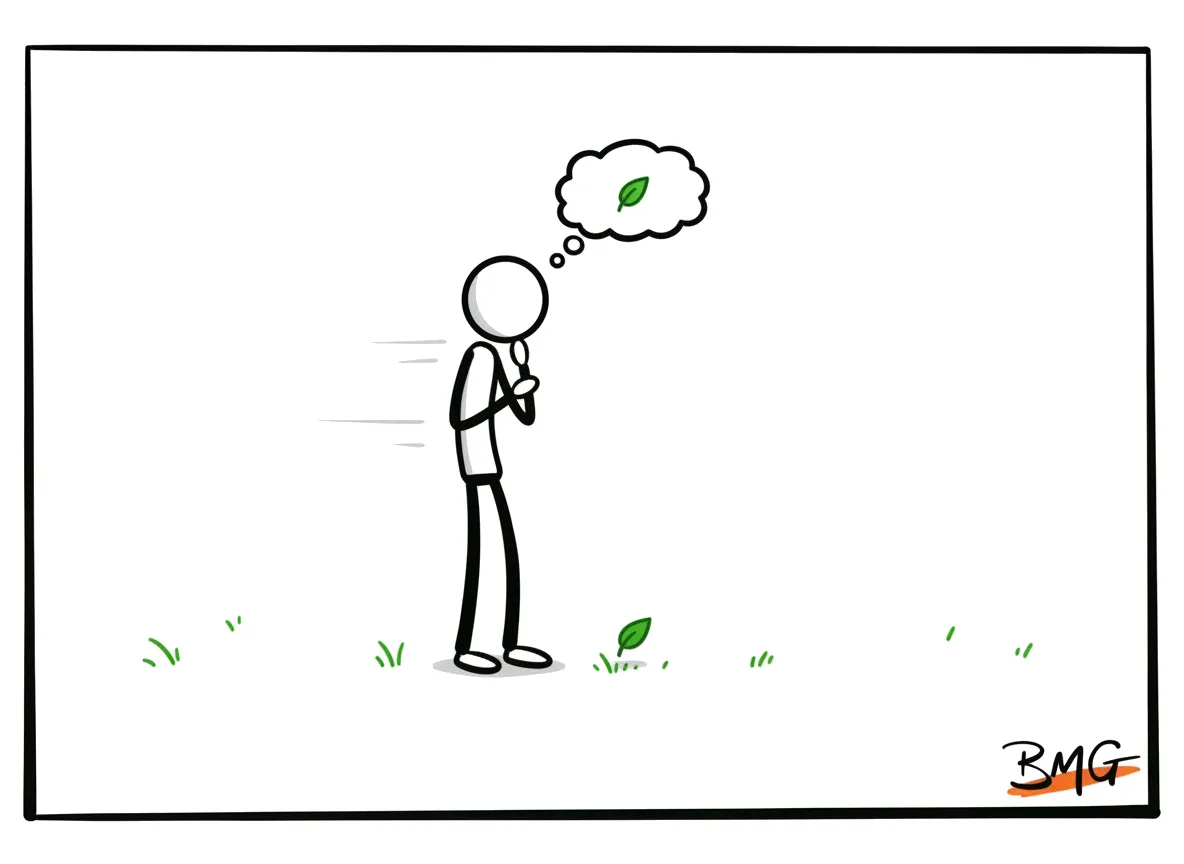
“I take two weeks a year to just read and think, where I’m not interrupted by work or anything else. This is how I’ve come up with many new ideas.”
, Bill Gates
If you’re like most successful people, you spend your days buried in tasks, calls, and emails. You’re productive, sure - but are you thinking?
Busyness masquerades as progress, but without intentional time to reflect, explore, and imagine, we’re not steering our boat, we’re simply rowing harder.
This is the paradox of modern leadership:
We crave new ideas, fresh insights, and better decisions, but we rarely create the conditions for them to emerge.
The Models
Bill Gates famously retreats twice a year for a Think Week. He checks out (completely) for seven days of uninterrupted reading, note-taking, and idea exploration. His legacy of innovation is not just built on execution, but on creating space to think deeply.
More recently, writers and creators like Sahil Bloom have popularised the “Think Day” - a shorter but equally intentional pause.
One day away from the treadmill of tasks, designed for reflection, creativity, and strategic clarity.
The lesson I take from both concepts?
It’s not about the length of time. It’s about the quality of attention.
Why Thinking Time Works
When we step away from busyness, several things happen:
Perspective expands: Distance reveals patterns invisible up close.
Creativity ignites: Novel ideas emerge when the brain isn’t consumed by execution.
Decisions improve: Reflection helps align action with values, not just urgency.
Energy renews: Pausing creates space for recovery, preventing burnout.
Neuroscience backs this up:
Our brains need “default mode” time (periods of rest and wandering thought) to process, connect, and innovate.
Making It Work for You
You don’t need to disappear into the woods for a week - although I don’t know about you, but that sounds pretty nice to me sometimes. The actually principle applies at any scale:
Think Hour – block 60 minutes in your week to step back. No screens. No calls. Just space.
Think Day – once a month, clear your calendar. Journal, read, reflect. Ask better questions.
Think Week – once (or twice if you are one of the lucky few) a year, retreat fully. Recharge. Immerse yourself in exploration and vision.
It doesn’t matter how long. What matters is that you choose (very deliberately) to prioritise thinking as highly as you would doing.
A quick pause
If this is helpful, my free guide goes deeper, and the newsletter brings ideas like this twice a week.
My book, High-Fidelity Leadership, explores these same themes in more depth, with practical frameworks for standards, clarity, and the conversations that leaders avoid for too long.
Personal Reflection
I’ve noticed that my best ideas never come in the middle of endless calls or email chains. They come on walks, in quiet mornings, or during rare days when I’ve stepped out of the daily grind.
How many times have you noticed that some of your very best ideas come over the weekend or on holiday?
Whenever I give myself permission to think (without the guilt of not “doing”)I realise that thought itself is action. It’s the kind of action that shapes everything else.
The hardest part for me personally isn’t the practice.
It’s giving myself permission to pause.
Reflection Prompts
When was the last time you gave yourself uninterrupted space to think?
What decision or challenge in your life most deserves a Think Hour, Day or Week right now?
How much of your productivity is actually just activity?
What’s one small experiment you could run to test the power of thinking time this week?
Final Thoughts:
A life of busyness is not the same as a life of progress.
Whether it’s a week in the woods like Gates, a day of silence like Bloom, or simply an hour away from noise, the practice is the same: create space for thought.
It’s in that space that clarity emerges, creativity sparks, and direction presents itself.
So don’t wait for a holiday, a crisis, or permission.
Take your Think Hour, Day, or Week … and remember:
The time you spend thinking is never wasted.
It’s the deepest investment you can make in the life you want to build.
Remember, the path to extraordinary is walked with a thousand small steps, your’e doing great!
Your Small Steps
Isn’t this just a luxury for million/billionaires?
Not at all. You don’t need a cabin in the woods. Start with one hour a week. The key is intentionality, not scale.
Action: Block your calendar for a 60-minute “Think Hour” this week and protect it fiercely.
What do I actually do during a Think Day?
Read, journal, map out ideas, reflect on goals, or simply walk. The absence of busyness creates the space for clarity.
Action: Pick one key question to guide your day: “What matters most right now?”
Won’t I fall behind if I step away?
Ironically, stepping back helps you get ahead. Time away improves focus and decision quality.
Action: Track how your next Think Hour impacts your clarity and energy …you’ll likely gain time back - by some order of magnitude.
How do I stop my mind from wandering to tasks?
Expect restlessness. Write down stray to-dos on a notepad, then return to reflection. Structure helps free the mind.
Action: Begin your session with a short breathing exercise to transition out of urgency.
Can teams do this, or is it just individual?
Teams benefit greatly. Collective reflection leads to alignment and innovation.
Action: Schedule a quarterly “Think Session” with your team, free of agenda, to explore big questions.
What if I struggle to sit still?
Thinking doesn’t have to be static. Walk, dictate notes, sketch ideas. The key is space, not stillness.
Action: Try a walking Think Hour. Leave your phone behind and carry a small notebook.
How often should I do this?
As often as needed. Start small and build rhythm. The benefit compounds.
Action: Choose your entry point: Think Hour, Think Day, or Think Week. Book the first one now.

Barry Marshall-Graham
Executive coach and leadership advisor
Get the Difficult Conversations Guide
A practical resource for leaders who want to say the thing that needs saying, without burning bridges or avoiding the moment.
Keep reading
31 August 2026
The Sentence They Nearly Said
A pause or changed expression may lead to the useful part of a conversation, but noticing it doesn't give the coach permission to decode it.

24 August 2026
You Cannot Coach Someone You Are Secretly Judging
Second-hand information may be useful, but once it becomes a character verdict it changes the leader’s listening, questions and tone.

17 August 2026
A Good Question Can Be Badly Timed
The wording may be excellent, but a coaching question can still arrive before the relationship or the moment is ready to carry it.
10 August 2026
Whose Goal Is It Anyway?
A goal can be strategically sensible and still feel unowned. The answer is honest internalisation, not coaching somebody into believing it was their idea.
3 August 2026
The Leader Who Uses Coaching to Avoid Leading
Coaching can create room for another person to think, but it can also help a leader postpone the feedback, standard or decision that belongs to them.
27 July 2026
Advice Wearing a Hat
A coaching question can sound wonderfully curious while quietly steering somebody towards the answer their leader already prefers.
20 July 2026
The Emotional Cost of Being the Reliable One
Reliability earns trust, but it can also turn one capable leader into the place where unfinished work, uncertainty, and organisational risk accumulate.

13 July 2026
The Relief of Finally Saying the Thing
An overdue conversation occupies far more space than the words themselves. Relief begins when reality is finally allowed back into the room.
6 July 2026
The Sideways Shove
Peer conflict cannot be solved with the Manager Card. Influence begins when leaders stop pushing across borders and repair the working relationship.
29 June 2026
Clarity Under Pressure
Authority is tested when the room tightens. Clear leaders make reality, uncertainty, and the next decision visible without adding drama.